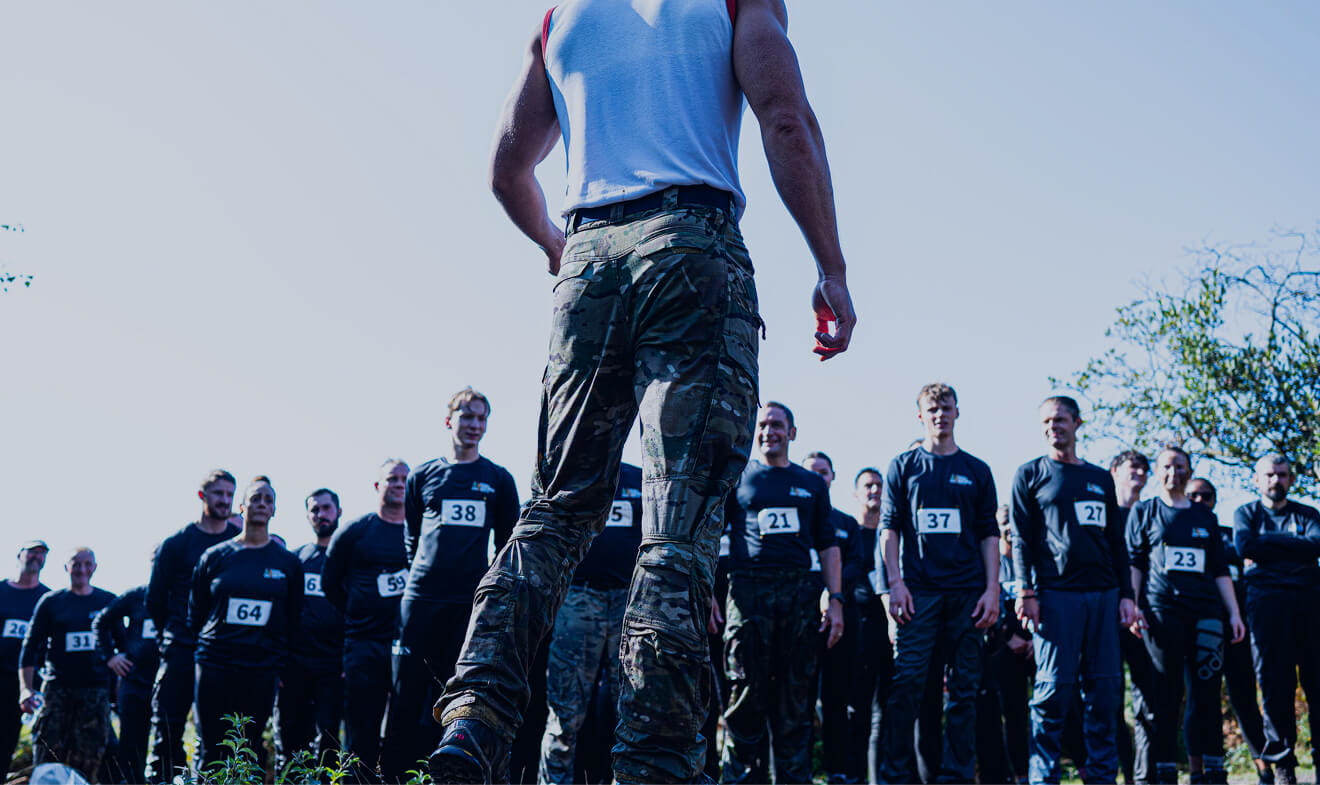
Commando Training
Royal Marines training is one of the toughest and most intense military training courses in the world. Over 32 demanding weeks at CTCRM Lympstone, you’ll be pushed physically and mentally as you build the fitness, discipline, field skills, and resilience needed to earn your place.
32 weeks
You'll train for 32 weeks as part of your initial training to become a Commando.
4 phases
Training is split into 4 phases, building on the skills you gain at each step.
CTCRM Lympstone
Training takes place at Commando Training Centre Royal Marines (CTCRM) Lymsptone, Devon.
Physically demanding
Known as one of the toughest training courses in the world, you'll be pushed to your physical potential.
Elite amphibious soldiering
Commando training is designed to prepare you for life as an elite fighter and a Royal Marines Commando.
ROP first
Before starting the main course, you’ll complete a two-week Recruit Orientation Phase.
Before you start
Get the facts so you can arrive on your first day ready to meet the demands of Commando training.
Before you start
- Read the fitness requirements so you understand the standard expected of you before training begins.
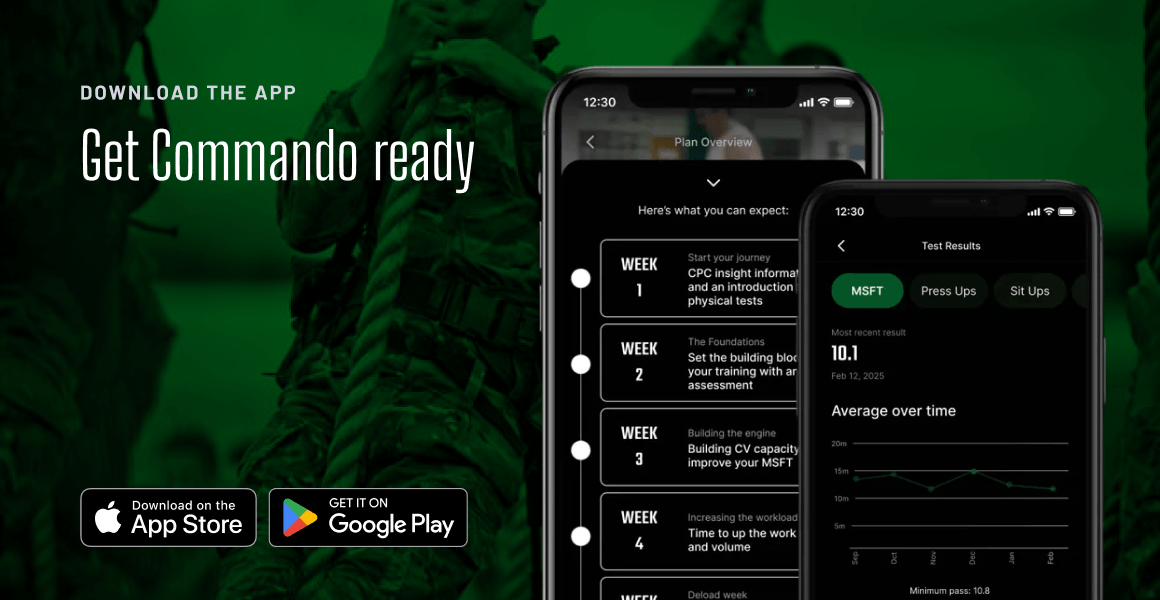
- Use the Commando Ready app and official training plans to build your fitness and prepare properly.
- Complete every stage of the joining process, including assessments, CPC and security checks.
- Check your joining instructions carefully so you know what kit to bring and what to expect on arrival.
- Be ready to travel to CTCRM Lympstone on the date you are given - your AFCO will arrange your train ticket and help you get there.
Training in action

Marines fitness
There’s a press-up. And there’s a Royal Marines press-up. Are you fit to join?

Meet the instructors
There’s only one condition for Royal Marines Commandos. Peak condition. That’s why we’ve got a dedicated team of Physical Training Instructors (PTIs), who keep our team in shape and make sure our recruits are up to the rigours of basic training.

The 30 miler
The 30 Miler. A march across the harsh and unforgiving terrain of Dartmoor to be completed in eight hours, regardless of the conditions. This is the final Commando Test. Everything you’ve worked for rests on this. Can you perform under pressure?

The endurance course
This 73-minute challenge is only the start of an intense, week-long physical examination that proves you’re ready to wear the green beret.
Phases of training
Royal Marines training builds in phases. It starts with adapting to life at CTCRM and mastering the basics. From there, training becomes more tactical, immersive, and demanding as you move towards the Commando Phase.
PHASE 1: WEEKS 1-10
Recruit orientation and individual skills
Adapting to life at CTCRM and building foundations.
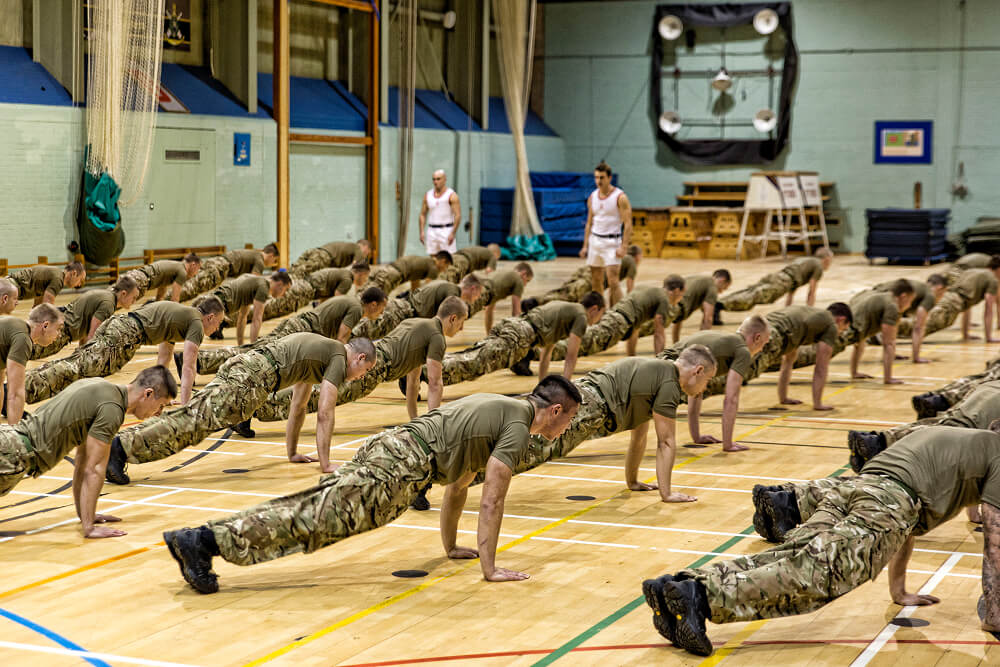
The opening phase of Royal Marines training is about two things: adapting quickly to life at CTCRM and building the individual skills every recruit needs before training becomes more tactical. It begins with the two-week recruit orientation phase, where you are introduced to the standards, routines and pace of recruit life, including drill and personal administration, weapon handling, basic fieldcraft, lectures on nutrition, health and hygiene, and a field exercise.
From there, the course moves into individual skills, where the focus is on physical training and swimming, drill, weapon handling, map reading and navigation, fieldcraft, live firing and marksmanship.
This is where the training first starts to bite. The physical work is demanding from the outset, but what often makes this phase so exhausting is the combination of effort, repetition and constant pressure. You are learning new skills, adjusting to military routine, and expected to maintain standards while tired and under instruction.It is not just about getting through hard sessions - it is about showing that you can recover, stay disciplined and keep improving day after day.
During the first two weeks of mainstream training after ROP, recruits are expected to pass a weapons handling test and hit Royal Marines Fitness Test standards of level 11 on the MSFT, 5 overhand pull-ups, 40 press-ups and 50 sit-ups.
PHASE 2: WEEKS 11-15
Team and section skills
Learning how to operate as part of a small tactical unit.
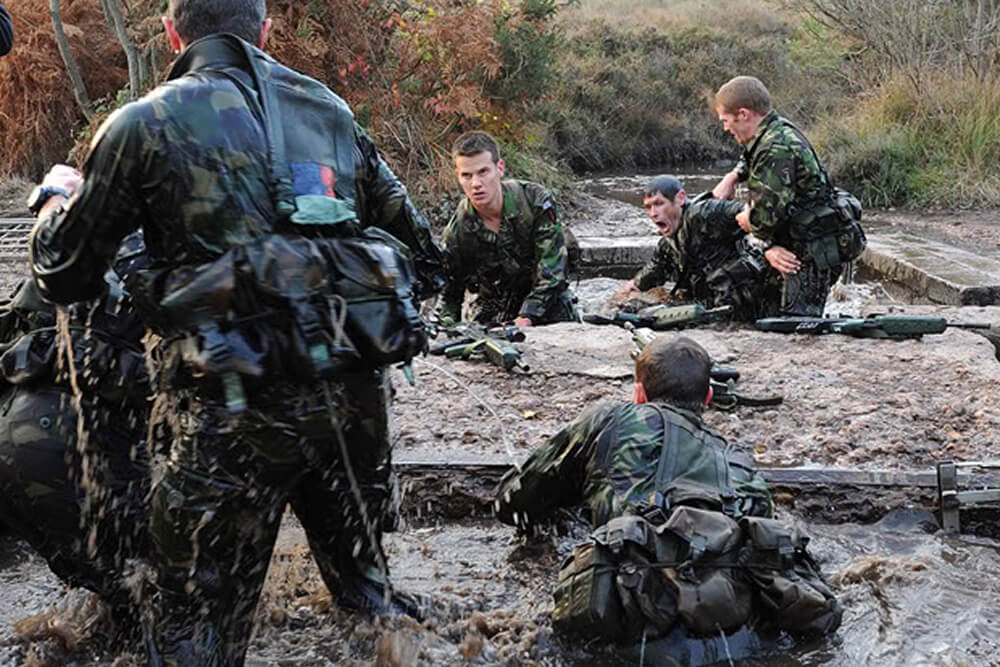
Once the basics are in place, training moves on from what you can do on your own to how well you can work with others. This phase includes reconnaissance and surveillance, small team tactics, tactical navigation and signals training, medic training, section tactics, and continued PT and swimming sessions.
The emphasis now starts to feel more clearly military and more connected to the role itself. You'll learn how to move, communicate, respond, and make decisions as part of a team – rather than an individual being coached through the basics.
By this point, the challenge changes. The physical demand remains, but there is now more tactical thinking, more responsibility, and more pressure to stay sharp when tired. You are no longer just building fitness and confidence. You are learning how to apply those things in a more realistic and operational way.
This makes training more immersive and even more demanding: you are asked to think, communicate, and perform under fatigue instead of simply 'pushing through.
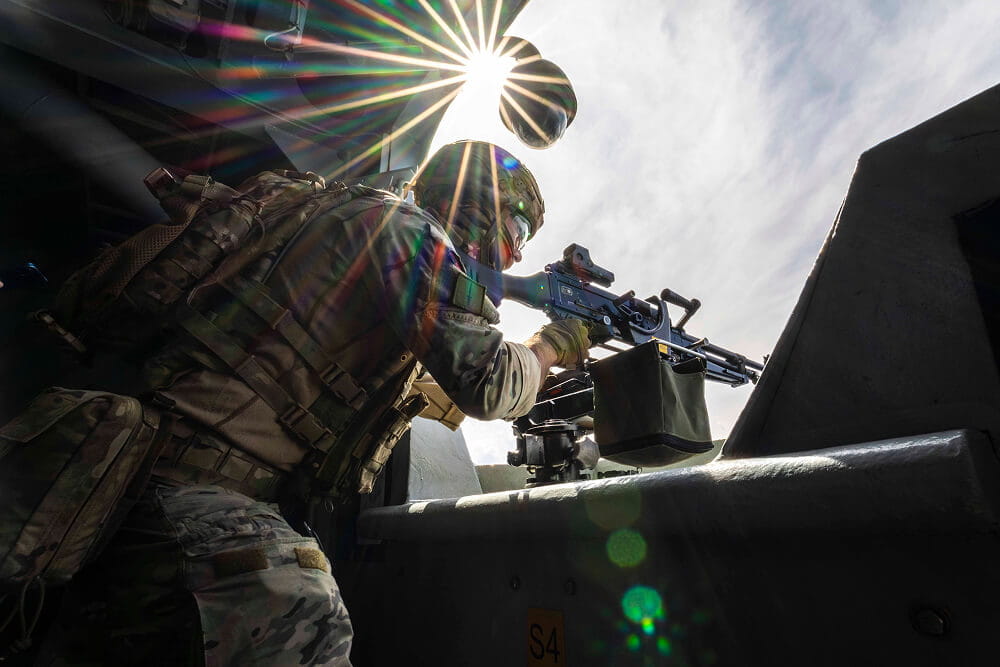
PHASE 3: WEEKS 16-23
Troop and urban skills
Taking on advanced weapons, tactics, and close combat training.
The third phase raises the intensity again. Training now includes general purpose machine gun (GPMG), pistol handling and live firing, troop tactics, tactical night navigation, Royal Marines close combat training, close quarter battle, and Strike operations, alongside skills consolidation and a test exercise.
The pace and complexity of the course increase as you move beyond the fundamentals and start working through more advanced tactical activity in conditions that demand more control, aggression, and resilience.
This is often where the course begins to feel sharper and more serious. The physical strain is compounded by longer days, more complex activity and the challenge of operating at your best when your energy is already stretched. Night navigation, close combat work, and urban training all add to the mental load.
The margin for error feels smaller and the standard expected of you is higher. It's not just about keeping up; you'll need to be able to apply what you've learned under more realistic pressure.
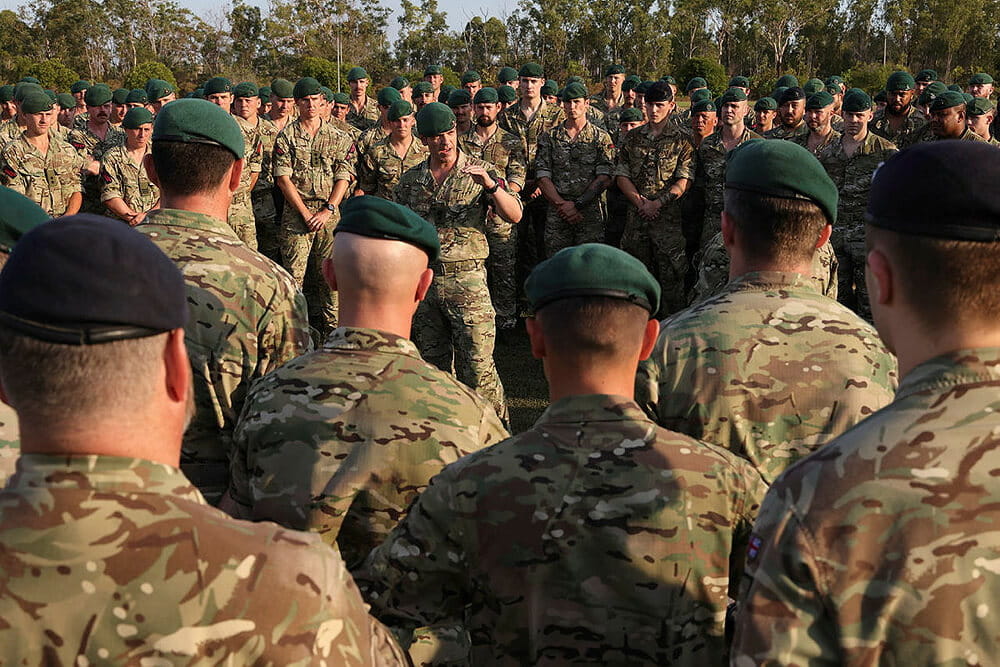
PHASE 4: WEEKS 24-32
Commando phase
Bringing everything together.
The final phase is where the course reaches its peak. This section includes live firing tactical training at section and troop level, day and night manoeuvre training, amphibious foundation training, the final exercise, Commando tests and King’s Squad pass out. It is the culmination of the entire programme, where the physical work, tactical skill, fieldcraft and resilience built over the previous weeks are all brought together and tested.
This is the point where the course becomes less about development and more about proof. The training is still physically demanding, but the real weight of this phase comes from what it represents: the standard has been set, the foundations have been laid, and you are now expected to show that you can meet the moment.
Recruits reaching this stage are carrying weeks of accumulated fatigue, but are also expected to operate with focus, discipline and control through the final exercises and tests. If you make it through Commando training, the rewards are unforgettable. You'll celebrate with friends and family at the Passing Out parade and do what few have done: earned the coveted green beret.