Navy News
Direct from the front-line, the official newspaper of the Royal Navy, Navy News, brings you the latest news, features and award winning photos every month.
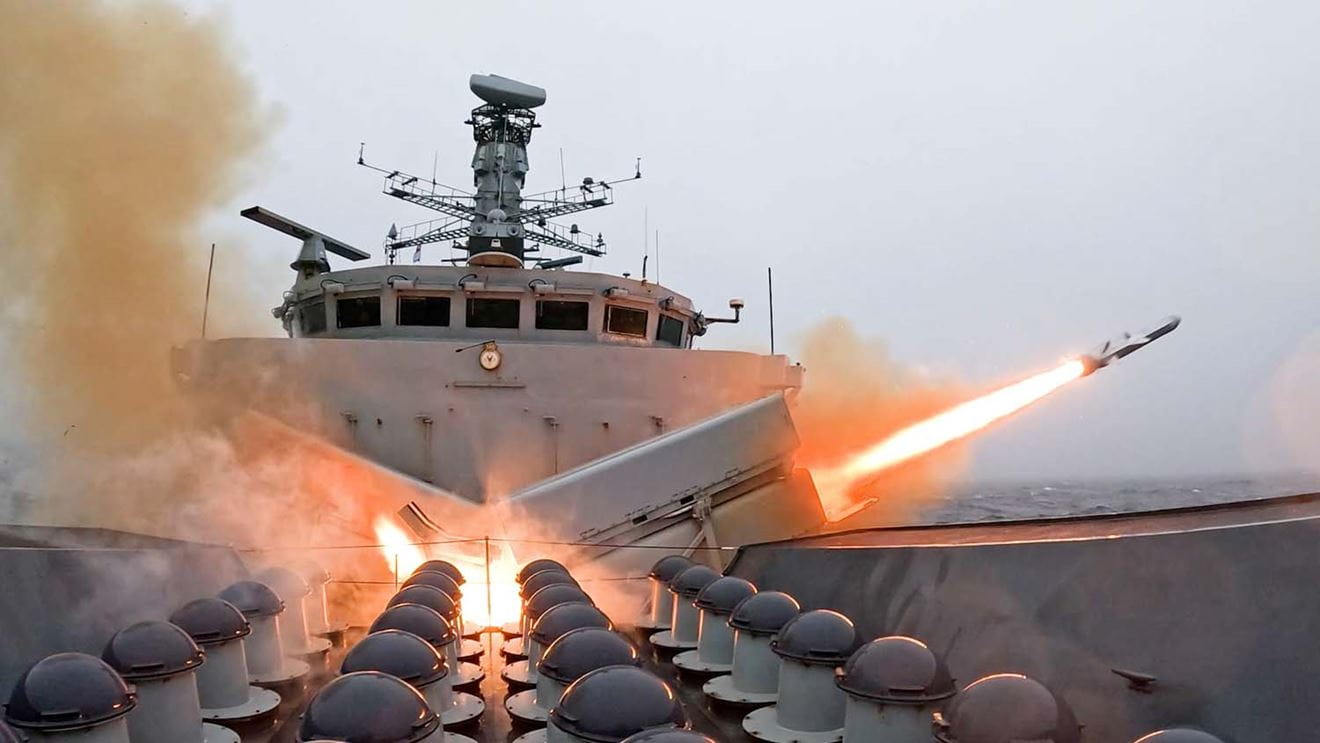
HMS Portland unleashed her ferocious Naval Strike Missile (NSM) while her Wildcat helicopter from 815 Naval Air Squadron let rip with Sea Venom missiles at decommissioned frigate USS Klakring at the MOD Hebrides range off the northwest coast of Scotland during Exercise Atlantic Thunder.
Plymouth-based Type 23 frigate HMS Portland pummelled the target during the first Royal Navy firing of an operational NSM, an advanced warhead that can travel close to supersonic speeds and strike targets more than 100 miles away, evading detection by skimming the sea.
The Wildcat, operating from the flight deck of HMS Portland, smashed the Klakring with its own powerful missiles – completing the first live firing of an operational Sea Venom from a Wildcat against a realistic target.
Lieutenant Commander Louise Kirkaldy, HMS Portland’s Principal Warfare, said: “The successful firing of NSM marks a significant milestone for the Royal Navy, demonstrating our ability to deliver credible, modern maritime strike capability.
“This achievement reflects the professionalism, dedication and teamwork of all those involved, whose hard work has ensured we remain ready to meet the challenges of today and tomorrow.”
Petty Officer James Kenyon, an Above Water Warfare specialist on HMS Portland, added: “To be involved in such a high-profile exercise is the highlight of my career.
“Being the first person to fire war-shot NSM and achieve a hit is a very proud moment, and one that will stay with me for the rest of my career. This was the culmination of over a year’s effort in planning and bringing the drills into service, and I am glad that I was able to contribute.”
The landmark firing of the Sea Venom missile provided evidence of its destructive power and the way it will be used in future operations – helping develop tactics and training and understanding of its performance in combat.
During the exercise the Wildcat crews completed the full ‘kill chain’ process – detecting, identifying and striking the target.
Lieutenant Commander Rhydian Edwards, Test & Evaluation Commander, Maritime Aviation Strike Operational Advantage Group, said: “This was a landmark moment for the Wildcat Force. For the first time we demonstrated the live firing of an operational Sea Venom missile against a representative maritime target. More importantly, we proved our ability to execute the full maritime strike kill chain under realistic operational conditions.
“This was about giving commanders confidence that Wildcat can find, fix and strike maritime targets using Sea Venom as part of a wider task group. The lessons learned from this activity will directly inform future tactics, training and operational capability development, ensuring Maritime Aviation Strike remains ready to fight and win when called upon.”
The Sea Venom is a smart missile designed to defeat corvette sized maritime vessels, or disable frigates/destroyers or larger, taking them out of any fight. The Wildcat can carry four Sea Venom at once. It is also capable of being deployed overland and against harbour targets if required, where it would be equally effective at taking out bunkers/buildings/vehicles.
The NSM, which is also in service with the Norwegian, US and Polish navies, travels close to supersonic speeds (Mach 1) and can strike targets more than 100 miles away, evading detection by skimming on the sea.
It will be a complementary weapon for the ‘Future Cruise Anti-Ship Weapon’, which will become the Fleet’s premier long-range, heavy duty anti-ship missile, carried by the Royal Navy’s next-generation warships fitted with the Mk41 vertical launch system (including the new Type 26 and 31 frigates).
Commander Dafydd Bryden, Commanding Officer of HMS Portland added: “The opportunity to fire anti-ship missiles against a decommissioned warship is an important test of our warfighting capability. This engagement proved the effectiveness of these systems as well as the sailors and aircrew who operate them. We remain ready to fight and win at sea.”
Lieutenant Commander Paul Atkins, UK Lead Project Officer for Atlantic Thunder said: “Atlantic Thunder 26 demonstrated the enduring strength of the UK-US alliance and the close partnership between the Royal Navy and the United States Navy.
"Operating together in a demanding environment, we showcased our ability to integrate seamlessly, share expertise and deliver a highly capable, interoperable maritime force.
"Through combined training and operations, we have strengthened our collective warfighting capability, reinforcing our ability to deter potential adversaries and deliver maritime combat power whenever and wherever it is required.”
Direct from the front-line, the official newspaper of the Royal Navy, Navy News, brings you the latest news, features and award winning photos every month.