Navy News
Direct from the front-line, the official newspaper of the Royal Navy, Navy News, brings you the latest news, features and award winning photos every month.
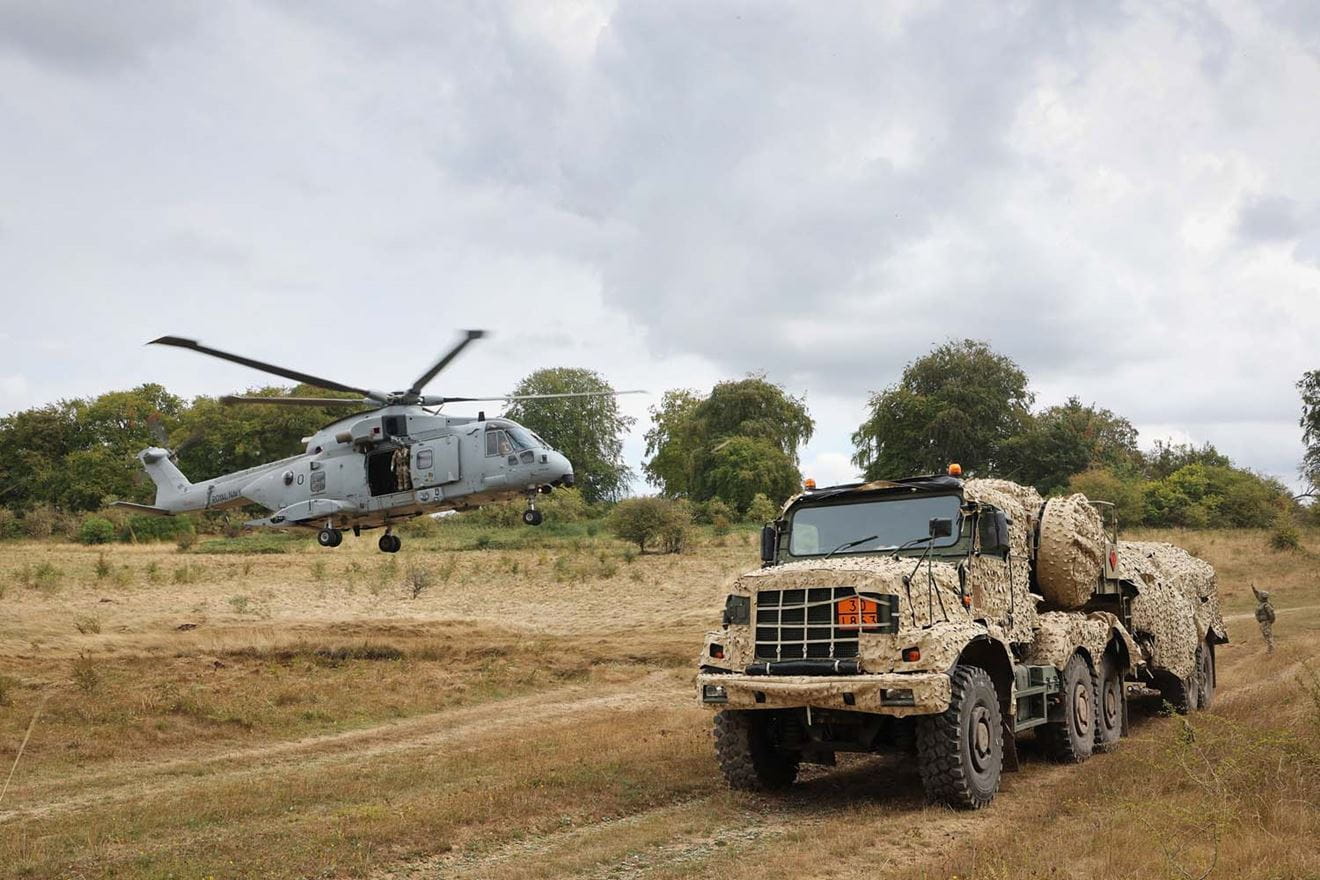
Exercise Green Reminder 2 saw Commando Helicopter Force’s (CHF) Aviation Combat Service Support Squadron put through their paces as they prepare for next year’s annual winter deployment.
In temperatures considerably warmer than those they will face in the Arctic Circle on Operation Clockwork, personnel were able to hone their skills and expertise in providing tactical Forward Refuelling Points to Merlin and Wildcat helicopters.
For four days, around the clock with both day and night training, around 40 personnel took on the challenge to locate, relay back information and provide safe spaces for CHF helicopters to take on fuel.
Taking place on Salisbury Plain, during summer leave meaning the area was quieter therefore offering freedom of manoeuvre for exercise participants, an essential element of the training activity, Merlin Mk4s from 845 Naval Air Squadron and Wildcats from 847 NAS were guided by the Aviation Combat Service Support (ACSS) Squadron to safe places to land and refuel.
The exercise saw Royal Marines from CHF deliver force protection in Jackal vehicles, Royal Navy aircraft handlers, and communication specialists from Information Warfare Troop, RN and RM Medics and Commando Mobile Air Operations Teams (Cdo MAOT) all take part to ensure all aspects of the operation were covered.
Alongside the helicopters, an A400 tactical aircraft showed its ability to work alongside ground troops to deliver fuel in proof-of-concept training.
The aircraft dropped simulated fuel resupplies, which, on real operations would contain aviation fuel – preventing the need for vehicles to be used to transport fuel to the helicopters.
To offer real-world conditions and to challenge ACSS personnel even more, “enemy” combatants were also involved – with Royal Marines from Cdo MAOT assessing vulnerabilities and signature of the FRP Teams on the ground.
In keeping with the Royal Marines and Royal Navy’s use of uncrewed technology, mini drones were flown to give insight into possible landing sites.
The remotely-piloted uncrewed aerial systems took video and recorded data which was then rendered into 3D computer modelling, offering a realistic view of the landscape. Gathering this crucial information using drones means additional risks, amount of space and limitations can be considered without the need to send in personnel or vehicles.
Exercise Green Reminder 2 is split into a series of training serials which ensure ACSS are ready to deploy at high readiness.
The first instalment held at the beginning of summer saw personnel briefed about the equipment, practice and test it and understand the manoeuvres and the theory behind them.
The training on Salisbury Plain is the second part while the third, named Ex White Reminder, takes place in Norway. It is the “run” phase when difficulty levels are raised to really challenge personnel.
As part of the exercise, ACSS also trialled thermal camouflage systems from DSTL and binocular night vision goggles – kit that ensures they can survive and operate in any terrain, at any time of day.
Direct from the front-line, the official newspaper of the Royal Navy, Navy News, brings you the latest news, features and award winning photos every month.