Navy News
Direct from the front-line, the official newspaper of the Royal Navy, Navy News, brings you the latest news, features and award winning photos every month.
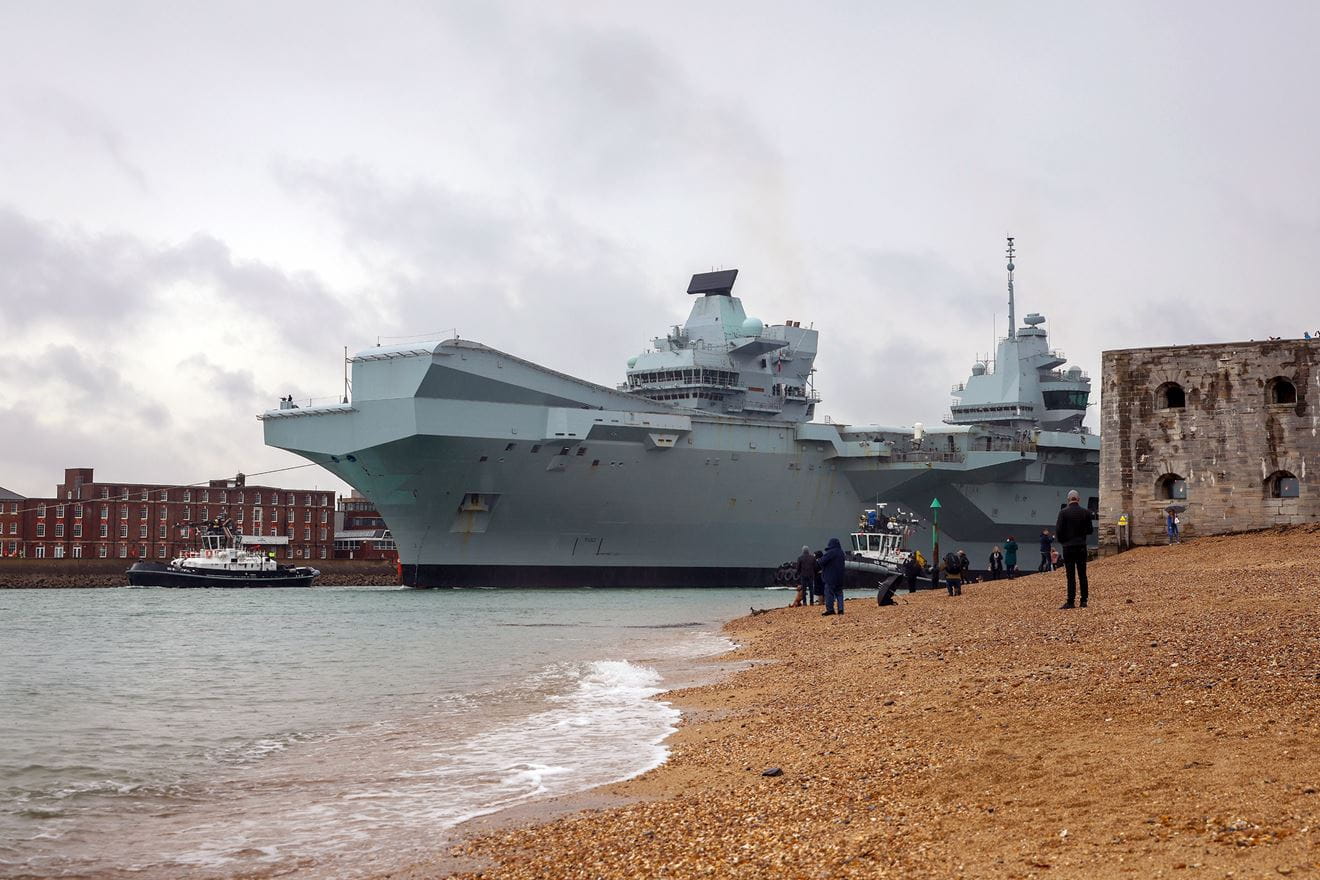
Over the next three months, the 65,000-tonne warship and her crew of more than 800 sailors will conduct an intensive programme of training and operations, working alongside Allies to enhance collective security, deterrence and readiness.
The deployment comes as the Defence Investment Plan confirmed that £240 million is being invested in the development of new drones to build a Hybrid Carrier Air Wing, including jet-powered drones to work alongside F-35 fighter jets.
HMS Queen Elizabeth will undertake advanced training under the Royal Navy's Flag Officer Sea Training (FOST) organisation, exercising across the full spectrum of modern naval warfare to ensure the carrier is ready to respond to emerging threats.
Having assumed the role of NATO’s command ship for the Allied Response Force in July, the carrier will also rehearse how an Allied naval force would operate together in the event of a crisis. It’s the first time either of the Queen Elizabeth-class ships has performed this NATO role.
The training programme will continue into next year, including participation in major NATO exercises, and will prepare HMS Queen Elizabeth to take over from HMS Prince of Wales as the UK's flagship and high-readiness strike carrier in late 2027.
HMS Queen Elizabeth’s Commanding Officer Captain Claire Thompson said:
"We’ve returned from summer leave rested and ready for the next phase of our training.
“Sailing this autumn is a key milestone for both our NATO commitment, as the Afloat Command Platform and also on our journey back to the Royal Navy’s ‘very high readiness’ aircraft carrier, a duty we will resume from our sister ship HMS Prince of Wales in 2027.
“Sailing with an embarked battle staff, integration and training is essential whilst relearning the skills required to conduct safe and effective aviation as we ensure that we are prepared to deliver operational activity at the heart of NATO should it be required.”
British forces are playing a vital role to deter and defend, increasing NATO’s resilience, readiness, and unity.
There are over 1,000 British personnel across NATO command posts, while the UK also leads the Allied Rapid Reaction Corps (ARRC) from its HQ in Gloucestershire.
UK forces also remain on the frontline of defending NATO – from the 800-strong UK battlegroup in Estonia, to the Typhoon jets defending the skies over Romania, and the RAF P-8 Poseidon and Rivet Joint surveillance aircraft patrolling the Baltic Sea.
The UK is the only European NATO member to commit its nuclear deterrent in full to the Alliance and as confirmed in the Defence Investment Plan, will join NATO’s Dual Capable Aircraft nuclear mission with F-35A jets.Sailing this autumn is a key milestone for both our NATO commitment and also on our journey back to the Royal Navy’s ‘very high readiness’ aircraft carrier
Direct from the front-line, the official newspaper of the Royal Navy, Navy News, brings you the latest news, features and award winning photos every month.