Navy News
Direct from the front-line, the official newspaper of the Royal Navy, Navy News, brings you the latest news, features and award winning photos every month.
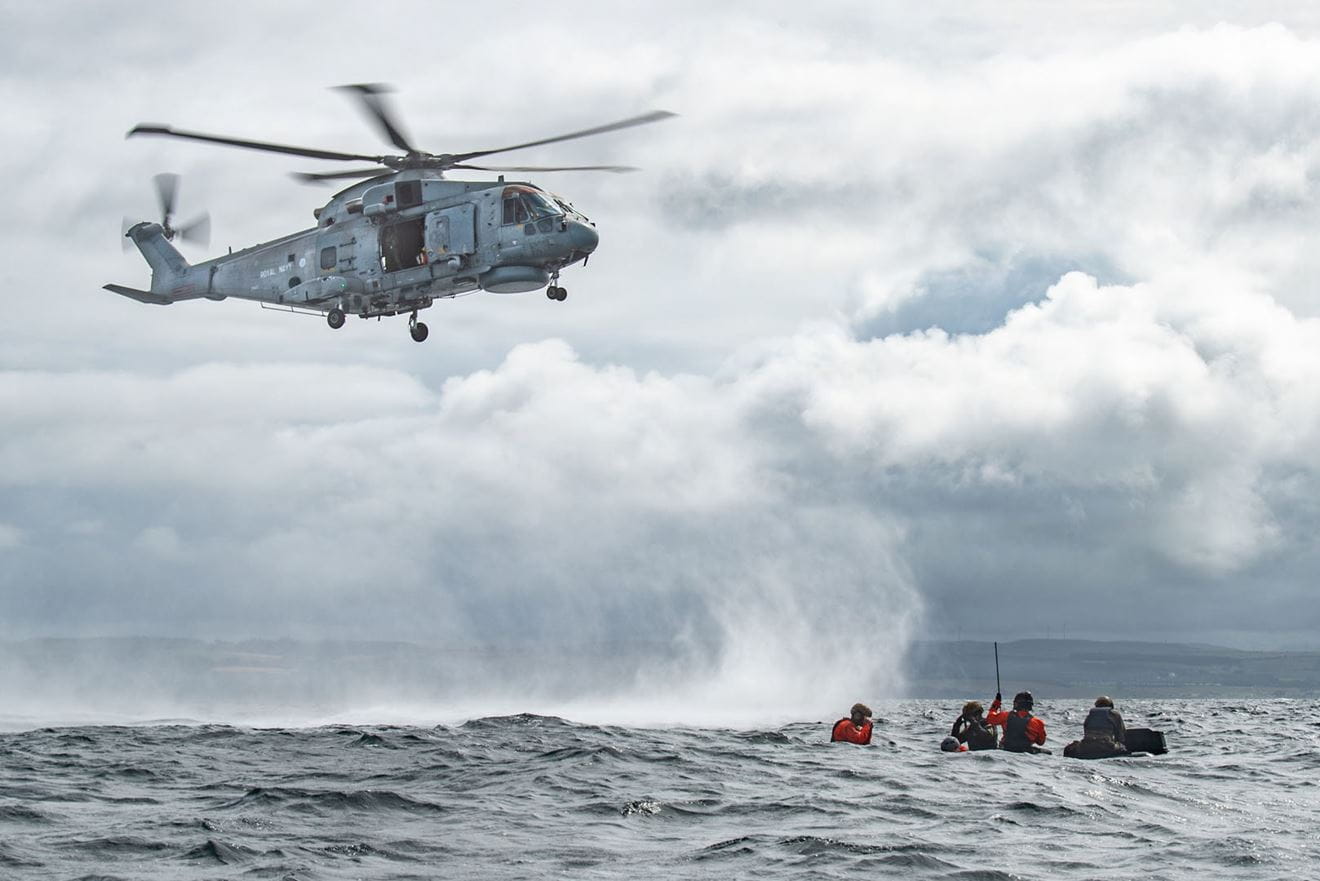
814 Naval Air Squadron, typically found operating from frigates or RFA tankers in the endless grey of the North Atlantic looking for hostile submarine activity, were invited to join the Kentucky Air National Guard, making a rare appearance in UK skies.
The National Guardsmen – rough counterparts to Reservists in the UK – deployed four C-130J Super Hercules, 60 personnel and 62,000lbs (28 tonnes) of kit and made Prestwick airport near Ayr their home.
The Americans, based in Louisville, wanted to test their ability to work with NATO partners – in this case the UK and Canada – in a series of multinational training events, spanning everything from refuelling, formation flying, low flying and rapid-reaction take-offs in a landscape and airspace completely different from Kentucky.
And what operating out of Prestwick gave the Guardsmen was instantaneous access to the sea.
Kentucky is landlocked. The nearest open water to the Super Hercules’ base in Louisville is Chesapeake Bay, 500 miles to the East…
…whereas the runway at Prestwick ends barely 3,000ft from the waters of the Firth of Clyde.
Which is where 814 Naval Air Squadron come in. The squadron’s Swordfish Flight was invited to join the Hercules on open-water rescue missions – notably saving downed aircrew bobbing around in the Clyde.
The way the Air National Guard work in such rescues is not a million miles away from how the Royal Navy responds to submariners escaping a stricken boat and floating to the surface.
First the C-130 crew locate the downed airmen in their raft. Next loadmasters airdrop an inflatable motorboat near the stricken fliers, before three Special Tactics Airmen leap into the ocean, deploy the boat and provide first aid.
Once complete, they begin coordination with 814 NAS to winch the injured aviator to safety with the Hercules circling overhead.
Swordfish Flight thoroughly enjoyed training with the Kentucky Air National Guard. We hope to continue working with our friends across the pond in the years to come.
“The integration with the Royal Navy was one of the highlights of the exercise,” said Lieutenant Colonel Reinke, a C-130 pilot and mission commander.
A pararescue flight chief for the Special Tactics team said he and his colleagues found the operating environment in Scotland “vastly different” from their regular training areas in the USA.
“It’s a lot colder here, and the salt water is an unusual factor for us,” he said. “The Royal Navy also uses different geolocation methods, and they have different tactics and techniques than we typically employ.”
They also learned that the Merlin generates substantially more rotor wash than the Black Hawks the Kentuckians are used to.
“Those are the kinds of things you don’t anticipate, but we were able to work through them and figure out what worked best for their guys and for us,” the Airman said. “We had to be flexible on the spot to get the mission done.”
Swordfish Flight Commander Lieutenant Cass said the Merlin team relished the chance to get involved in a complex search-and-rescue exercise; it’s over a decade since the Fleet Air Arm formally handed over rescue duties to the Coastguard, but it’s an essential skill to possess operating at sea.
“This complex personnel recovery and search and rescue training ensures crews remain proficient in recovering those in need during challenging conditions,” Lt Cass said.
“Swordfish Flight thoroughly enjoyed training with the Kentucky Air National Guard. This vital training strengthens our ability to work with each other and reinforces the close defence relationship between NATO allies.
“We hope to continue working with our friends across the pond in the years to come.”
Captain James Hall, Commanding Officer of 814 NAS’ home base of RNAS Culdrose, underscored the importance of the variety of the training with the Kentuckians.
“While protecting the United Kingdom's Continuous At Sea Deterrent and our carrier and maritime task groups remain our primary focus, we must also retain the versatility and expertise expected of a naval helicopter force.
“Exercises such as this, conducted alongside our Air National Guard partners, enable our crews to maintain and enhance critical search-and-rescue skills while strengthening the ability to work seamlessly together which underpins NATO's collective security."Direct from the front-line, the official newspaper of the Royal Navy, Navy News, brings you the latest news, features and award winning photos every month.