Navy News
Direct from the front-line, the official newspaper of the Royal Navy, Navy News, brings you the latest news, features and award winning photos every month.
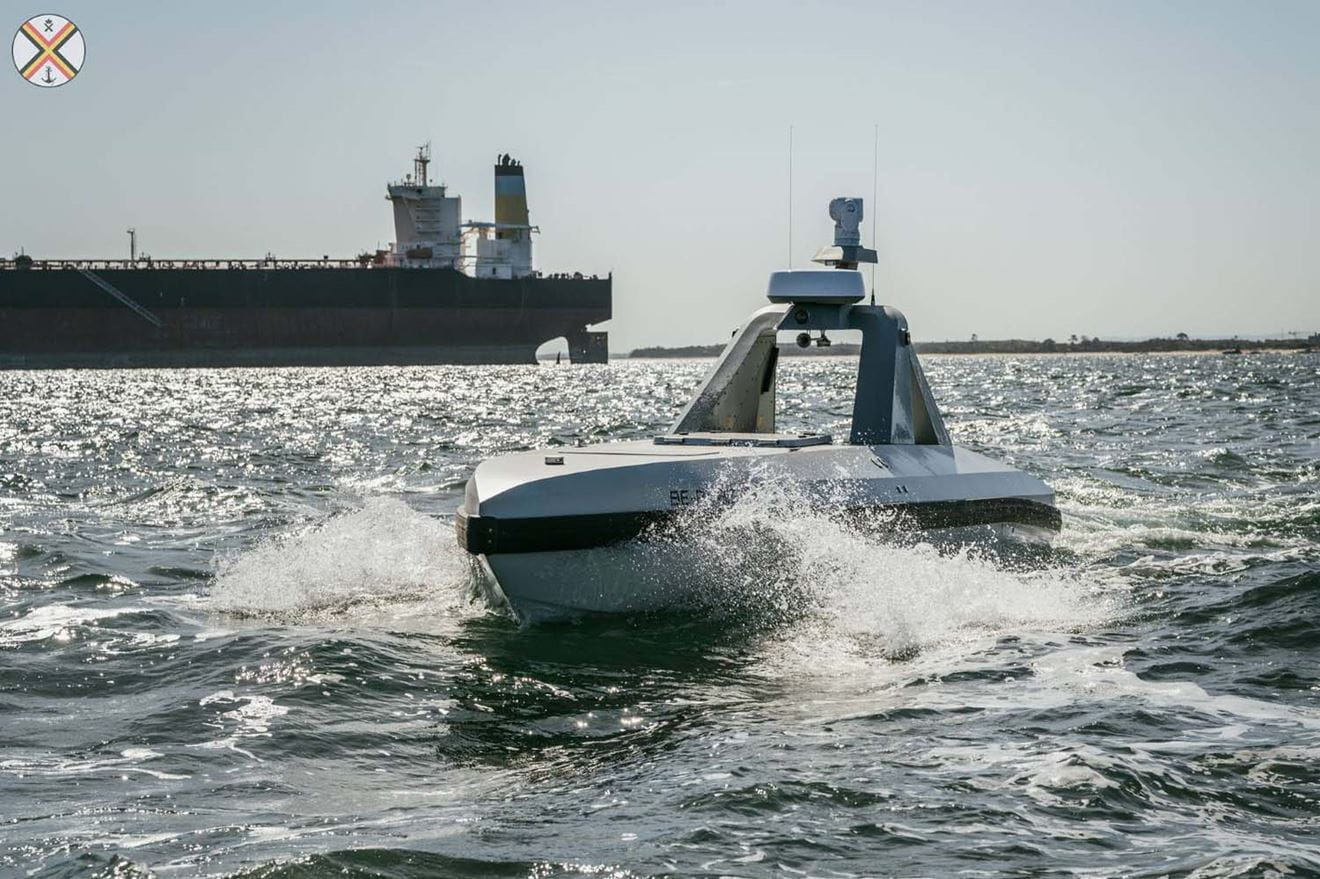
During annual autonomous wargame Exercise REPMUS, teams from the Royal Navy worked with industry experts and NATO allies to put a range of innovative equipment through its paces.
Hosted by the Portuguese Navy, this year’s iteration had a focus, for the UK, on anti-submarine warfare (ASW) with the Royal Navy acting as the lead for the operational scenarios and trials.
The Royal Navy sent around 200 people, including sailors, scientific support staff and industry, to Troia – leading an international contingent from ten NATO and partner nations.
Together, participants were looking to develop their ASW capabilities and their ability to conduct surveillance of underwater infrastructure.
For the RN this was an opportunity to field emerging capabilities, but also to sponsor UK industry to allow the evaluation of potential technologies in an international context, not yet formally adopted by the RN but which will inform future options adopted under Atlantic Bastion.
Several types of underwater gliders were deployed from those feeding back real-time assessments of the oceanography to larger sentinel gliders using long acoustic vertical arrays to detect and track potential threats.
Squads of small and medium uncrewed surface vessels were used to gather acoustic data and provide real time contact reports of submarine targets; this is a proof of concept for larger squads and versions of such vessels, two autonomous boats – one 12, the other 17 metres long – were tested to tow sonar systems, drop automated sonobuoys (underwater microphones) for detecting submarines and the launching of gliders.
The exercise was supported by five support ships from Germany, France, the Netherlands and NATO’s Centre for Maritime Research and Experimentation.
Sweden deployed fixed wing airborne drones for intelligence, surveillance and reconnaissance missions while Portugal also flew drones which drop sonobuoys and relay the data back to a command centre ashore.
Exercise REPMUS allowed the UK to test prototype and novel capabilities in support of the Royal Navy’s Atlantic Bastion programme (the use of hybrid forces to defend the UK and NATO allies against evolving threats); integrate with allied components; and demonstrate future use of equipment in complex tactical scenarios against realistic targets.
The Royal Navy’s participation in Exercise REPMUS comes as it continues its shift to a hybrid navy – one that sees autonomous and uncrewed systems integrated to work alongside traditional ships and aircraft.
The focus on anti-submarine warfare reflects current threats from adversaries and the need to experiment with uncrewed systems to enhance our abilities to deal with such threats alongside our allies.
The UK’s Head of Delegation to REPMUS, Cdr (Rtd) Ian Danbury OBE, said that it was a privilege to lead such a diverse team of people from across not only the Royal Navy but allied navies and industry shaping the future of how the Royal Navy and NATO will tackle underwater threats in the future, adding mass to the battlespace with innovative systems.
Direct from the front-line, the official newspaper of the Royal Navy, Navy News, brings you the latest news, features and award winning photos every month.