Navy News
Direct from the front-line, the official newspaper of the Royal Navy, Navy News, brings you the latest news, features and award winning photos every month.
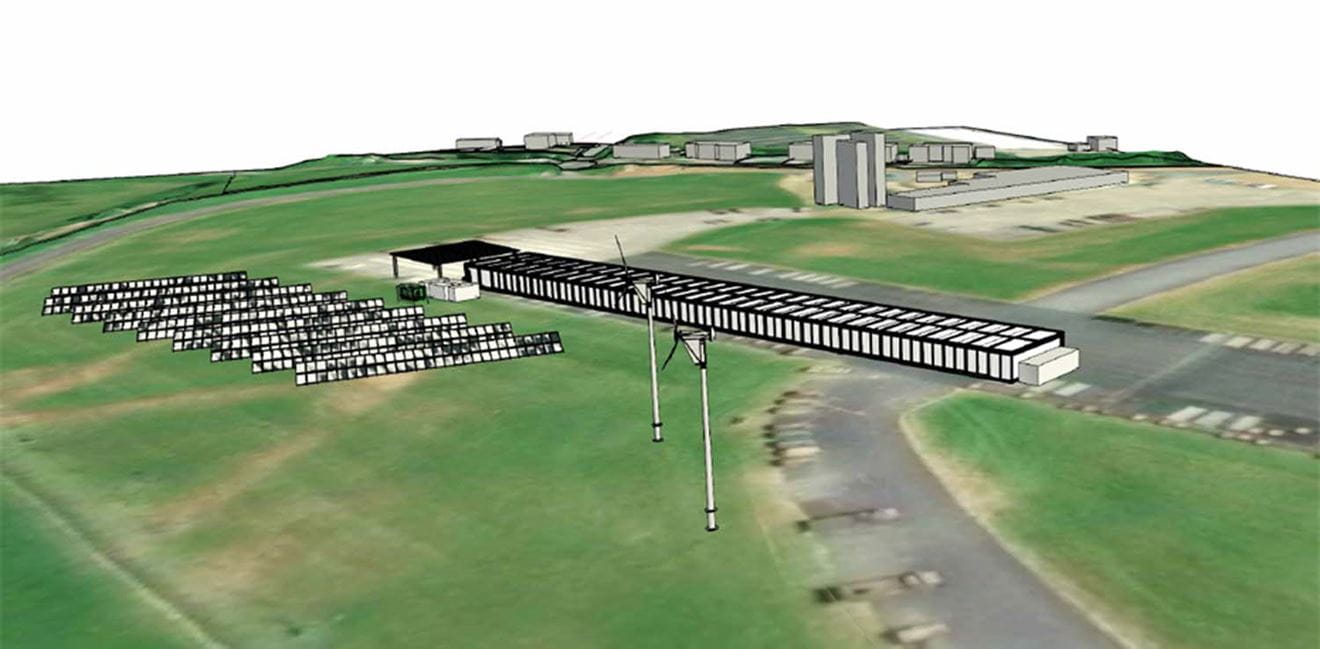
The combat facilities at Norton Manor Camp near Taunton – home to 40 Commando – and the Royal Marines Base Chivenor – home to the Commando Logistic Regiment and 24 Commando Royal Engineers - require considerable power.
Rather than connect them to the existing electricity network, ‘renewable energy micro-grids’ will be created: two 15-metre-tall wind turbines and solar panelling.
They will generate electricity all year round, stored in battery storage systems on site and ‘released’ to either power the ranges or, when there’s a surplus, support the National Grid.
The two modular 100-metre ranges will be used for individual and collective training by UK Commando Forces as they practise marksmanship through to house/building clearance tactics.
First Sea Lord General Sir Gwyn Jenkins formally opened the facility at Norton Manor, Anzio Range – and demonstrated his impressive marksmanship – last week.
Whether being used for standard rifle/pistol shoots, or especially when close-combat training is taking place with rounds constantly being fired off, smoke, flash-bangs and other devices in use, the ranges need powerful ventilation to prevent any potentially-dangerous build-ups of lead or other harmful substances.
During live training, each range devours around 136 kilowatts (equivalent to around 18 family homes). Over a year that’s around 220 megawatt hours – or an electric bill of more than £50k.
Given their remote locations on both sites, plus the limited existing electrical infrastructure, connecting both facilities to the grid would have been expensive and challenging – hence the ‘microgrid’ solution.
In addition using renewable energy as the primary power source will significantly reduce the carbon emissions associated with these high‑demand training facilities – and also ensure that training for high-readiness war fighting forces remains uninterrupted by potential disruptions to the National Grid.
The two projects are part of a wider programme of investment in sustainable energy at 11 sites across the MOD, which has received £13m from the Department of Energy Security and Net Zero Great British Energy scheme to install solar panels and energy storage.
“This project demonstrates how innovation and cross‑government partnership can deliver direct operational advantage, strengthening our warfighting resilience by ensuring critical training continues regardless of disruption to external energy systems,” said Lieutenant Colonel Christopher Emptage RM from Navy Force Generation.
“Working closely with the Department for Energy Security and Net Zero, we are advancing Defence’s contribution to national Net Zero objectives while delivering a more efficient, sustainable, and cost‑effective foundation for future capability.”
The microgrids combine solar photovoltaic generation (solar panels), wind energy generation (wind turbines) with a Battery Energy Storage System (BESS) and an integrated energy management system which actively controls and makes best use of all power sources.
Work will start on the microgrids shortly.
Direct from the front-line, the official newspaper of the Royal Navy, Navy News, brings you the latest news, features and award winning photos every month.