Navy News
Direct from the front-line, the official newspaper of the Royal Navy, Navy News, brings you the latest news, features and award winning photos every month.
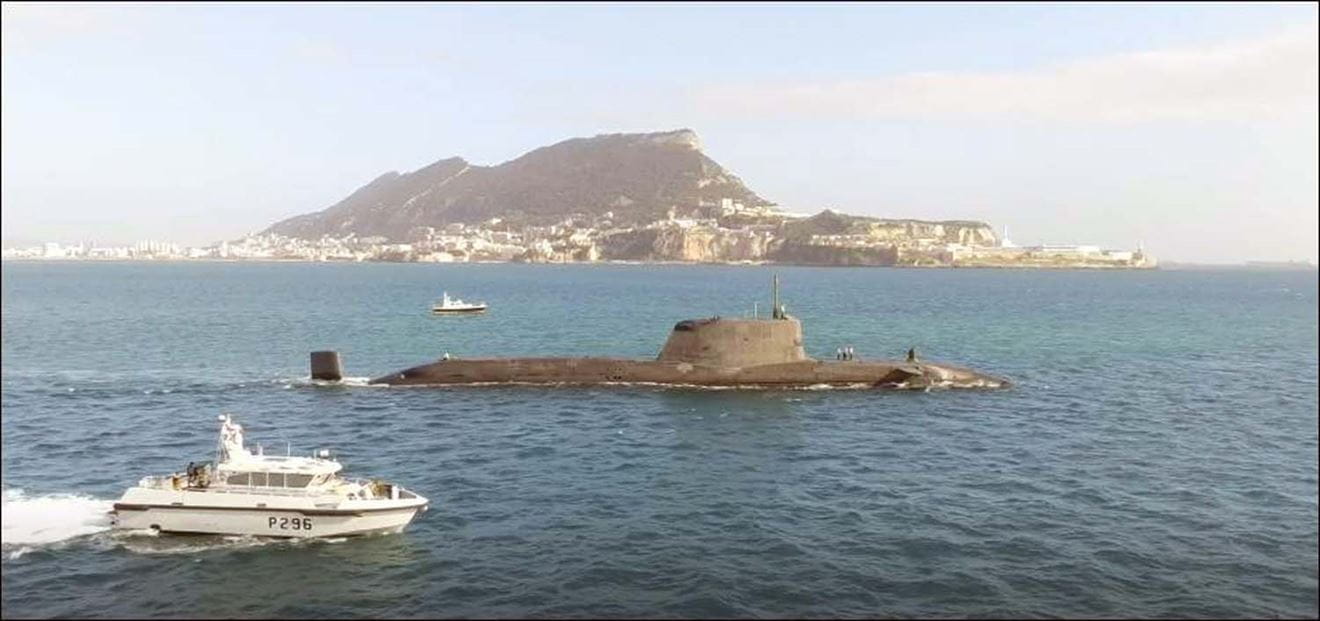
The Anafi Parrot quadcopter is now part of the intelligence-gathering apparatus at the disposal of the Royal Navy Gibraltar Squadron – and has been used to monitor/safeguard visits to the overseas territory by major UK warships.
The clearance to use it – and other smaller drones – in conjunction with Royal Navy warships is now considerably easier and smoother as a result of a concerted effort by personnel serving in Gib.
With the use of lightweight drones (under 25kg) growing, the existing regulations for operating such systems – known as ‘ship-air release’ – were proving to be a bottleneck.
The rules were designed for larger, more complex systems – and rightly remain in place. But the process was time-consuming, often taking weeks or even months to approve smaller lower risk drones, which could potentially hinder front-line operations and the Navy’s ability to adapt to the rapidly-evolving world of drone technology.
To simplify the process, the team in Gibraltar worked with safety, maritime, and naval aviation experts to devise the documentation, risk assessments and procedures, even an app, all of which reduced clearances and approval from months to a matter of days.
The new accreditation process – labelled ‘the tailored route’ by personnel – was tested with Anafi Parrots aboard HMS Cutlass and Dagger, as well as the launches used by the RN Gibraltar Squadron.
The success of those trials means the simplified accreditation is now being considered for further drone operations from vessels as varied as XV Patrick Blackett, Vahana boats used by divers and craft operated by 43 and 47 Commandos.
The impact of the ‘tailored route’ has been profound, giving the navy a faster, more flexible method for deploying lightweight crewless aerial systems from ships and boats.
The admin burden has been significantly reduced and this scalable model is well-suited to accommodate the growing number of small drones entering service.
For the Royal Naval Gibraltar Squadron, it marks a new era in surveillance and operational capability.
“The ANAFI drones have enhanced our ability to deliver effective surveillance during both routine patrols and major tasking,” said Lieutenant Commander Jonathan Davies Royal Navy, Commanding Officer RNGS.
“Whether supporting Intelligence gathering tasks or protecting high value units such as the Carrier Strike Group, the system’s clear imagery significantly improves situational awareness and supports tactical decision making.
“The improved integration of remotely piloted systems reflects the Royal Navy’s commitment to adopting modern technology that delivers operational advantage.
“As the Squadron continues to refine its procedures and explore more opportunities to further enhance its use, drone technology will play an increasingly important role in supporting both routine patrols and high-profile maritime security activity.”
Direct from the front-line, the official newspaper of the Royal Navy, Navy News, brings you the latest news, features and award winning photos every month.