Navy News
Direct from the front-line, the official newspaper of the Royal Navy, Navy News, brings you the latest news, features and award winning photos every month.
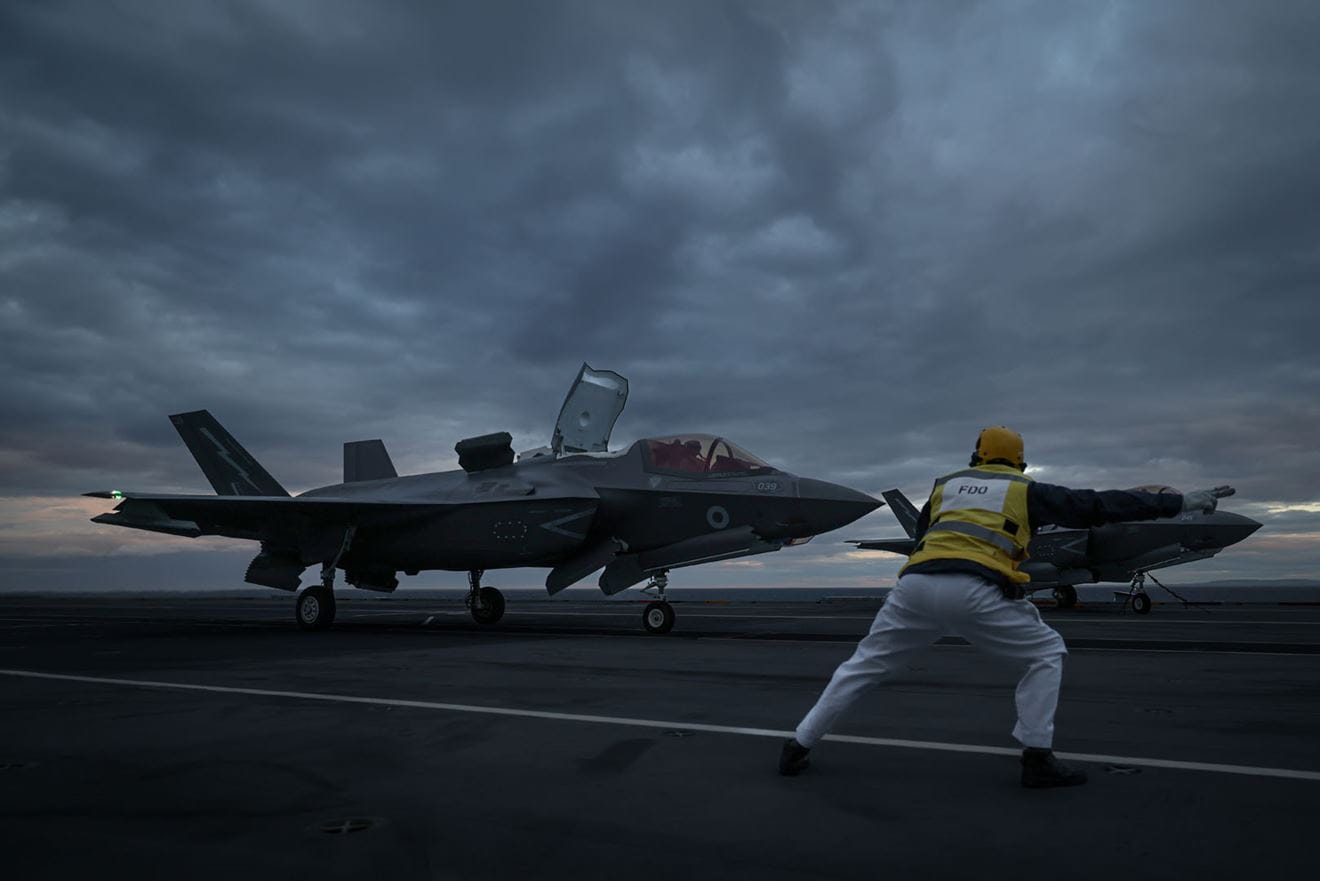
The fifth-generation jets, plus Merlin and Wildcat helicopters – all operating from the flight deck of HMS Prince of Wales – provided the aerial punch of the UK’s input to Ramstein Flag 26, a huge workout of Allied air power extending across the length and breadth of Europe.
Having embarked the F-35Bs of 809 Naval Air Squadron – one of two front-line UK Lightning formations alongside the RAF’s 617 Squadron – on the Portsmouth-based aircraft carrier, sorties were launched from the North Sea, frequently in unseasonal weather for June.
Tankers providing air-to-air refuelling extended the fifth-generation stealth fighters’ range for sustained, long-range missions deep into Europe, underscoring the UK’s commitment to NATO and the capabilities of the F-35, operating 700 miles or more from their floating home.
The scenario behind Ramstein Flag 26 tested the Alliance’s ability to respond rapidly, cohesively, decisively to an attack on a member state, triggering Article 5, demanding a response by all its nations.
The scope of the exercise – which takes its name from the huge US Air Force base in southwest Germany – was vast, spread across 20 locations from Norway to Spain and Finland and HMS Prince of Wales’s carrier strike group (destroyer HMS Duncan, tanker RFA Tidespring) at sea.
Around 150 sorties were flown daily by up to 150 NATO aircraft from 18 nations over the 11 days of the exercise – everything from land and carrier-based F-35s through Typhoons, F18s, Swedish-made Gripens, France’s Rafales and Mirages, tankers, transporters to Reaper drones.
Among the more unusual sights: F-35Bs landing, then refuelling before taking off again… from Finnish highways.
That was US Marine Corps Lightnings. 809 Naval Air Squadron’s jets paid a more conventional visit to the Nordic country, making use of the facilities at Pirkkala air base near the city of Tampere (about 100 miles north of Helsinki).
The aim was to ensure that many different types of aircraft, with different sensors and weapons systems, flown by pilots with half a dozen different first languages, directed from headquarters hundreds of miles away could work together seamlessly and effectively, facing down the latest threats and taking the fight to the enemy.
As far as Commodore Richard Hewitt, Commander UK Carrier Strike Group’s involvement has delivered a clear message to our allies and also any possible aggressor.
“The seamless coordination of our Carrier Strike Group with 18 Allied partners during Exercise Ramstein Flag is a powerful testament to the skill of our sailors and aviators.
“The UK Carrier Strike Group is fully integrated into NATO’s frontline defence. Operating under NATO command, the fifth-generation capability we are generating from HMS Prince of Wales delivers a deliberate message to any potential adversary: together, the Royal Navy and our allies provide the precise, synchronised combat power required to secure the Northern Flank."
Side-by-side with operations in the skies of Europe came ‘operations’ in HMS Prince of Wales’ impressive sick bay.
Conflict on the scale of a Ramstein Flag-style scenario would, sadly, almost certainly lead to sustained and serious casualties.
The ship has a comprehensive hospital suite including an operating theatre offering Role 2 medical support – emergency surgical capability to carry out urgent operations on the most severe casualties so they can be subsequently transferred to a full-scale hospital for further treatment and recuperation.
The ability to rapidly assess, stabilise and treat critically injured or unwell personnel vastly improves survivability.
As a result, a 20-or-so strong medical team is on call 24 hours a day, bolstered by a ‘flying ambulance’, the Maritime Medical Emergency Response Team, which delivers on-the-spot life-saving aid where necessary, before delivering a casualty to HMS Prince of Wales – or accompanying them to a hospital ashore.
All were pressed into action with a series of casualty drills and exercisesxxxThe seamless coordination of our Carrier Strike Group with 18 Allied partners during Exercise Ramstein Flag is a powerful testament to the skill of our sailors and aviators.
Direct from the front-line, the official newspaper of the Royal Navy, Navy News, brings you the latest news, features and award winning photos every month.