Navy News
Direct from the front-line, the official newspaper of the Royal Navy, Navy News, brings you the latest news, features and award winning photos every month.
Packed with sensors – from a full oceanographic sensing package to side scan sonar and a sub-bottom profiler and high-end optical and electro-optical cameras – ScanFish can operate at depths down to 1,000 metres (3,300ft), hoovering up reams of data in the process.
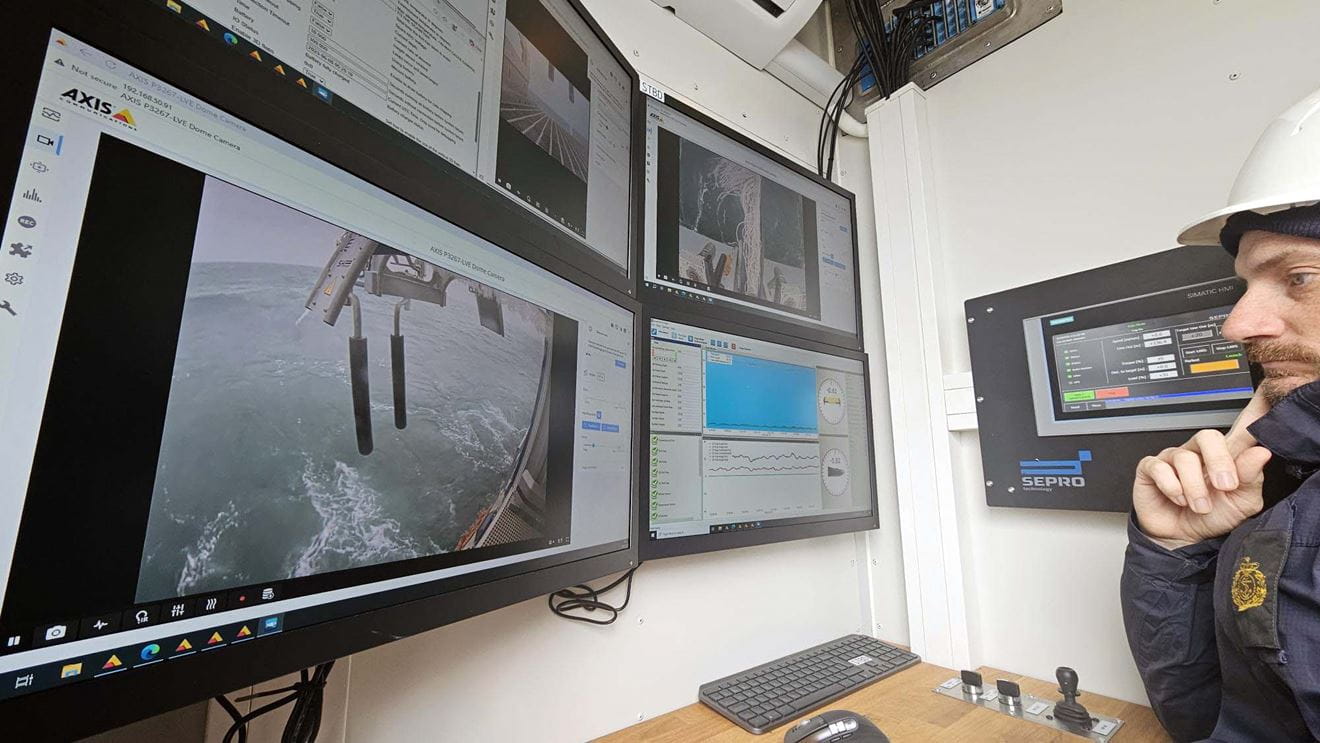
It’s classed as a Containerised Remotely Operated Towed Vehicle (C-ROTV), procured by Navy Develop, and intended to be easily deployable thanks to a bespoke containerised launch and recovery system. It’s designed to be operated from any suitable vessel by a small team from the Royal Navy’s Hydrographic eXploitation Group based in Devonport.
The system – which looks rather like a section of an airplane wing – is towed behind a mother ship
ScanFish enjoyed its first run-out earlier this year aboard RV Aurora off Aarhus in Denmark.
For their second series of trials, the team deployed on a Royal Navy vessel for the first time in home waters, ocean surveillance vessel RFA Proteus, to start to develop tactics and procedures for using ScanFish – and exploiting its impressive full capabilities.
Once fitted aboard Proteus, a multitude of sensors and systems were then integrated into the ship, after which the hydrographic team could begin their trials in earnest, safely launching and recovering ScanFish, as well as using the operations centre in the container.
The data collected by the Scanfish will be processed by the team and then sent to the United Kingdom Hydrographic Office for assessment
The HXG team contains a wealth of experience in towed body operations, ranging from survey motor boats through to survey ships and anti-submarine Type 23 frigates.
Having mastered the basics, the trials shifted to a more demanding workout in Lyme Bay conducting launch and recovery drills and flying data collection missions.
Key to success through all stages of the trials was seamless cooperation with Proteus’ crew and the bridge team especially – essential during all phases of operation, be that when finding the right course for launch and recovery or when 100s of metres of cable are paid out and the Scanfish is flying in close proximity to the sea floor.
“The Proteus crew were excellent hosts and supported the embarkation every step of the way,” explained Lieutenant Liam Speed of the HXG.
“The data collected by the Scanfish will be processed by the team and then sent to the United Kingdom Hydrographic Office for assessment.”
The HXG team will conduct further mobilisations of the ScanFish system on Proteus and other MOD vessels as it builds up to being deployed to support front-line operations.
Direct from the front-line, the official newspaper of the Royal Navy, Navy News, brings you the latest news, features and award winning photos every month.