Navy News
Direct from the front-line, the official newspaper of the Royal Navy, Navy News, brings you the latest news, features and award winning photos every month.
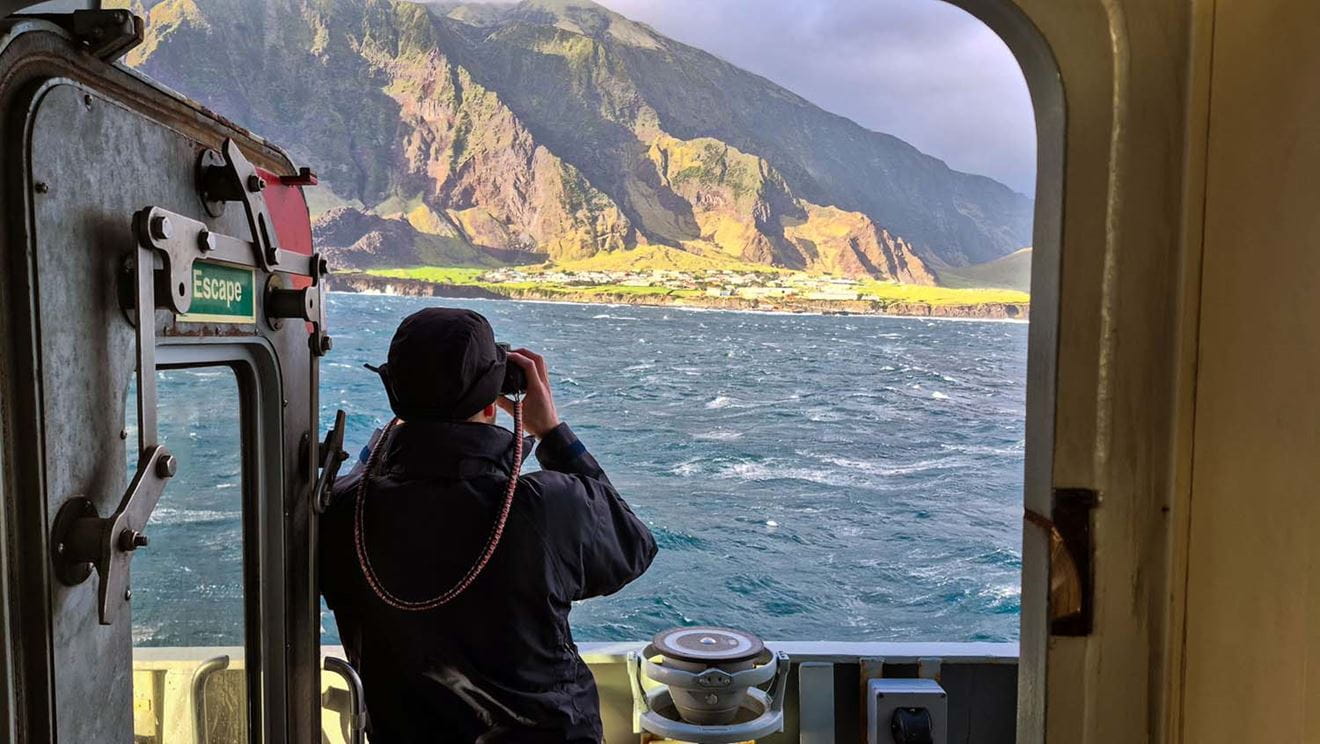
The vessel is back in the Falklands having battled her way through rough seas and past icebergs on a 5,000-plus-mile round trip to Tristan da Cunha, delivering aid and collecting medics who had to be parachuted on to the tiny island to treat a suspected case of hantavirus.
The disease was linked with a visit by the cruise ship Hondius, which spent three days in Tristan before an outbreak of hantavirus on board which led to the deaths of three passengers.
That prompted an international medical response and the ship and those remaining on board being quarantined to prevent the virus spreading..
And, with the case on Tristan, it led to one of the most unusual humanitarian missions the UK Armed Forces have been involved with – dictated by the UK Overseas’ Territory’s isolation.
With a population of 221, most of them clustered in the ‘capital’, Edinburgh of the Seven Seas, Tristan da Cunha is often labelled the most isolated inhabited islands.
The nearest airport is over 1,500 miles away on St Helena. Cape Town is 1,700 miles to the east, the Falklands 2,400 miles to the west.
Ships can only visit in relatively benign conditions (the harbour is tiny and mostly requires boat transfers). And there’s no airport.
That did not stop the RAF providing additional medical staff and supplies, conducting a long-range parachute drop from an A400M from Ascension Island (it needed to refuel to reach Tristan as it’s a 4,000-mile round-trip).
Six jumpers from the Army’s Pathfinder Platoon, 16 Air Assault Brigade, with passengers (one consultant doctor, one ICU military nurse) strapped to two of the parachutists for tandem leaps, stepped out of the transporter some 7,000ft above the Atlantic and used the wind to drift down safely on the island.
Three more drops followed: 3.3 tonnes of cargo on pallets with various supplies. With medical facilities on Tristan limited and oxygen in short supply, the air drop of personnel, kit and medicines was extremely timely.
That was one half of Operation Mossyback. The other was getting those medics back home, delivering more aid… and some replacement medical personnel, which only a ship could do.
Enter HMS Medway.
Battling unforgiving South Atlantic winter conditions, the ship completed the demanding eight-day journey through storms and six-metre swells.
Once she arrived off Edinburgh, Medway found the conditions too severe to conduct boat transfers and had to wait offshore for more than 24 for the weather to ease.
When it did, both the patrol ship’s sea boat and islander’s RIBs were launched to complete the transfer and a continuous flow of personnel (six clinicians were handed over to the island) and supplies moved between Medway and shore, concluding with the Pathfinder team and military medical personnel embarking.
Medway handed over various treats and home comforts – including sweets and yoghurts – and Tristan’s residents reciprocated with island delicacies and gifts.
“The conditions were not ideal, but both our teams rose to the challenge and achieved what we needed them to,” said Tristan’s administrator Philip Kendall.
"My admiration for everyone involved in this operation is hard to put into words. From the RAF who flew here two weeks ago, to the Army who jumped from the plane, and the Royal Navy who came to pick them up in challenging conditions.”
It’s the second time a Falklands guardship has been dispatched across the South Atlantic; Medway’s predecessor HMS Forth delivered Covid vaccines to the same island at the height of the pandemic.
HMS Medway’s Executive Officer Lieutenant Commander Chris Poulson praised the 60-plus souls aboard persevering in difficult conditions.
“The ship’s company battled through weeks of heavy seas and, on the day of the transfer, personnel from all departments worked together on deck to support the sea boat crews operating close to the limits of the ship’s endurance.
“A special mention must go to the crews of Medway’s and Tristan da Cunha’s seaboats who performed admirably in extremely tough conditions while fully exposed to the South Atlantic. The team has shown exceptional resilience and professionalism throughout and should be justly proud of their achievements.”
Direct from the front-line, the official newspaper of the Royal Navy, Navy News, brings you the latest news, features and award winning photos every month.