Navy News
Direct from the front-line, the official newspaper of the Royal Navy, Navy News, brings you the latest news, features and award winning photos every month.
Specialists from the Diving Threat and Exploitation Group have undergone rapid-fire training over the past few weeks mastering the small – and supremely effective – Video Ray Defender-Viper system: a portable submersible capable of finding, identifying and safely destroying underwater devices.
It’s part of a range of minehunting and disposal systems, plus other autonomous equipment, loaded aboard RFA Lyme Bay in Gibraltar so she can serve as a mine warfare mothership. The ship sailed this week for a potential multi-national mission to the Strait of Hormuz.
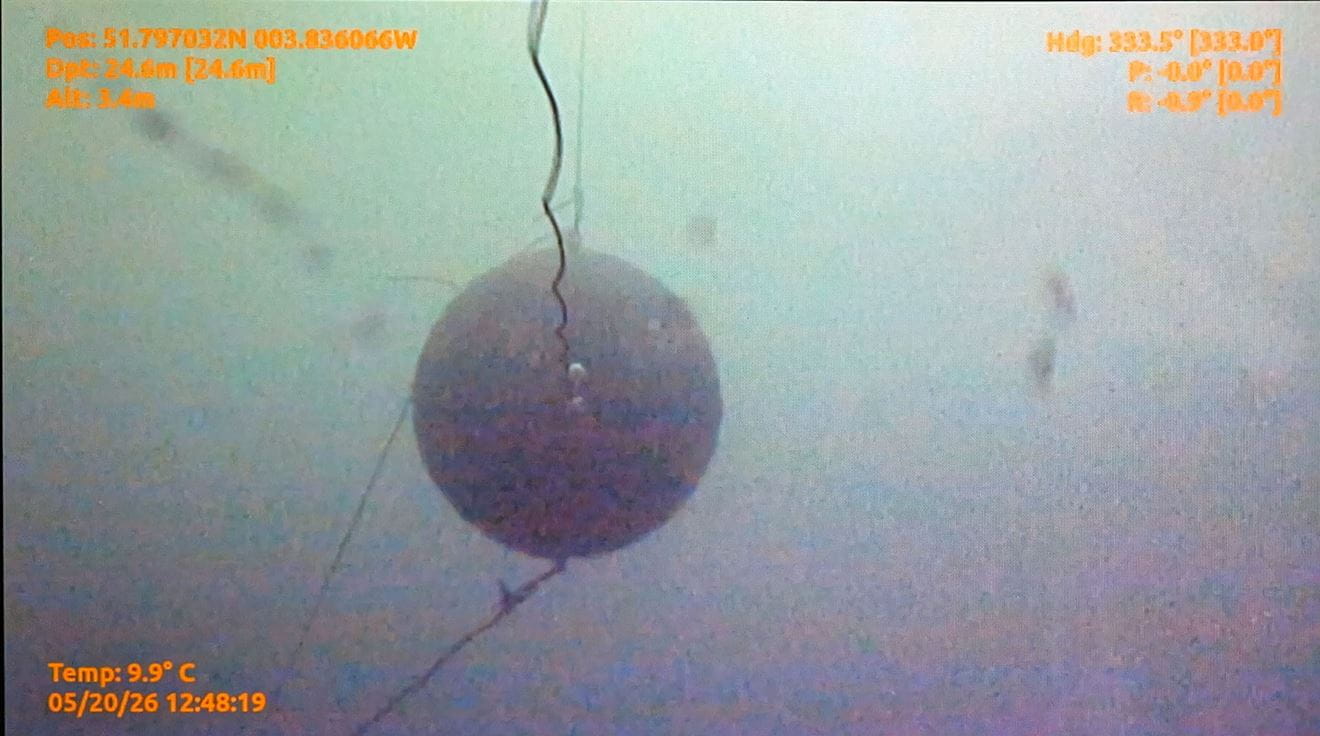
Tested extensively in European waters and already used by Ukrainian forces, it is particularly suited to dealing with buoyant mines which ‘sit’ just below the surface of the ocean, detonating when they are struck by passing shipping.
“A fundamental principle of Explosive Ordnance Disposal is to use remote means whenever possible, so if we have this tech, we need to use it,” explained Lieutenant Commander James Carpenter, Commanding Officer, Delta Squadron.
On front-line operations, the divers will work in tandem with the Royal Navy’s Mine Threat Exploitation Group who will use their leading-edge sonar systems to pinpoint the location of a suspected devices, leaving the divers to handle neutralising it.
Two of the systems – it comprises the distinctive yellow/black Defender remotely operated vehicle, Viper which literally nails a demolition charge to a mine, and Tornado, a firing system which ensures the detonation takes place at a safe distance – are aboard RFA Lyme Bay.
The system has the potential to be phenomenal – and we still possess our fundamental skills to fall back upon if it doesn’t work for some reason and get in the water
Controlled from a heavy-duty laptop either in a small Royal Navy boat, or from a small command centre set up in a shipping container or compartment on a ship, Defender-Viper can be steered manually or make its own way to its target following pre-set co-ordinates.
It provides a constant video and sonar feed back to the operator, while software onboard the Defender helps to maintain its position in the water.
Then it is carefully manoeuvred into position and Viper is fired with tremendous force into the mine, attaching the weapon to it while the Defender retreats back leaving Viper behind - rather like a barb from a bee.
Unravelling the firing cable as it goes, the submersible withdraws to a safe distance until the operator fires the weapon, shouting: “Standby to fire!... Firing now!” and the charge detonates.
It delivers a ‘shaped charge’ – directing the blast/energy in a specific direction, in this instance into the mine; it’s powerful enough to ‘eat’ through steel more than one metre thick. When it reaches the high explosive at the heart of the mine… Boom!
Meanwhile Defender is hauled back to its mother craft, hauled out of the water and prepared for its next mission.
Able Seaman (Diver) Charlie Rich, who has five and a half years under his belt as a clearance diver – including time in the Gulf – is among those trained to use the new kit.
He’s particularly impressed by its ability in low-visibility conditions.
“There are occasions when it is so dark, visibility is so bad that you’re literally hoping to bump into something. With this, the sonar is fantastic, so we can ‘see’ through the darkness and murkiness,” he said.
“The system has the potential to be phenomenal – and we still possess our fundamental skills to fall back upon if it doesn’t work for some reason and get in the water.”
Further training with Defender-Viper will be conducted before a dozen-strong ‘mission team’ joins RFA Lyme Bay.
Direct from the front-line, the official newspaper of the Royal Navy, Navy News, brings you the latest news, features and award winning photos every month.