Navy News
Direct from the front-line, the official newspaper of the Royal Navy, Navy News, brings you the latest news, features and award winning photos every month.
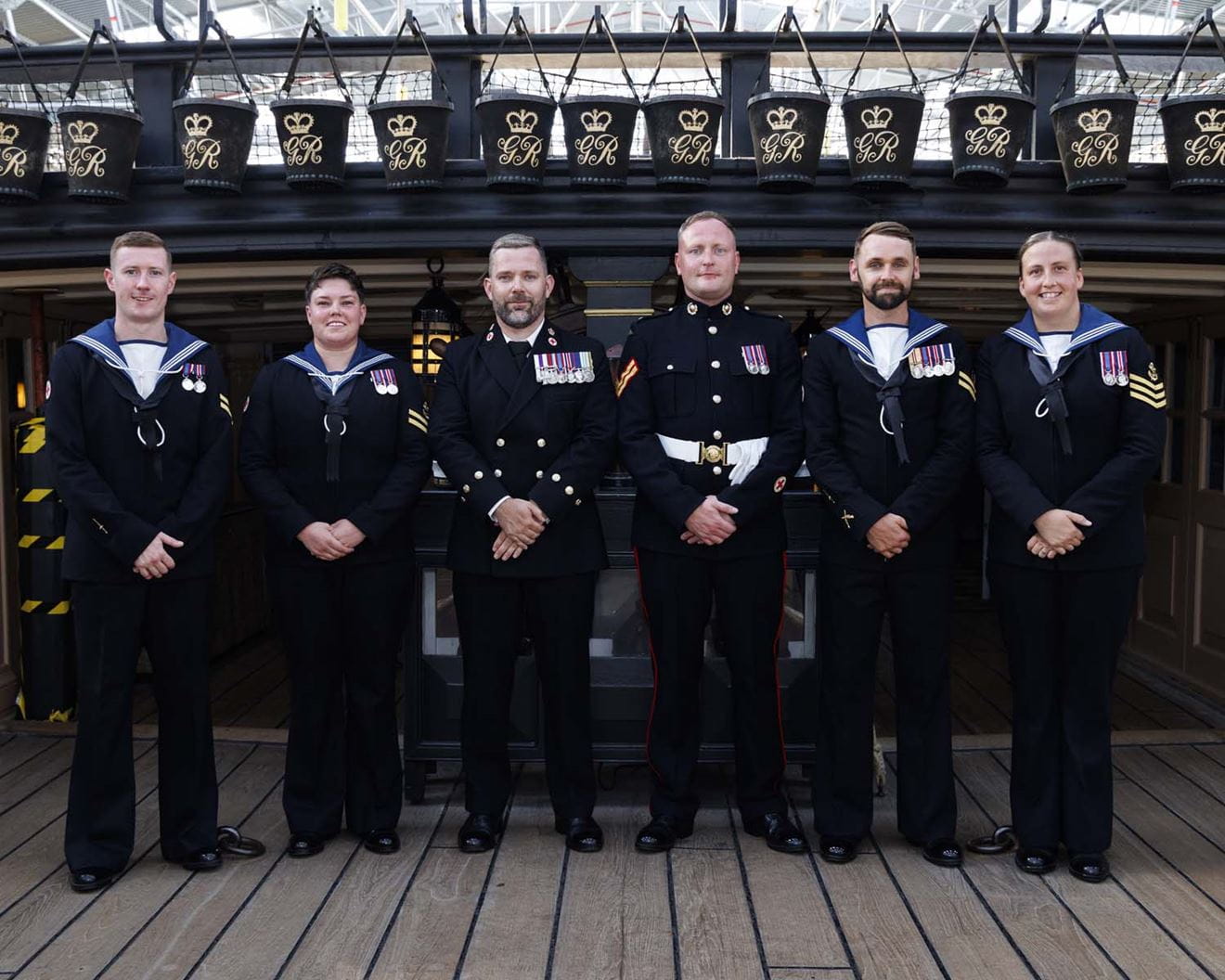
Until now, RN medical assistants have had to obtain paramedic qualifications externally.
But evolving operational requirements, particularly working with the UK Commando Force, has highlighted the need for additional highly-trained clinicians who can operate in remote, high-threat environments.
The three-year course, delivered in partnership with the NHS and the University of Lancashire, combines academic study with extensive clinical placements and exposes trainees to a wide range of real-world emergency scenarios… preparing them for the demands of modern maritime operations.
“Training paramedics internally allows the Royal Navy to develop clinicians who understand the unique demands of military medicine from the outset,” said Leading Medical Assistant Steven Babington, one of the first six sailors attending the graduation ceremony aboard HMS Victory in the presence of Second Sea Lord Vice Admiral Paul Beattie.
“It strengthens the medical services’ capability and ensures we can provide high-quality pre-hospital care tailored to the operational environment.”
He and five colleagues completed a Bachelor of Science (Honours) in Paramedic Science last year, before consolidating their clinical skills with NHS Ambulance Trusts across the UK.
This blend of academic education and front-line clinical experience equips the paramedics with the skills to deliver high-level care comparable to civilian paramedics, while also adapting those skills to the unique challenges of military operations at sea and on land such as:
• Austere and remote conditions
• Prolonged field care
• Operational adaptability
• Maritime and expeditionary medicine
• Independent decision making
Senior Lecturer Donna Ryan, programme lead for paramedic science at the University of Lancashire, said the six Royal Navy students had done “a fabulous job while studying for their paramedic science degrees.
“They came to us as combat medics, who have plenty of experience in treating service personnel but with little or no experience of civilian practice.
“Our degree programme has opened their eyes into the range of health and wellbeing needs of the general public. By dealing with patients who have issues that you typically wouldn’t see in the military, it means when they go back into the Navy they’ll be more of an all-rounded clinician.”
Unlike their civilian counterparts, who generally work within structured emergency response systems, Royal Navy paramedics must be prepared to stabilise, treat and sustain patients over longer durations while fully integrated into operational teams.
Their presence on the front line ensures enhanced survivability thanks to their ability to provide early advanced interventions such as controlling haemorrhaging, airway management and critical care stabilisations.
By ensuring patients are treated, held or evacuated appropriately, paramedics not only maximise the effectiveness of limited medical resources, they also reduce the burden on medical officers during operations and in the field.
Leading Medical Assistant Laura Hodgson described the training as a “challenging but highly rewarding journey”.
Her colleague Leading Medical Assistant Rhiann Dilmore said she was “incredibly proud” to be in the first cohort of RN paramedics.
She continued: “Not only have we completed a demanding programme, but we’ve also helped develop a new branch capability from the ground up.
“It’s rewarding to know that we’re setting the standard for those who come after us and helping create new opportunities for Royal Navy medics to develop as registered pre-hospital clinicians and stay clinically focused as they progress in their careers.”
The six trailblazers will spend two years ‘on loan’ to NHS Trusts working on the front line alongside civilian colleagues, before returning to the fold of the RN on completion.
Direct from the front-line, the official newspaper of the Royal Navy, Navy News, brings you the latest news, features and award winning photos every month.