Navy News
Direct from the front-line, the official newspaper of the Royal Navy, Navy News, brings you the latest news, features and award winning photos every month.
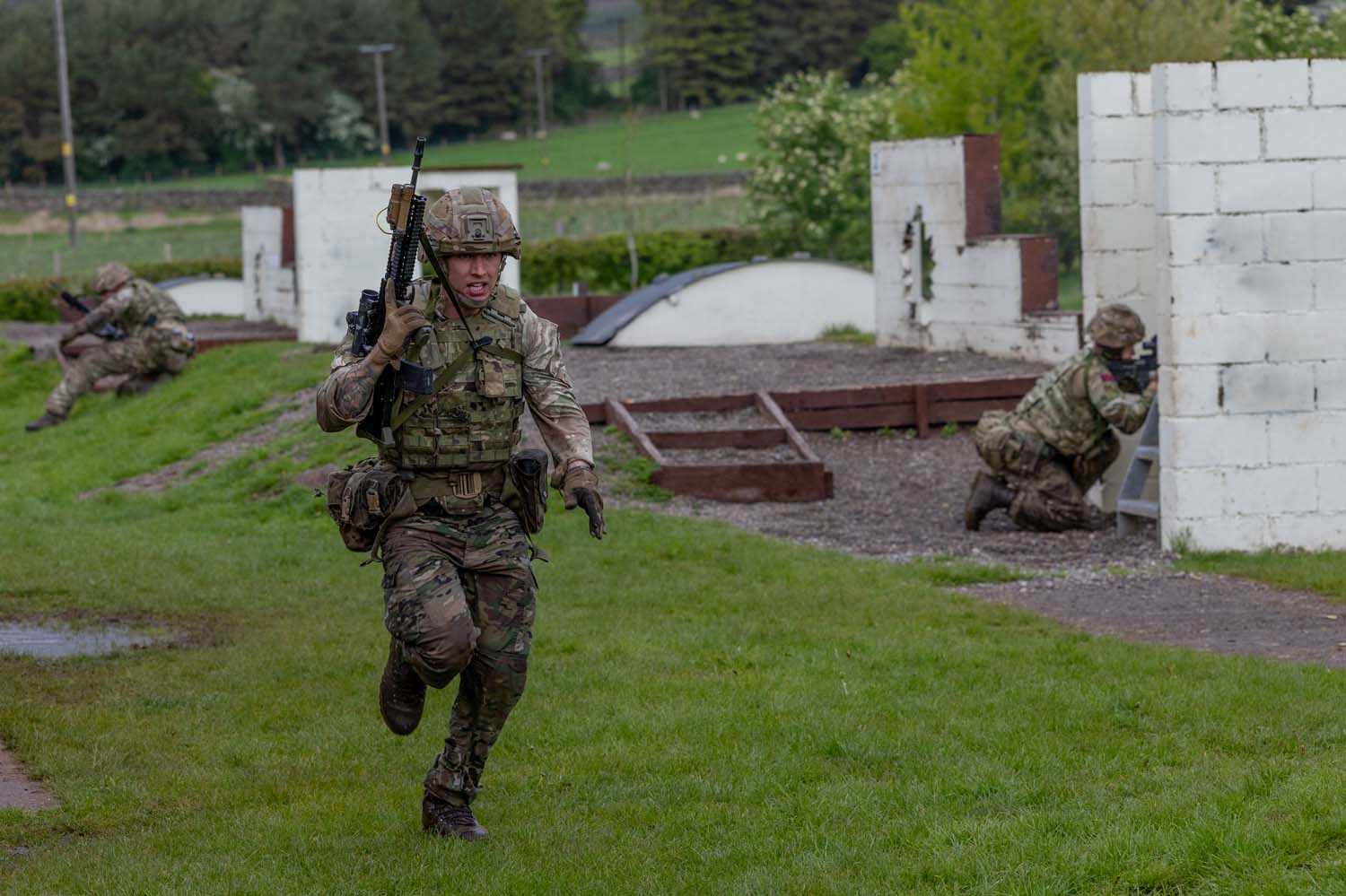
Reservists carried out live firing work in small arms tactics and support weapons – in the first week developing weapon handling and safety drills, before applying those skills in tactical missions.
Overall, Exercise Commando Phoenix 2026 at the Warcop Training Area in Cumbria, was aimed at bringing core skills up to the baseline standard require to operate with the UK Commando Force.
“Live-fire training is a critical part of preparing Royal Marine Reservists for operations,” said course instructor Sgt Matt Gough. “It develops confidence, sharpens decision-making and reinforces the discipline required to operate safely and effectively in demanding environments.”
Training serials covered the range of small arms and support weapons that Royal Marines may be required to employ on operations, including Glock pistol, SA-80 rifle, General Purpose Machine Gun and the L72A9 Light Anti-Structures Missile.
Royal Marines must be prepared to operate in all environments and under all conditions, and Royal Marine Reservists are held to the same high standards.
During the first week, personnel were tested through demanding live-fire scenarios including a night shoot, focused on sensory adaptation, the use of specialist equipment such as night-vision goggles, and close-quarters marksmanship drills requiring rapid transitions between primary and secondary weapons.
Battlefield casualty training was delivered during the first week by experienced paramedics. This highlighted one of the key strengths of the Reserve Force: the wide range of professional skills that its personnel bring to training and operations.
Further live-fire training with the L109 high-explosive grenade reinforced both operational effectiveness and strict safety discipline. Although the mechanics of throwing are straightforward, the training placed emphasis on immediate action drills, safe procedures and the ability to perform accurately under pressure in close-range live-fire conditions.
The first week concluded with a speed march in and around Warcop Camp in body armour, further reinforcing physical robustness, resilience and team cohesion.
During the second week, reservists conducted live-fire drills with the L72A9 Light Anti-Structures Missile. Designed to penetrate and destroy fortified positions and bunkers, the weapon system gave personnel valuable hands-on experience with a specialist live-fire serial that cannot be replicated in a classroom.
One of the standout events of the exercise was the ‘March and Shoot’ Competition. This demanding serial tested physical robustness, leadership, and marksmanship under pressure. Competitors completed a weighted run-in full fighting order across varied and challenging terrain before conducting a section-level shoot within a strict time limit.
Success required more than speed; teams were assessed on overall time, ammunition expenditure and target engagement. With targets appearing unexpectedly while competitors battled fatigue, the event demanded calm decision-making, effective leadership and the ability to perform under pressure.
Another highly valuable training serial was the Bullet Penetration Demonstration. This gave all personnel attending the exercise the opportunity to witness first-hand the effects of 5.56mm, 7.62mm and 9mm rounds against a variety of common structures and materials, including vehicle doors, walls, barrels and brickwork.
Fired at varying distances, the demonstration highlighted both the stopping power of each calibre and the way different materials can affect bullet performance. The serial proved particularly informative, enhancing understanding of ammunition capabilities and limitations in realistic operating environments.
The Section Attack served as the culminating event for all trained ranks and brought together everything that had been taught and learned throughout the previous week and a half.
Conducted in a dynamic and demanding tactical environment, the serial tested situational awareness, communication, ammunition management, decision-making and teamwork.
As the pressure increased and multiple factors competed for attention, participants were required to demonstrate the core qualities expected of Royal Marines, whether Regular or Reserve. The exercise concluded with several high-explosive grenade throws, providing a fitting end to an intense and rewarding training package.
Ranks also paused during the exercise to mark the promotion of Marine Harrington to Lance Corporal. Having previously served as a Regular Royal Marine, LCpl Harrington now continues his service in the Royal Marines Reserve, bringing experience, professionalism and commitment to his role. He joined the RMR through the Firefly scheme, which enables regulars to transition seamlessly into the reserve forces.
Exercise Commando Phoenix 26 forms part of the wider commitment to ensure Royal Marine Reservists remain ready to support operations alongside the wider Commando Force whenever required.
Direct from the front-line, the official newspaper of the Royal Navy, Navy News, brings you the latest news, features and award winning photos every month.