Navy News
Direct from the front-line, the official newspaper of the Royal Navy, Navy News, brings you the latest news, features and award winning photos every month.
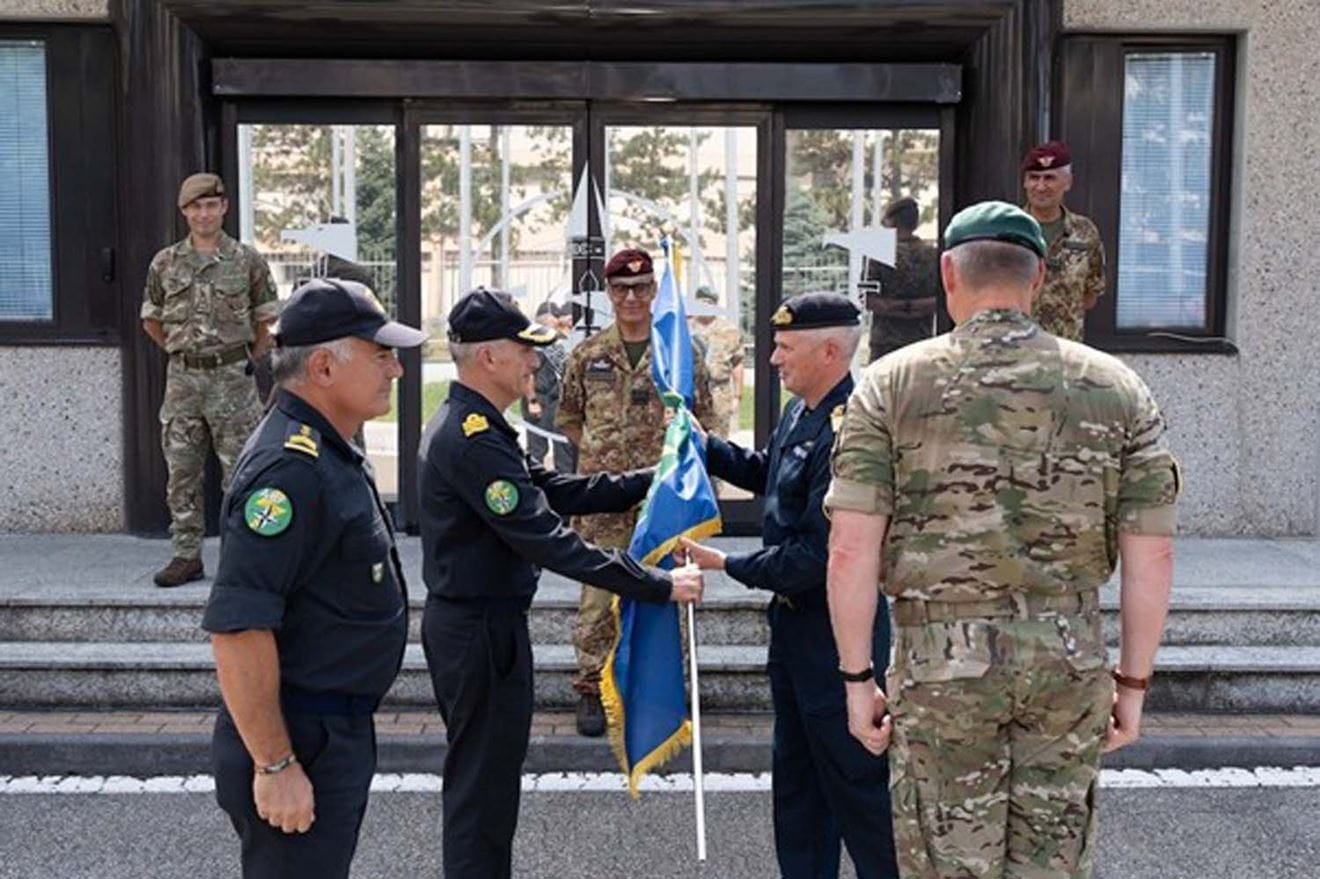
The NATO flag was raised on board aircraft carrier HMS Queen Elizabeth, which will serve as flagship of NATO’s leading high readiness naval force during a ceremony in Portsmouth Naval Base.
Rear Admiral Mark Anderson has assumed command of the Allied Reaction Force (Maritime) (ARF(M)) – the maritime component of NATO’s response to international crises; deploying land, sea and air forces to defend and deter anywhere in the Alliance’s area of responsibility.
HMS Queen Elizabeth will be the Afloat Command Platform, from which Rear Admiral Anderson and his battle staff will command and coordinate ARF maritime operations, if activated, during the UK’s 12-month duty.
“The UK remains committed to NATO and taking command of the maritime component of the ARF is a clear demonstration to partners and allies that the Royal Navy will play its part in responding swiftly and effectively to crisis,” said Rear Admiral Anderson.
Command of the ARF maritime force was transferred to Rear Admiral Anderson, Commander of the United Kingdom Strike Forces, and his staff, from the Spanish Navy during a ceremony at the NATO Rapid Deployable Corps Italy Headquarters near Milan last week.
UK Strike Forces is the Royal Navy’s most senior ‘fighting’ battle staff for planning, coordinating and executing operations, and designed to lead UK task forces as well as multinational missions, including with NATO and the Joint Expeditionary Force.
Rear Admiral Anderson and the Commanding Officer of Queen Elizabeth, Captain Claire Thompson, delivered speeches to mark the start of this endeavour to gathered sailors and Royal Marines during the ceremony on July 2.
The ARF(M) will now be primed to conduct operations at the direction of NATO’s Supreme Allied Commander Europe, who would deploy the relevant warships, naval air power and support vessels to react to a crisis.
The Allied Reaction Force as a whole is held at high-readiness and is designed to facedown many modern-day challenges that require a coordinated response, including hybrid warfare, terrorism and cyber-attacks.
The ARF includes land, maritime, air, special operations forces, cyber, space, logistics and strategic communications elements, provided by NATO member countries.
HMS Queen Elizabeth returned to the Royal Navy fleet in May 2026, after extensive engineering work in dry dock in Rosyth, Scotland, and has since completed a range of intensive training to be ready for operations with NATO.
At the same time the Royal Navy takes charge of the ARF(M)) the UK is taking command of the Alliance’s high readiness special operations force for the first time.
The UK’s Special Operations Forces assumed leadership of the Special Operations Component Command within the ARF.
Spearheading its maritime element are Royal Marines of 42 Commando, who form the Special Operations Maritime Task Group, which provides the Alliance with elite troops able to deploy at extremely short notice to carry out missions such as recapturing vessels and oil rigs, as well as covert coastal raids to pave the way for allied amphibious landings.
Within the task group are a range of specialist teams drawn from across the Royal Navy and UK Commando Force who each bring unique skills to the equation – pilots, boarding teams, engineers and boat operators to name but a few.
Direct from the front-line, the official newspaper of the Royal Navy, Navy News, brings you the latest news, features and award winning photos every month.