Navy News
Direct from the front-line, the official newspaper of the Royal Navy, Navy News, brings you the latest news, features and award winning photos every month.
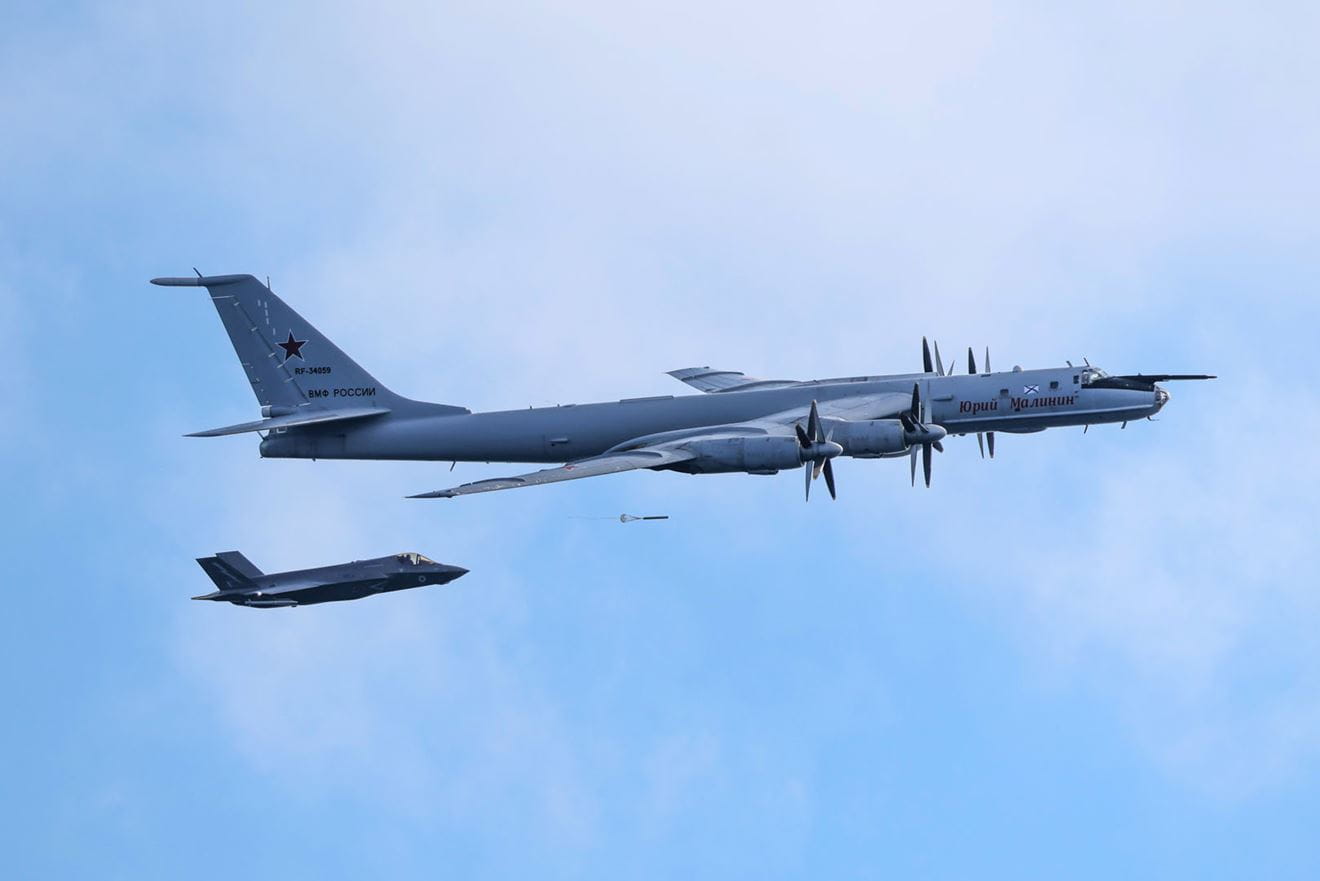
HMS Prince of Wales was buzzed by a large Tupolev Tu-142 ‘Bear’ maritime patrol aircraft, escorted all the time by two stealth fighters from 809 Naval Air Squadron, launched from the carrier’s flight deck minutes earlier.
The encounter – which saw the Russians drop sonobuoy listening devices and also pass destroyer HMS Duncan – took place in the Norwegian Sea on the latest phase of the UK Carrier Strike Group’s Firecrest deployment.
That phase built up to using a Queen Elizabeth-class carrier for NATO’s air policing mission, protecting Icelandic and Arctic skies against Russian incursions.
It’s the first time the mission has been conducted from a European aircraft carrier – with the Lightnings carrying out patrols or standing ready to scramble to defend the High North.
The jets – from 809 Naval Air Squadron, but flown and maintained 50/50 by RAF and Royal Navy personnel – have been safeguarding the airspace for the small Nordic nation.
To date the NATO air policing mission has been carried out solely by aircraft operating from traditional air bases on land.
“Air defence is a core role for the Lightning Force and having been accredited previously from land bases, it is great to see the capability expanded further to support our allies from an embarked environment,” said Commander Nick Smith, Commanding Officer of 809 Naval Air Squadron.
“I’m incredibly proud of 809 Naval Air Squadron and the wider Carrier Strike Group’s achievements this week in completing NATO Air Policing validation.
“The proving of communications links, command chains and standard tactics, techniques and procedures have all been demonstrated and we have once again proven interoperability with our NATO partners.”
Iceland sits at the heart of a critical corridor between Greenland and the United Kingdom, through which military and commercial traffic passes between the Arctic and the North Atlantic.
Keeping it secure protects the sea and air links that connect the UK and North America – and by extension the trade routes that underpin British jobs and living standards.
Portsmouth-based HMS Prince of Wales and her escorting destroyer HMS Duncan can both track incoming aircraft at ranges in excess of 200 miles, while the ships’ fighter controllers direct the F-35s on their missions.
Air defence is a core role for the Lightning Force and having been accredited previously from land bases, it is great to see the capability expanded further
Direct from the front-line, the official newspaper of the Royal Navy, Navy News, brings you the latest news, features and award winning photos every month.