Navy News
Direct from the front-line, the official newspaper of the Royal Navy, Navy News, brings you the latest news, features and award winning photos every month.
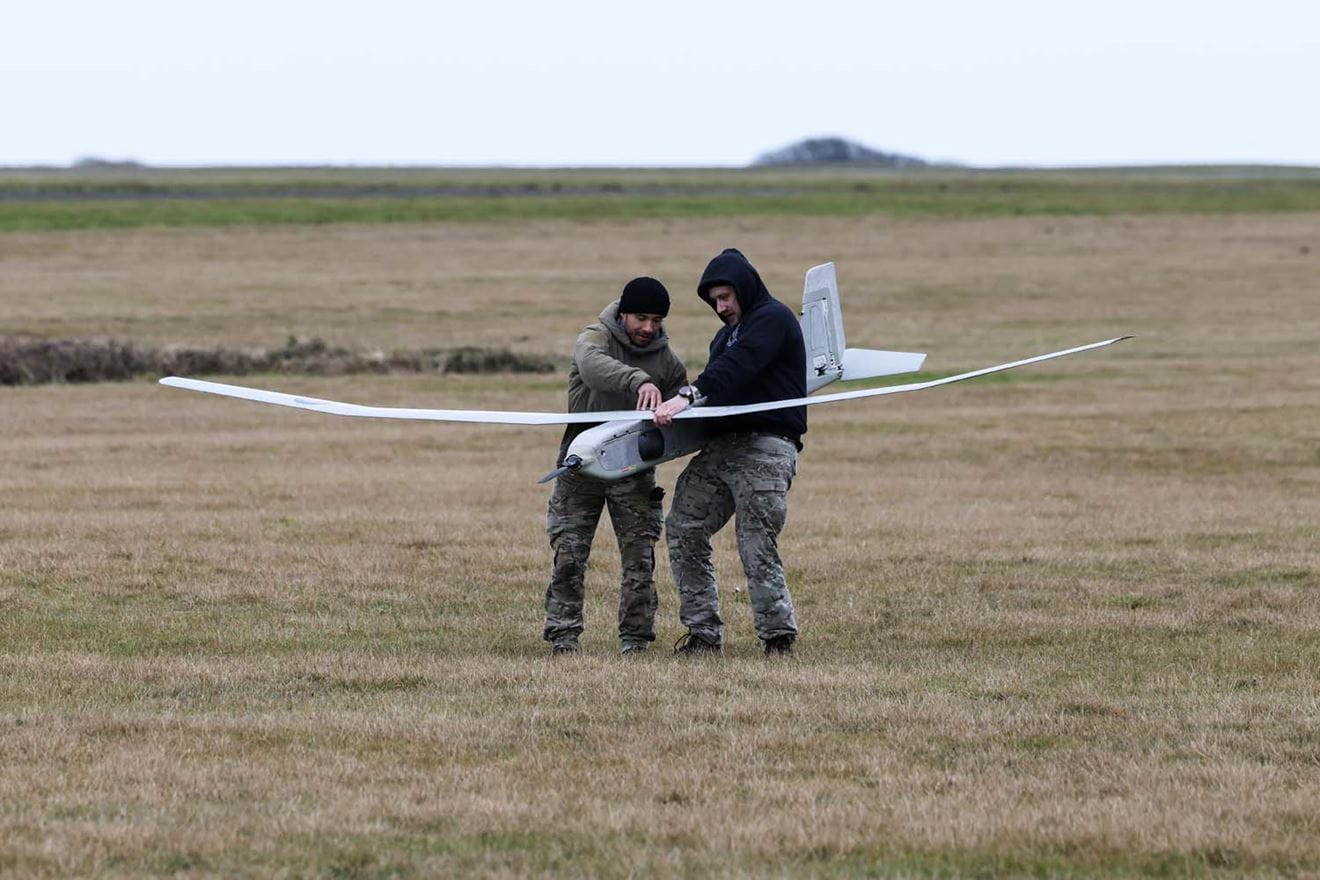
The crew of a Wildcat from 815 Naval Air Squadron received information almost instantaneously from two small surveillance drones (a Puma and a Providence), and data from other ground-based sensors to target a moving vehicle via a multi-node mesh network, at times over the horizon and beyond line of sight.
The trials, conducted out of Predannack airfield on Cornwall’s Lizard Peninsula, pave the way for far more complex operations involving crewed and crewless systems working together – a ‘hybrid air wing’ – not just involving Royal Navy assets, but also drones operated by the rest of the UK Armed Forces and our NATO allies.
It’s this aspect of the trials – dubbed Eagles Eye and involving experts from the Royal Navy’s specialist drone squadron, 700X, Wildcat personnel from 847 Naval Air Squadron and industry experts from MarWorks, TeleplanForsberg, General Dynamics, C3IA, UAV Aerosystems and Collins Aerospace – which has the team behind them truly excited, harnessing technology combat-proven in Ukraine.
It unlocks the potential for helicopters and aircraft to act as airborne command centres for flotillas of drones, connecting to any sensor across the communications network via a series of nodes.
“We turned a Wildcat helicopter into a flying command centre. For the first time, while flying a mission, a Royal Navy crew sent and received live data from multiple drones from within the aircraft across a node network,” explained Lieutenant Commander Rhydian Edwards, Officer in Command of the Wildcat Maritime Force Operational Advantage Group, based at RNAS Yeovilton in Somerset.
“The important thing here is that remote data nodes were used to send and receive information from any system on the MESH network, getting that into the aircraft instantly whilst also setting the foundations for taking control of those systems when tactically appropriate – the Puma, combined with the Providence, were just a means to an end to prove that the system will work and develop initial tactics.”
A MESH network is decentralised, provides widespread coverage and possesses the ability to ‘self-heal’ – finding alternative routes to securely transmit data between units and machines on the ground and in the air if parts of the network are knocked out or fail.
It’s proved to be crucial in Ukraine where it’s been successfully used by our allies – and it’s the reason why the 815 fliers are excited for the future, showing the way to a hybrid air wing featuring all manner of piloted and crewless aircraft operating together seamlessly.
“This is essentially a universal translator. In the past, every new drone and sensor came with its own unique interface. This breaks that cycle,” Lt Cdr Edwards added.
From the Wildcat’s cabin, the aviators operated the Navy’s Puma drone which has been in service for more than six years with 700X Naval Air Squadron, based at RNAS Culdrose, whilst also receiving a video feed from a smaller Providence system piloted by UAV Aerosystems, to locate and share a range of targets in the local area, allowing them to sneak up on threats undetected before engaging with their Martlet missiles.
“This shows exactly where the Wildcat Maritime Force is heading as we embrace the Hybrid Navy model,” said Commander Andrew Henderson, Commanding Officer of the Wildcat Maritime Force.
“It’s not just about the drone, it’s also about the network access. By learning lessons from the war in Ukraine we are securing these links into MESH networks, increasing interoperability and proving we can connect sensors and strike assets across the battlefield instantly.
“We are building a system that is modular and survivable – embracing the latest tech to make us deadlier and harder to defeat in a fight on the modern battlefield.”
The lessons learned during Eagles Eye will be incorporated in the next major workout for the Wildcats, when they head to Norway to exploit these new crewed and un-crewed teaming tactics for dealing with fast attack craft and similar ‘asymmetric’ threats side-by-side with the Royal Norwegian Navy in the fjords around Bergen.
Direct from the front-line, the official newspaper of the Royal Navy, Navy News, brings you the latest news, features and award winning photos every month.