Navy News
Direct from the front-line, the official newspaper of the Royal Navy, Navy News, brings you the latest news, features and award winning photos every month.
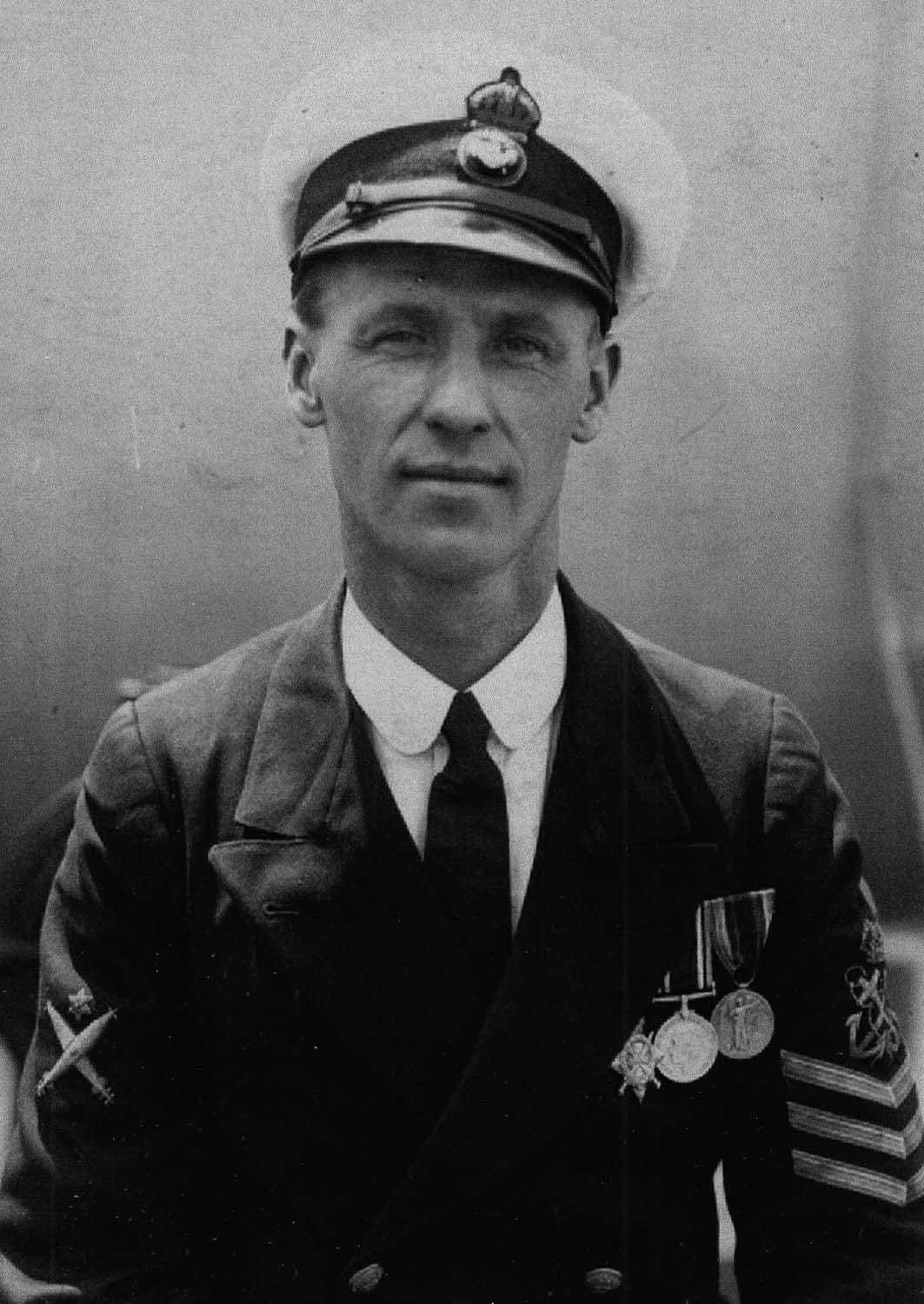
Chief Petty Officer Reginald Vincent Ellingworth was the first rating to be awarded the George Cross – one of eight decorations he earned for service spanning both world wars above and beneath the waves.
Sadly, the GC – which for bravery ranks alongside the Victoria Cross, the only difference is the absence of the enemy – was awarded posthumously, after five outstanding days of bomb disposal work at the very start of the Luftwaffe’s onslaught against Britain’s towns and cities.
Over five days in mid-September 1940 – the climax of the Battle of Britain and the opening nights of the Blitz – the senior rating worked tirelessly with Lieutenant Commander Richard Ryan to deal with the Germans’ latest aerial threat, the Type C magnetic mine.
Dropped at sea, it detonated when a warship passed over it. On land, it exploded after first smashing through a roof, setting off a 21-second fuse.
Frequently, the fuse failed to work – though the slightest movement could easily trigger it. The team of Lt Cdr Ryan and CPO Ellingworth earned a reputation as experts in rendering the mine safe since one had first been encountered in April 1940.
With German bombs dropping over England, I realised it was only a matter of time before his selfless courage would cost him his life. Seven weeks later he was killed
They had neutralised six Type Cs since September 16 – including one which landed in a canal and another which threatened the key RAF airfield at Hornchurch – when they were called to Dagenham on September 21.
Now they came across a mine hanging from a parachute on a warehouse. As the pair began extracting the fuse, the mechanism was triggered and the 700kg of explosives detonated, killing Ryan and Ellingworth instantly.
It was a fate the senior rate had predicted. Talking with his son Donald, a soldier recently evacuated at Dunkirk, while on home in Portsmouth on leave in July 1940, he told him: “One thing is certain, son. If anything does go wrong, I won’t know anything about it.”
Donald recalled: “With German bombs dropping over England, I realised it was only a matter of time before his selfless courage would cost him his life. Seven weeks later he was killed.”
Originally from Wolverhampton, ‘Reg’ Ellingworth joined the Royal Navy as a boy in July 1913. He served in battleship HMS Benbow at Jutland, then switched to the Silent Service and spent the rest of his regular career in boats and shore drafts until he retired in 1938.
With the outbreak of war, he was recalled and assigned to the fledgling ‘Rendering Mines Safe’ Party based at HMS Vernon in Portsmouth.
Described by his widow as ‘the best of dads’, the 42-year-old was buried at Milton Cemetery in Portsmouth where his Commonwealth War Graves Commission headstone bears the epitaph: In Everlasting Memory of our Beloved, Killed by Enemy Action. Duty Nobly Done.
More than eight decades later, his family is auctioning his collection of medals – including the 1914-15 Star, British War Medal 1914-20, Victory Medal 1914-19 and Atlantic Star – at Noonans Mayfair on February 11, 2026 where they are expected to fetch £60k-£80k: www.noonans.co.uk
Images courtesy of Noonans Mayfair
Direct from the front-line, the official newspaper of the Royal Navy, Navy News, brings you the latest news, features and award winning photos every month.