Navy News
Direct from the front-line, the official newspaper of the Royal Navy, Navy News, brings you the latest news, features and award winning photos every month.
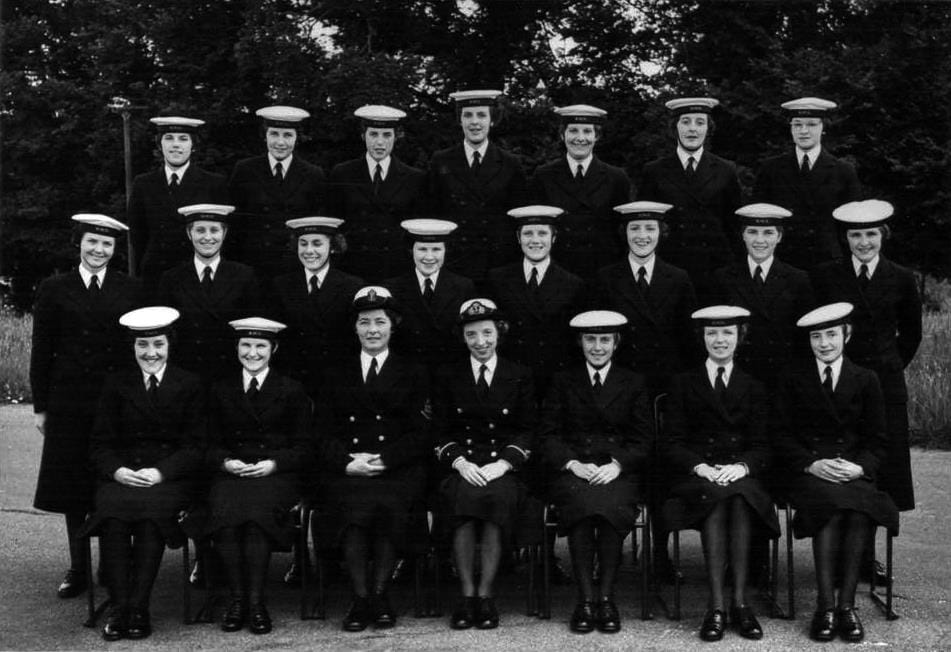
Or perhaps a descendant/relative of one such Wren?
If the answer is ‘yes’, then you could help with a 33,000-piece ‘jigsaw puzzle’ as a team of enthusiasts look to replace/recreate 35 years of missing records.
Between 1946 and 1981 when the site closed and training was moved to HMS Raleigh in Torpoint, HMS Dauntless took female civilians and turned them into members of the Women’s Royal Naval Service – more commonly known as Wrens.
The details of every single trainee were recorded in comprehensive ledgers – from the first day in February 1946 when the site was known as HMTE Burghfield (it was renamed HMS Dauntless in 1953) to July 1981 when the gates closed for the last time.
The ledgers were transferred to Raleigh and were last seen about 30 years being transferred between stores. Since then, nothing.
Probably no-one would have noticed until lockdown, when former Wren Mandy Powell (1976-87) began linking up with fellow Dauntless veterans, sharing photographs and stories of life undergoing basic training.
When they discovered the ledgers were missing, they decided to turn what was a fun pastime into an historical challenge, rebuilding the missing books to create a permanent record of the 33,000 young women who served Navy and Nation over that 35-year period.
The appeal to create a ‘digital/visual ledger’ – officially The WRNS Burghfield-Dauntless Project – is now into its sixth year and has seen calls put out by the Women’s Institute, Royal British Legion, newspapers, magazines, parish newsletters, radio stations (as far afield as Nova Scotia in Canada).
And it’s reaped an impressive harvest of images and information.
With a fresh class of Wrens joining roughly 42 weeks of the year, it’s thought as many as 1,400 Divisional photographs were taken.
So far Mandy and her colleagues have collected almost 1,000 of those images, impressively – with the help of fellow historians/enthusiasts – in putting names to 11,681 of the 22,822 faces on them.
Which leaves photos of 10,000 Wrens to find… and the faces of more than 19,000 women to identify.
It’s a race against time to find and id them, however. The youngest of the early classes from the post-war intake will be in their late 90s, those of 1981 vintage are over 60.
“The sad fact is that we are running out of time,” said Mandy. “We are losing ladies quicker than we are finding them and we need to be able to spread the search much wider.”
She says beyond historical value the work has been richly rewarding on a personal level.
“The thought of just gathering data is pretty dry, but actually we are doing so much more.
“We’ve helped people find old friends they thought they’d never be able to track down, helped families who’ve lost a relative they knew had been in the WRNS but nothing else – we’ve managed to give them background, occasionally share photographs and have found friends who were happy to talk to the family about that relative.
“We’ve also been able to help families who have a relative with dementia or similar. Sharing photos from a similar time frame they have visual memories that help with conversation and reminiscing.”
If you have any divisional photographs or feel you could assist the project, contact Mandy via [email protected]
We are losing ladies quicker than we are finding them and we need to be able to spread the search much wider
Former Wren Mandy Powell
Direct from the front-line, the official newspaper of the Royal Navy, Navy News, brings you the latest news, features and award winning photos every month.