Navy News
Direct from the front-line, the official newspaper of the Royal Navy, Navy News, brings you the latest news, features and award winning photos every month.
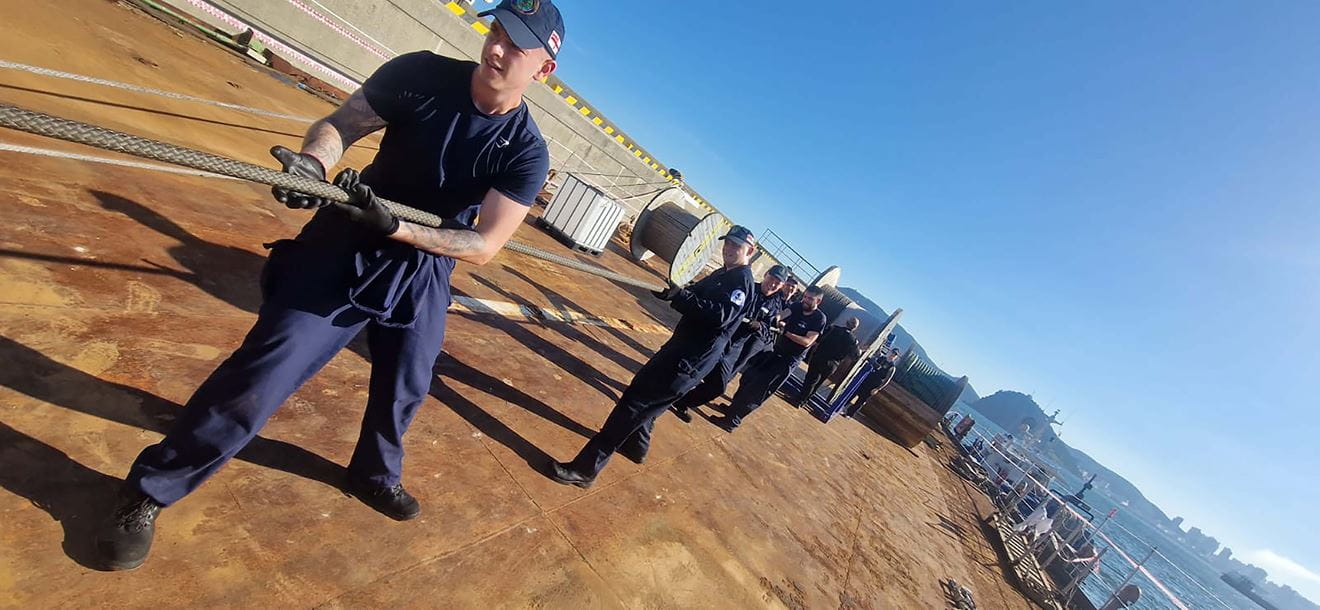
The Forward Support Units provided 88,300 hours of engineering support to the front-line Fleet in 2025 – collectively more than ten years’ work – at home and half way around the globe.
The units were established to provide additional help to ships’ engineering teams through maintenance periods or when operating from forward bases overseas.
More recently they’ve been rebadged – FSU Archimedes (Portsmouth based, but also embraces teams based overseas, such as Bahrain and the Falklands), Brunel (Portsmouth) and Campbell (Devonport) – and remodelled.
So as well as their long-standing duties, they’ve helped the wider Engineering Branch by allowing engineers returning from sea to focus exclusively on engineering roles to protect the work-life balance, ensuring they are refreshed ahead of their next sea assignment.
FSU Archimedes provided support to RN units deployed in the Gulf region and aside from assisting with day-to-day maintenance for ships on operations, the team has prepared Bahrain in particular for the growing transition to autonomous mine-hunting systems in place of traditional minehunters, which also demands hundreds of pieces of equipment no longer needed in theatre returning to the UK.
In the Falklands, HMS Forth received 1,600 hours of TLC courtesy of the Archimedes team, who succeeded in resolving a major electrical fault on a Pacific 24 Sea Boat with limited resources – ensuring the craft didn’t have to be flown back to the UK for repair.
Both Brunel and Campbell Units were mobilised to support the RN’s premier deployment of the year, Highmast, in Japan and South Korea, but personnel were also deployed to support HMS Spey’s major maintenance period in Singapore and, less exotic, to Birkenhead to help HMS Stirling Castle regenerate following her transfer from the RFA.
Through innovation and engineering delivery, the FSUs collectively achieved a superb milestone in 2025 by saving the Royal Navy an estimated £2 million.
At the HQ in Portsmouth, embracing Artificial Intelligence has helped to cut admin by around 500 hours – roughly three whole weeks of red tape, gone – while schemes encouraging engineers to learn about new technology and some of the new systems they will be working with such as the Type 26/31 frigates.
As for the impressive savings made in 2025:
• in-house thermographic surveys – to find potentially unknown defects, holes and generally assess the state of a vessel – were carried out on 30 craft, saving more than £250k;
• another £130k was saved bringing old/broken stores back into use;
• the biggest saving effected by the teams, however, came from maintenance work on the Navy’s two aircraft carriers which clawed back a cool £1.6m – rather than give the work to contractors.
Commander Will Jones said the collective effort of the FSUs last year had been both impressive and impactful, directly benefitting front-line operations.
“Through innovation and engineering delivery, the FSUs collectively achieved a superb milestone in 2025 by saving the Royal Navy an estimated £2 million.
“By prioritising continuous professional development and embracing new engineering technologies, the FSUs have empowered our engineers to deliver greater engineering support to the Fleet.”
Direct from the front-line, the official newspaper of the Royal Navy, Navy News, brings you the latest news, features and award winning photos every month.