Navy News
Direct from the front-line, the official newspaper of the Royal Navy, Navy News, brings you the latest news, features and award winning photos every month.
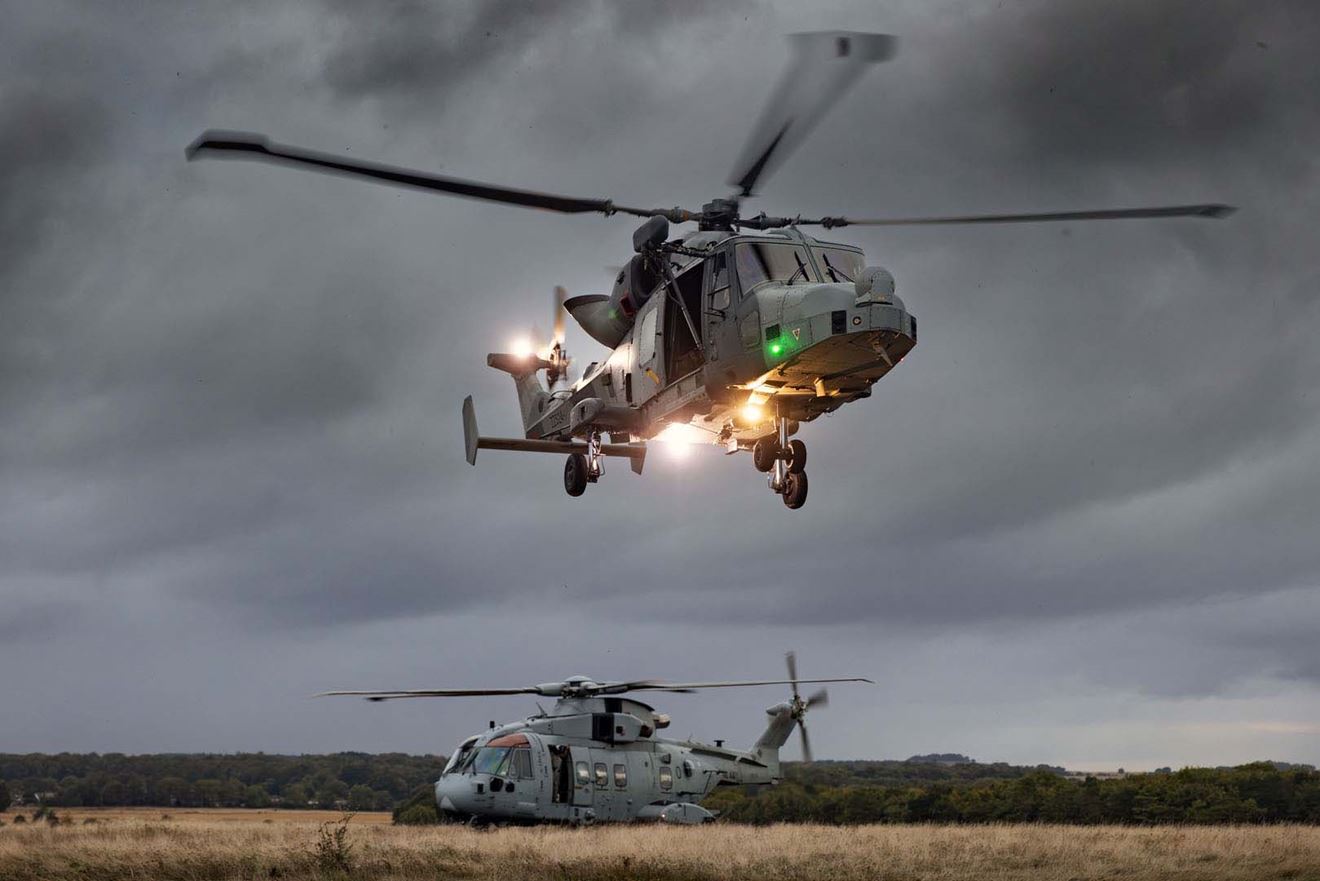
Wildcats and Merlins of the Commando Helicopter shared Wiltshire skies with intelligence-gathering drones while makeshift headquarters and support bases were set up on the ground.
The combined training was aimed at testing most aspects of the force, which is based at RNAS Yeovilton in Somerset and frequently deploys wherever the UK Commando Force is committed.
The three-squadron commando force is one element of Joint Aviation Command, which has four deployable Aviation Task Force headquarters. Task Force 2, provided by the Commando Helicopter Force, is the UK’s dedicated helicopter coordination headquarters for amphibious operations.
When deployed, it draws upon both the Commando Helicopter Force, the Army Air Corps (Apache and Wildcat) and Royal Air Force (Chinooks) to provide the aerial support – and firepower – required to help Royal Marines or the British Army to establish a beachhead/bridgehead and then push inland.
The combined force was last tested in Norway last year and with large-scale NATO exercises lined up for coming winter, the time had come to revisit the task force concept with a fairly gentle ‘warm-up’ building up to the main event in the High North next February-March.
The abandoned village of Imber – evacuated in 1943 to prepare troops for D-Day and Normandy and used ever since by the UK’s armed forces – served as the hub for the double-pronged training.
The first element was to set up headquarters in the field and choreograph aviation operations from them.
And the second was the military hardware itself to choreograph: enter Commando Wildcats from 847 Naval Air Squadron, which perform a myriad of combat missions from providing aerial firepower and calling in air and artillery strikes, through intelligence gathering, airborne command and control and moving troops around; and Commando Merlin which do the heavy lifting of Royal Marines (up to 24 at a time), their kit and supplies.
The helicopters are rendered useless if they don’t have ground support. Integral to the exercise were small teams moving around Salisbury Plain to establish makeshift ‘helibases’ – Forward Arming and Refuelling Points (FARPs) – in the field.
Small and often behind enemy lines or in exposed locations, the FARPs require force protection both for themselves and their supply line – the trucks and tankers delivering the munitions and fuel – courtesy of the Commando Helicopter Force’s own Royal Marines in heavily armed/armoured Jackals, all of which are part of the Force’s Aviation Combat Service Support Squadron.
To scout for the best sites to set up the forward bases, teams used small drones to 3D map the terrain – and once the ‘fighting’ phase of the exercise got under way, to look for targets.
The exercise – dubbed Orion Spear – tested teams in a series of sorties and raids, from taking out high-value targets to practising evacuating civilians from a war zone and providing aid in a crisis.
Direct from the front-line, the official newspaper of the Royal Navy, Navy News, brings you the latest news, features and award winning photos every month.