Navy News
Direct from the front-line, the official newspaper of the Royal Navy, Navy News, brings you the latest news, features and award winning photos every month.
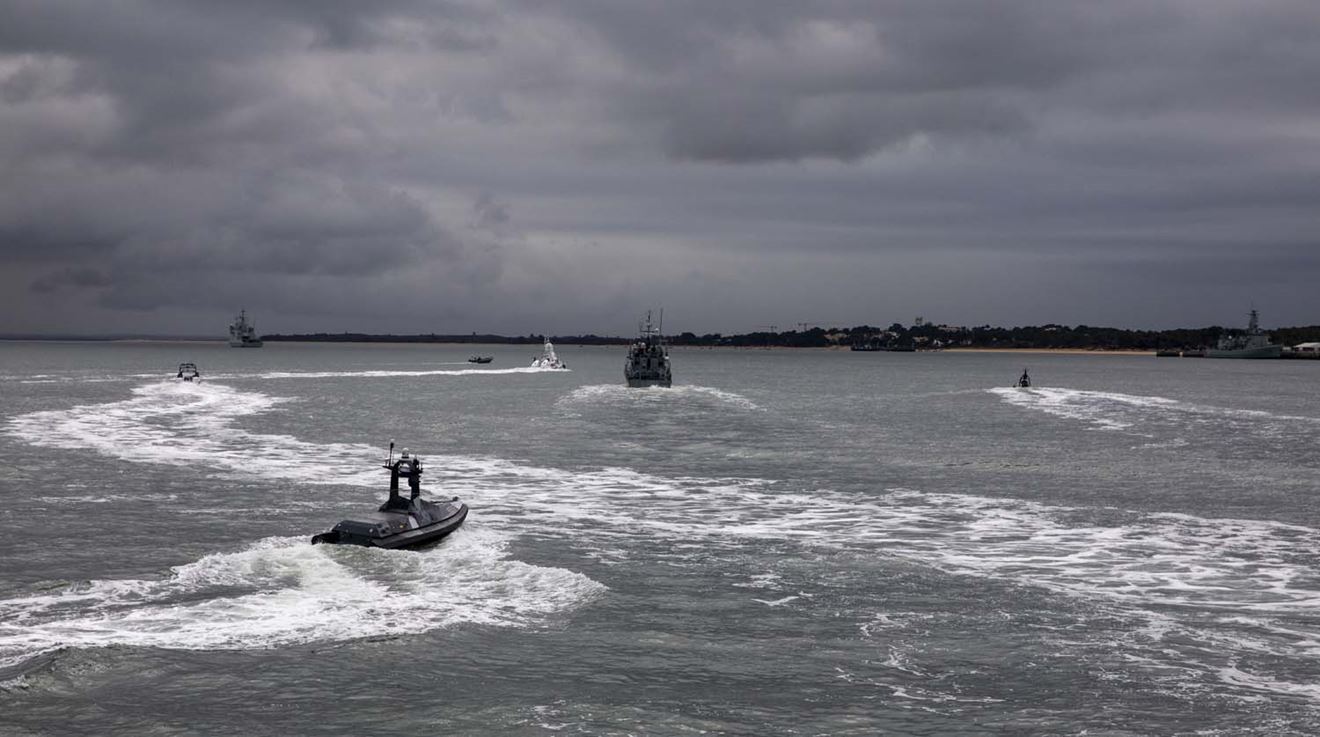
A team from the Disruptive Capabilities and Technologies Office, responsible for trialling the latest innovations and introducing them to front-line operations, will attend the three-week exercise this month alongside several Royal Navy teams, industry and defence experts.
The exercise, held in Tróia and Sesimbra and known as REPMUS, sees a range of technology deployed across all domains from below the waves to in the skies. It puts the latest autonomous and uncrewed equipment through their paces, trialling surveillance and reconnaissance sensors, dropping payloads and gathering data.
Charles Thomson, head of the project for the UK and part of DCTO, said: “In a time of rapid technological advancement and an increasingly complex security environment, REPMUS highlights the UK’s commitment to advancing defence technology within NATO.
“Royal Navy operators, supported by industry partners, will deploy uncrewed systems across surface, subsurface, air, and cyber domains. These systems will support missions such as protecting undersea infrastructure, tracking submarines, identifying vessels beyond line of sight, and enhancing mine warfare, all while operating with teams from NATO and other allied nations.
This multinational effort reflects years of innovation aimed at strengthening future warfighting capabilities
“This multinational effort reflects years of innovation aimed at strengthening future warfighting capabilities.”
Working closely with industry partners and experts, the Royal Navy will test uncrewed surface vessels (USV) for anti-submarine warfare and acoustic monitoring, larger USVs for surface operations, ocean gliders, camcopters to support aerial operations, interface systems to improve how various autonomous systems and commanded and controlled while deployed as well as other sensors and hydrophones.
The trials will further improve the Royal Navy’s ability to deploy uncrewed and autonomous technology on various operations such anti-submarine warfare and will also ensure it can work seamlessly with NATO allies and partners when deploying technology together.
It will also help with mine countermeasures by using technology to detect mines and seabed mapping.
Direct from the front-line, the official newspaper of the Royal Navy, Navy News, brings you the latest news, features and award winning photos every month.