Navy News
Direct from the front-line, the official newspaper of the Royal Navy, Navy News, brings you the latest news, features and award winning photos every month.
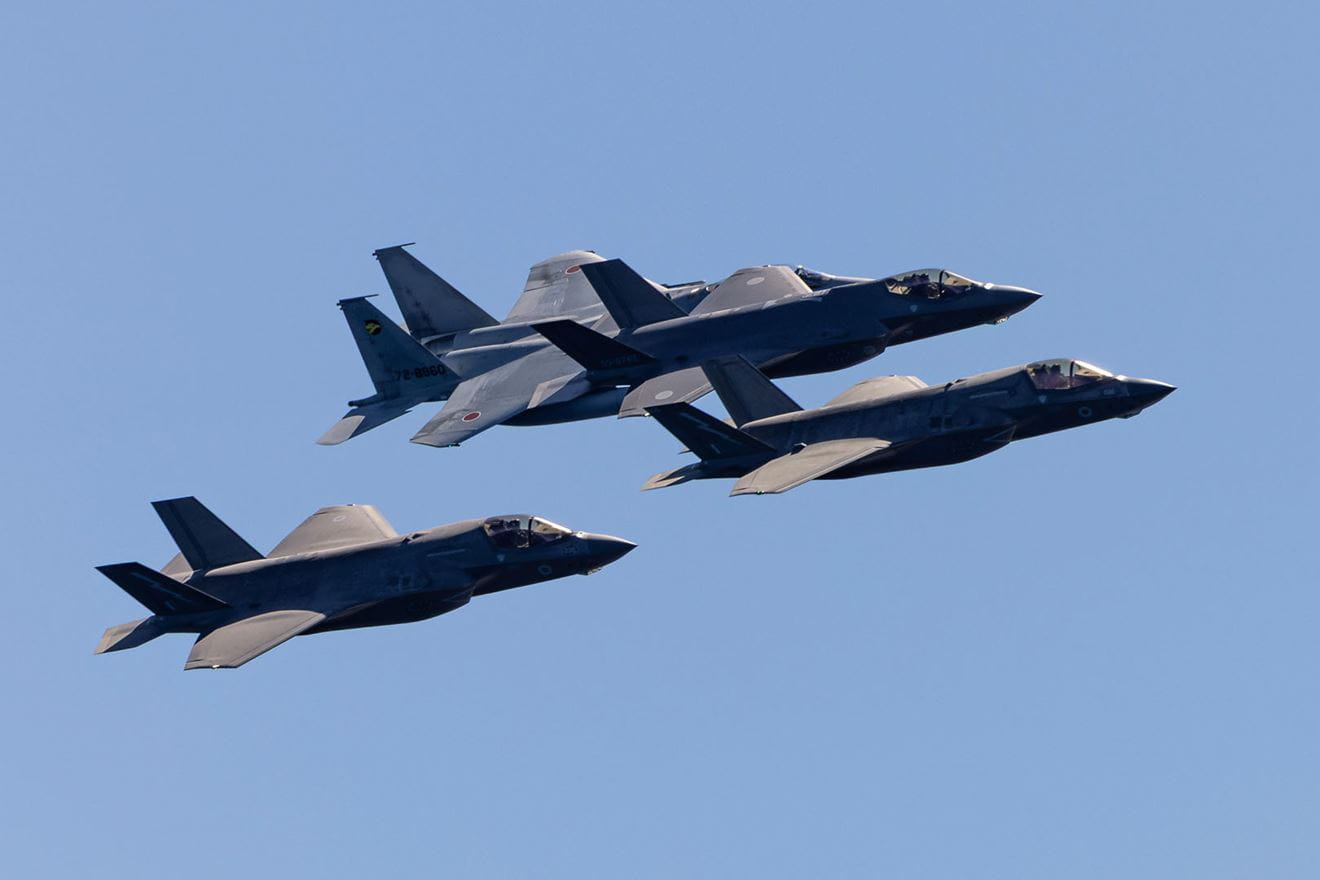
The multinational task force is currently operating in the Sea of Japan with our allies from the Land of the Rising Sun, following a three-week break as Operation Highmast deployment passes the halfway point.
Split between South Korea (HMS Richmond and RFA Tidespring) and Japan (HMS Prince of Wales, HMS Dauntless and the Norwegian frigate HNoMS Roald Amundsen), the force conducted much-needed maintenance after sailing halfway around the world, interspersed with various defense engagement activities.
The focus now is on Stage 5 of the Highmast mission – from Japan/Republic of Korea to Southeast Asia – ramping up operations from early August.
The carrier's F-35B Lightning IIs have been working with the Japanese Air Self-Defense Force – its powerful fourth-generation F-15 Strike Eagles and their fifth-generation successors, the F-35A (conventional land-based stealth fighters without the Lightning's short takeoff/vertical landing capability).
The aircraft staged a (very loud) flypast of the UK flagship in close formation to conclude a combined air exercise.
This is just one aspect of the activity involving the group since sailing last week, ranging from routine training such as firefighting on deck to handling a complex casualty evacuation.
The carrier is equipped with a comprehensive hospital facility, with personnel capable of performing life-saving operations before casualties/injured sailors are transferred ashore for further treatment.
A hospital is of little use if you can't get the patient to it – the 'golden hour' is just as important at sea as it is for emergency services on land.
To that end, the strike group is supported by the Maritime Medical Emergency Response Team (MMERT) – a team of casualty experts – who are on standby to deploy rapidly with a Merlin Mk4 helicopter acting as a flying ambulance.
Their task is to provide immediate, life-saving care – beyond that which can be offered by a ship's standard medical team – and then transport the casualty to a hospital for further treatment: that could be HMS Prince of Wales, or a hospital ashore.
The concept was trialed aboard HMS Queen Elizabeth and has now been implemented aboard her sister ship on this year's carrier strike group deployment. It was put to the test with a high-intensity exercise—adding the extra complexity of language to the mix—involving the treatment of a "casualty" on board the Roald Amundsen. The casualty received initial trauma care on the Norwegian frigate and throughout the short flight back to HMS Prince of Wales in a Merlin helicopter, before being handed over to the carrier's medical team.
Direct from the front-line, the official newspaper of the Royal Navy, Navy News, brings you the latest news, features and award winning photos every month.