Navy News
Direct from the front-line, the official newspaper of the Royal Navy, Navy News, brings you the latest news, features and award winning photos every month.
The commandos headed to Bovington in Dorset and the Sennybridge Training Area in Wales to bring their skills set closer to their regular comrades and to use first-hand the modernised kit and weaponry being rolled out across the Corps.
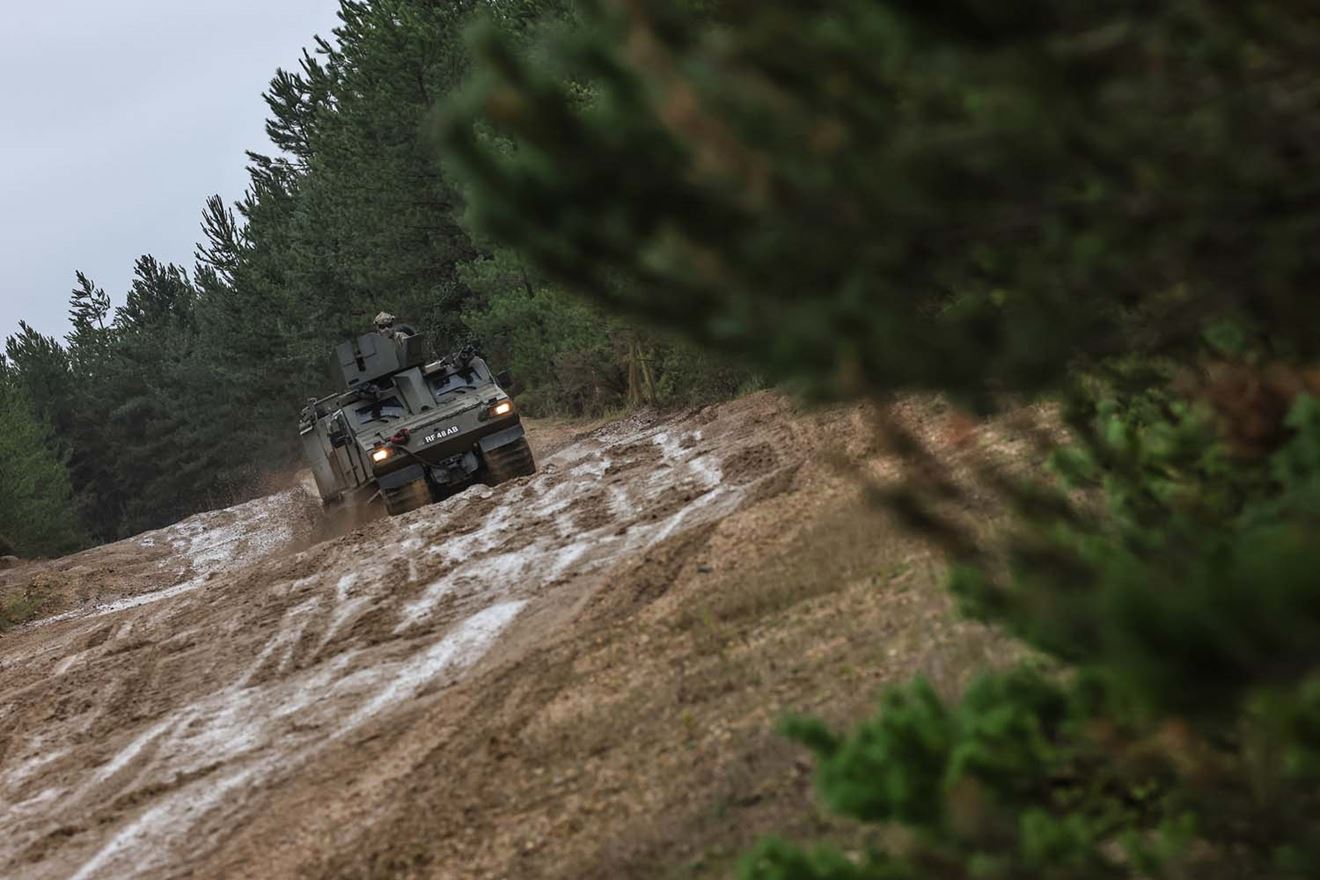
Exercise Campbell Hardy – organised by Royal Marines Reserve Merseyside – tested the Green Berets in a range of environments and scenarios, including operating with Viking armoured vehicles and testing combat skills in rural and urban areas.
Part of the training saw the reservists equipped the Tactical Engagement Simulation system (TES) –basically a laser tag which provides feedback on whether they’ve taken a hit and if it’s critical.
“The exercise gave Royal Marine Reservists a great experience in using protected mobility and practicing commando force tactics with the added realism of TES,” said Warrant Officer 2 James Lynskey, RMR Merseyside chief training instructor.
“This helped close a residual gap that exists between regulars and reservists after they have completed commando training.
“The exercise pushed them to their limits in a challenging yet operationally realistic environment.
“Exercises like this are key to making sure the Royal Marines Reserve is always operationally ready.”
The purpose of the exercise was to close the training gap between a regular and a reservist rank, develop command and leadership skills in a mentally and physically tough environment and to introduce developing tactics and equipment.
In its fifth iteration, Exercise Campbell Hardy – named after a WW2 commando leader and later Commandant General Royal Marines – tested reservists in a wide range of environments and scenarios designed to push their limits and build on the commando mindset they developed while earning their green berets at the Commando Training Centre in Devon.
“This mindset gives the Royal Marine Reservists the self-belief to undertake physically and mentally demanding training and operations in the future,” added WO2 Lynskey.
The first week took place in Bovington and was based around using protected mobility supplied by the Royal Marines Armoured Support Group squadron of Viking vehicles.
The second week of the exercise was held at Sennybridge in the Brecon Beacons and reservists were equipped with TES, adding a sense of realism to the exercise.
It also provided detailed information for feedback as part of the after-action reviews, allowing the reservists to reflect and learn at the end of each day.
While equipped with TES, reservists practised operating in rural and urban area, using section and team level tactics which provided opportunities for junior marines to develop their command and leadership skills.
They also trained battlefield skills such as battlefield casualty drills, close target recesses and operating observation posts.
The exercise finished with a final test which put all the skills the reservists had developed over the exercise into practice.
They conducted recce patrols and setup observation posts before finally conducting a multi-team sweep to clear on a village.
The switch from the open rural environment to close-quarter battle of an urban environment challenged the marine reservists in an operationally-realistic manner.
Direct from the front-line, the official newspaper of the Royal Navy, Navy News, brings you the latest news, features and award winning photos every month.