Navy News
Direct from the front-line, the official newspaper of the Royal Navy, Navy News, brings you the latest news, features and award winning photos every month.
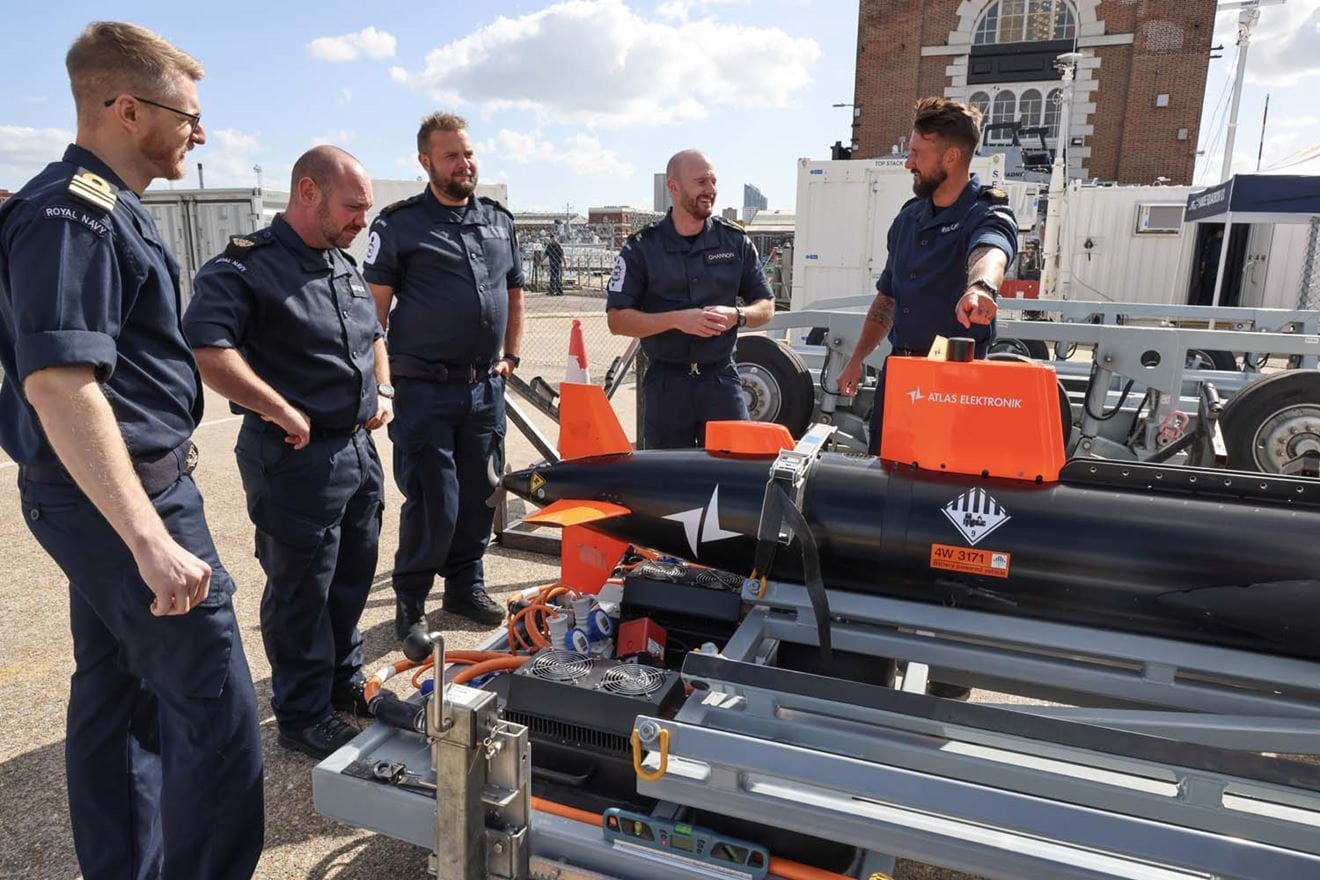
Last November, the Mine and Threat Exploitation Group set up its Operational Conversion Unit – a team of seven to deliver training on the specialist equipment used in minehunting operations.
The team have had a successful first year, having delivered 12 courses and generating savings of around £280,000. Previously, the unit would have relied on external contractors, manufacturer training or commercial training providers to learn how to use the cutting-edge kit.
But they can now deliver the training courses in-house for nine autonomous or crewless systems as MTXG transitions away from traditional mine hunting methods and embraces autonomy as the future of mine warfare.
Officer-in-Charge (OiC) of the OCU, Lieutenant Commander Dan Chandos-Hall, said: “We are a small team with a big task and the guys have worked incredibly hard to bring a training solution to fruition without reliance on contractor support in a really short space of time.”
The MTXG OCU was formally stood up in November last year, operating with just seven personnel. The unit is based in the Sail Loft at HMNB Portsmouth, a location previously occupied by the Maritime Autonomous Systems Trials Team (MASTT).
Despite its modest size, the OCU has quickly become a vital component in the Navy’s transition to autonomous mine warfare.
They offer a broadly cost-neutral solution in delivering the training which supports the wider Mine Hunting Capability programme and the future of mine hunting operations.
We are a small team with a big task and the guys have worked incredibly hard to bring a training solution to fruition
From 2028, career training for the Mine Warfare Cadre will undergo a major transformation but the pace of system procurement meant an interim training solution was needed and so the OCU was developed and implemented swiftly to meet operational demands.
Lt Cdr Chandos-Hall added: “There are only seven of us to design and deliver upwards of nine different courses as quickly as possible, so we’ve had to identify agile ways of bringing compliant training to life.
“It’s a testament to the experience and relentless work ethic of the team that we’ve made the progress we have, especially when they’re still being trained in the systems themselves; we should be delivering training in five of those systems by the end of next year.”
The OCU has successfully delivered 12 iterations of training, covering the Remotely Operated Vehicle (ROV) Video Ray Defender and the command system software Seetrack.
Looking ahead, the team will receive training on the Seacat Medium Uncrewed Underwater Vehicle (MUUV) this month, followed by the ARCIMS Uncrewed Surface Vessel (USV) in February 2026, with internal delivery of these systems scheduled to begin next year.
The MTXG OCU’s work not only supports the immediate operational needs of the Royal Navy but also lays the groundwork for a sustainable, scalable training model that will underpin the future of autonomous mine warfare.
Their efforts exemplify innovation, agility, and dedication in the face of evolving maritime threats.
Direct from the front-line, the official newspaper of the Royal Navy, Navy News, brings you the latest news, features and award winning photos every month.