Navy News
Direct from the front-line, the official newspaper of the Royal Navy, Navy News, brings you the latest news, features and award winning photos every month.
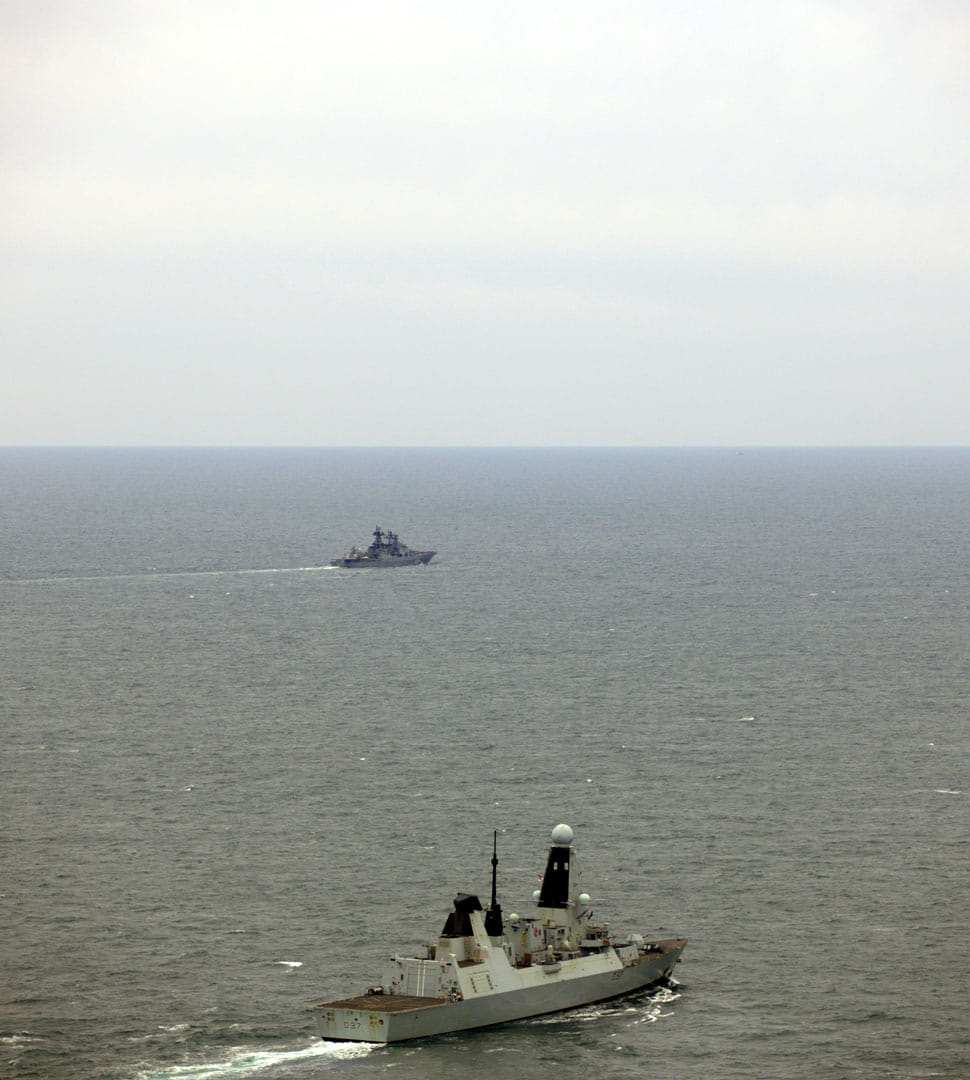
Portsmouth-based HMS Duncan was activated by NATO Allied Maritime Command, headquartered at Northwood in London, to shadow Russian destroyer Vice Admiral Kulakov through the English Channel during the operation.
This represents the first time a Royal Navy warship has been tasked under the alliance’s direct command for such an operation, forming part of wider security efforts across northern Europe. The mission complements ongoing work by Plymouth-based HMS Somerset with NATO in the North Atlantic.
The Type 45 destroyer utilised her advanced sensors and systems to intercept the Kulakov in the North Sea, monitoring her passage westward through the Channel towards the island of Ushant off the French coast.
A Wildcat helicopter from 815 Naval Air Squadron, based at Royal Naval Air Station Yeovilton, joined the operation to provide air support and maintain surveillance of the Russian vessel. The coordinated effort involved three nations, including a Dutch Air Force NH90 and the French Navy.
The operation underscores the government’s ongoing commitment to safeguarding UK waters and protecting national security through the Plan for Change.
Al Carns, Minister for the Armed Forces, said: “The Royal Navy stands ready to respond to any Russian Naval activity. They conduct constant monitoring operations to safeguard Britain and our territorial waters.
“Once again the Royal Navy has deployed under Allied Maritime Command underpinning our unwavering solidarity with NATO to counter Russian activity.”
This operation highlights the Royal Navy’s commitment to safeguarding UK waters and working seamlessly with our NATO allies to ensure the security of our shared maritime spaces.
HMS Duncan’s Commanding Officer, Commander Dan Lee, added: “This operation highlights the Royal Navy’s commitment to safeguarding UK waters and working seamlessly with our NATO allies to ensure the security of our shared maritime spaces.
“The close coordination between UK, French and Dutch forces demonstrates the strength of our alliance and our ability to respond collectively to any activity in our region.
“Tracking and escorting the Vice Admiral Kulakov through UK waters was a clear example of NATO’s interoperability in action. The professionalism and teamwork displayed by all involved ensured the operation was conducted safely and effectively, showcasing our shared resolve to uphold international maritime norms.”
HMS Duncan is one of two Royal Navy warships attached to the alliance’s premier task force patrolling northern European waters, Standing Maritime Group 1 (SNMG1). The group also conducts an intensive programme of scheduled exercises, manoeuvres and port visits to strengthen bonds between NATO navies.
Whilst Duncan patrolled waters closer to home, Type 23 frigate HMS Somerset conducted Maritime Security Patrols in the sea lanes between Iceland, the Faroe Islands and Scotland – the critical passage between the North Atlantic and Arctic waters. The deployment has also enabled the 200-strong crew to visit Torshavn in the Faroe Islands and Reykjavik in Iceland.
Operating as part of SNMG1 allows the Royal Navy’s high readiness units to work within a coordinated effort to establish Alliance presence and demonstrate solidarity with partner nations.
HMS Somerset’s Commanding Officer, Commander Matt Millyard, said: “The ship has been deployed since August in support of Operation Relentless, protecting the UK’s nuclear deterrent which is assigned to the defence of NATO.
“Working as part of SNMG1 over the last few weeks has allowed us to further contribute to NATO’s presence in the region. The port visits have been a great opportunity for the crew to relax after a busy operational period and prepare for an even busier period over the next few months.”
Direct from the front-line, the official newspaper of the Royal Navy, Navy News, brings you the latest news, features and award winning photos every month.