Navy News
Direct from the front-line, the official newspaper of the Royal Navy, Navy News, brings you the latest news, features and award winning photos every month.
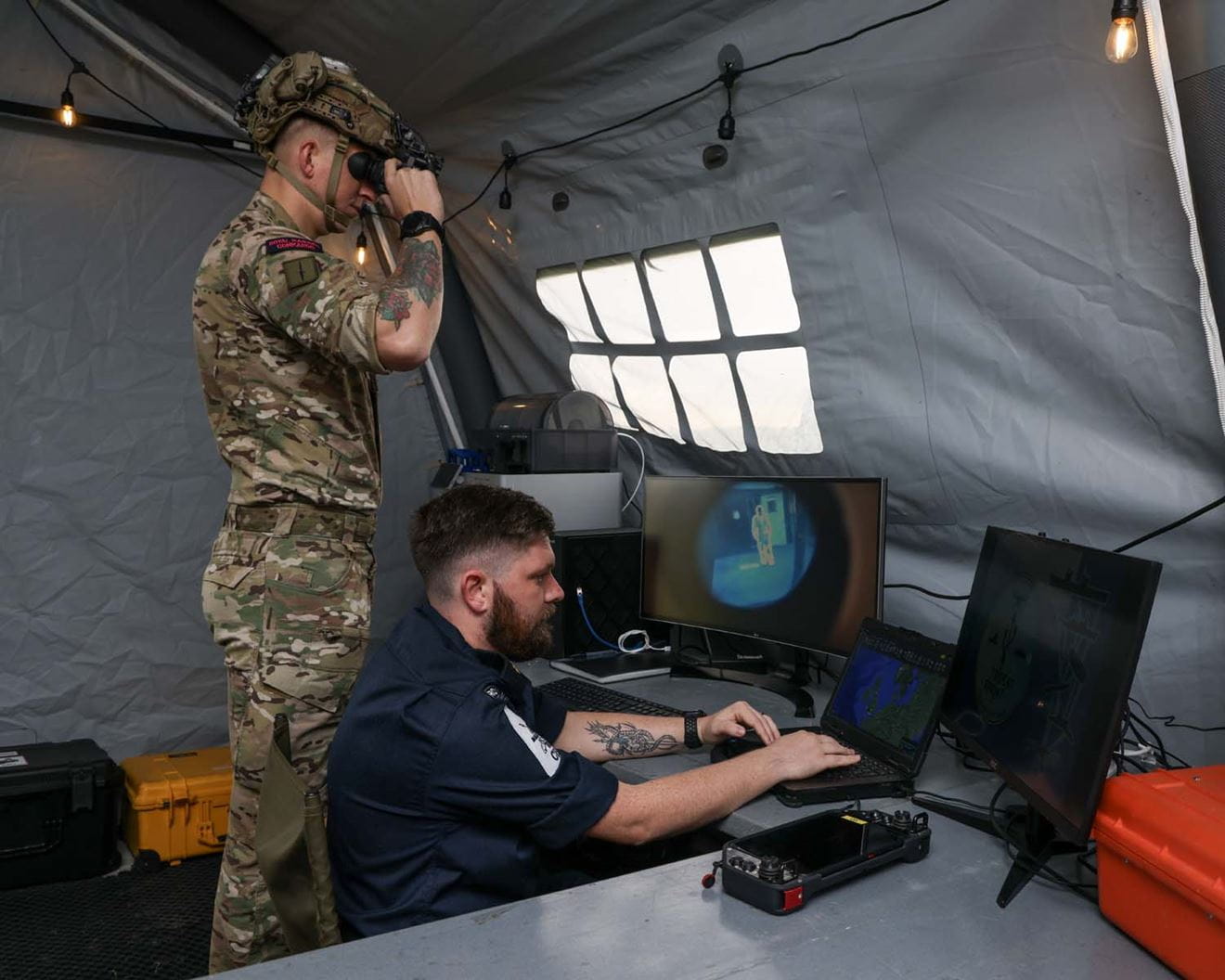
Crewless boats controlled from more than 150 miles away, robot dogs and drones capable of sending surveillance and data back to control centres were all tested at Exercise Trident Sprint 1 at RMB Chivenor in Devon.
The exercise is the first in a proposed series that will improve the use of digital assets, enabling the Royal Navy to integrate new technology at pace to deliver a Digital and Information Warfare advantage.
Over the course of a fortnight, the technology demonstration pushed both people and kit to its limits, and showed how off-the-shelf equipment can be used on the frontline of military operations - faster.
Cdre Jason Strutt, from Navy Digital, said: “It not about technology alone, we are embracing a shift toward multi-disciplinary collaboration—bringing together diverse expertise to strengthen our digital foundations and unlock greater agility, resilience, adaptability, and scalability across operations.”
The demonstrations showcased the Vandal and Kraken Scout Uncrewed Surface Vessels (USV) boats. Kraken was remotely piloted from Chivenor, in North Devon, while the vessel itself was off the coast of Portsmouth while Vandal was also controlled from the base while operating in Wales.
Kraken was also integrated into a complex network within just two days, proving the Royal Navy can rapidly work with and utilise uncrewed vessels.
The trials showed the boats can be used for logistics, search and rescue, survey, and strike operations.
It not about technology alone, we are embracing a shift toward multi-disciplinary collaboration
Second Sea Lord, Admiral Paul Beattie, visited Chivenor to see Trident Sprint in action.
He said: “This event marks the launch of a series of timebound work packages designed to accelerate delivery through scalable infrastructure and common architecture, enabling us to move at pace—at the speed of software.
“This is about being collaborative by default, bringing digital problems from all areas of the Royal Navy closer to the potential solution, it is about learning by doing, together.”
And it wasn’t just autonomous and crewless technology that was tested. The focus of the Sprint was to improve the Digital foundations used by the Royal Navy as it looks to become a hybrid force.
The team tested tactical comms on Strike Net, integrating various systems to send data, proving the Royal Navy can continue to operate in Disrupted, Degraded, Intermittent, Low-bandwidth (DDIL) environments without a reliance on satellite connectivity.
Mal Crease, chief executive and Founder of Kraken Technology Group, said: “As a British Company, Kraken was honoured to show its flagship autonomous maritime platform K3 Scout to the Second Sea Lord. The company was founded to support the UK and its allies, and we have the tested, proven and internationally deployed capabilities to do so.
“We are mission ready today and look forward to helping enable their vision of making the Royal Navy uncrewed wherever possible.”
Meanwhile, in the skies, the Royal Navy tested a rapidly deployable ‘On The Man’ (OTM) anti-UAV system which can be deployed to offer protection to maritime or land-based assets.
Trident Sprint 1 is a collaboration between Navy Develop, experts in developing future systems, and Navy Digital. The Sprints are focussed on delivering against the Royal Navy’s Hybrid warfighting readiness headmark of RN2029.
Direct from the front-line, the official newspaper of the Royal Navy, Navy News, brings you the latest news, features and award winning photos every month.