Navy News
Direct from the front-line, the official newspaper of the Royal Navy, Navy News, brings you the latest news, features and award winning photos every month.
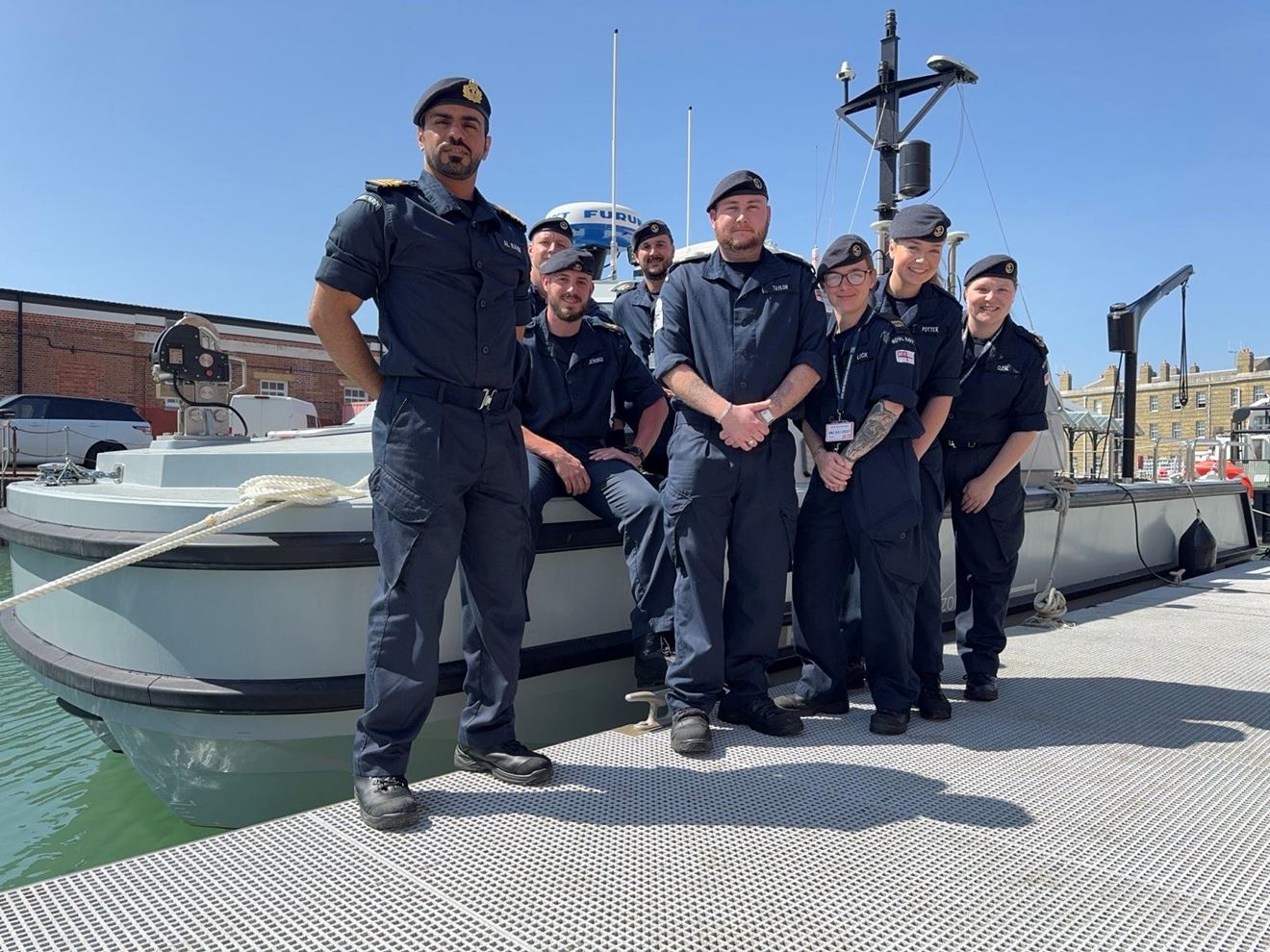
The navy’s Disruptive Capabilities and Technologies Office (DCTO) teamed up with scientists from University of Sussex to test the new navigation sensors, which have been developed to reduce reliance on GPS navigation – due to its vulnerability to disruption or to fail entirely underwater.
The ultra-sensitive quantum sensors measure tiny variations in the earth’s magnetic field, offering a new way to pinpoint locations when satellite signals are jammed or unavailable.
Commander Matt Steele, from DCTO, said: “We are excited and pleased to have supported this first sea trial with the University of Sussex and its quantum magnetometer technology.
“We are also grateful to our colleagues in the Hydrographic Exploitation Group for providing one of its vessels and crew to provide a test platform.
“To ensure it can resiliently operate in Global Navigation Satellite System denied and degraded environments, the Royal Navy continues to explore and accelerate the development of alternative means of navigation, such as this magnetic sensor, while positioning itself as a pioneer ‘quantum-enhanced navy’.”
The Royal Navy continues to explore and accelerate the development of alternative means of navigation
Tom Coussens, Research Fellow in Quantum Science and Technology at the University of Sussex, added: “GPS or Global Navigation Satellite Systems (GNSS) signals are highly vulnerable to disruption: they can be jammed or spoofed, and they fail entirely underground, underwater, or in heavily obstructed environments.
“This vulnerability has serious economic and operational consequences. While alternative systems such as inertial navigation and visual recognition exist, none simultaneously meet all critical requirements: long-term positional accuracy, weather independence, and resistance to jamming.”
The trials saw a team from the university work with the Royal Navy’s Hydrographic Exploitation Group who surveywaters, recording details of depth, seabed objects and composition.
The university used their Optically Pumped Magnetometers in open waters, with the trials taking place fromHis Majesty’s Naval Base Portsmouth.
In addition to navigation, they also successfully mapped surrounding magnetic signatures, pointing to new methods for detecting vessels, undersea features, and potential hazards.
Direct from the front-line, the official newspaper of the Royal Navy, Navy News, brings you the latest news, features and award winning photos every month.