Navy News
Direct from the front-line, the official newspaper of the Royal Navy, Navy News, brings you the latest news, features and award winning photos every month.
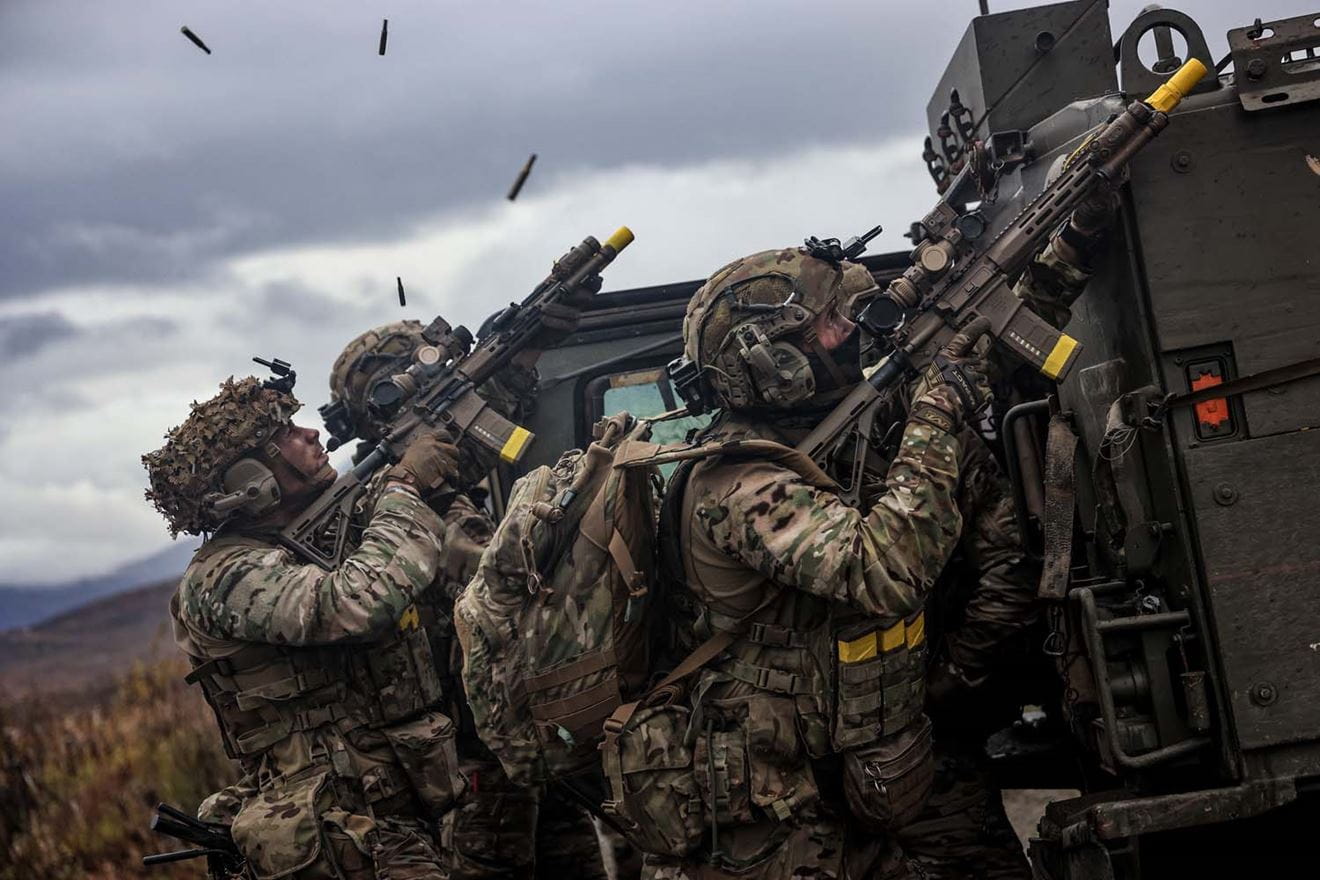
A ten-day workout in the Arctic fjords around Troms County in Northern Norway looked at how the UK’s commandos – and Norwegian allies – can, in event of an attack or invasion, bring their leading troops to bear, protect them once they’ve landed ashore and, critically, keep them supplied for combat using traditional logistics and uncrewed technology.
This exercise – known as Arctic Tide – is part of the largest-ever military drills (named Tarassis) in the 11-year history of the Joint Expeditionary Force – a group of ten like-minded nations who together aim to react rapidly to security threats across northern Europe if required.
While the patrol ships of the Royal Navy’s Coastal Forces Squadron participated in the Baltic Sea elements of Tarassis, 350 marines, sailors and soldiers deployed to the high north with Royal Fleet Auxiliary support ship, RFA Lyme Bay.
Once among the fjords, complex amphibious operations began in earnest to bring expert raiding troops from Taunton-based 40 Commando ashore – with a particular focus on the logistical challenges posed by keeping them supplied with ammunition, food and other supplies as they worked deep behind enemy lines.
The Commandos were tasked with establishing a foothold in this challenging environment, with the ultimate purpose of paving the way for larger-scale allied landings.
Commander Amphibious Task Force, Commander Aaron Revell, said: “Joint Expeditionary Force partner nations have responded to rapidly developing threats by planning and exercising a wide variety of response options.
“Exercise Arctic Tide, which sits within the much larger ‘Tarassis’ series of concurrent exercises, has rehearsed the UK Commando Force’s ability to conduct advance force and shaping operations in the High North and Arctic.
“I am especially proud of our 350 sailors, marines and soldiers, enabled by advanced and un-crewed technology, to covertly project several small but highly effective teams at long range from the sea, and sustain them for extended operations through a full first and second line of logistics support by agile amphibious landing.”
While not necessarily the glamourous part of Royal Marines operations, Arctic Tide provided a rare opportunity for North Devon’s Commando Logistic Regiment (CLR) to firstly test traditional logistic methods with RFA Lyme Bay but also the requirement to get necessary supplies to teams operating spread out widely deep into the wilderness.
For 40 Commando to succeed in their task to gain an allied foothold, a resilient logistics chain must be established for forces spread across a wide mountainous area that is difficult to navigate and operate in.
“It is easy to regard logistics as the backdrop to warfighting, but history repeatedly proves it is decisive,” said Major Al Hewett, Second in Command of Commando Logistic Regiment.
“The High North presents some of the harshest conditions anywhere in NATO’s area of responsibility. Limited infrastructure, long lines of communication, and a climate that degrades equipment and tests endurance.
“For advanced force units tasked with reconnaissance, strike, or enabling operations, the ability to remain supplied, repaired, and connected is what makes the difference between a fleeting presence and a credible effect.”
For CLR this was the culmination of months of careful planning and it saw 35 heavy vehicles – including Viking armoured vehicles, trucks and tractors – and a range of equipment hauled ashore from Lyme Bay using an array of landing craft.
Maj Hewett added: “CLR has sought to re-learn old lessons and integrate new practices. The exercise provided the regiment with the chance to plan, test, and adapt its approach to sustaining forces in dispersed field support areas, to regenerate skills not practised in several years.”
Direct from the front-line, the official newspaper of the Royal Navy, Navy News, brings you the latest news, features and award winning photos every month.