Navy News
Direct from the front-line, the official newspaper of the Royal Navy, Navy News, brings you the latest news, features and award winning photos every month.
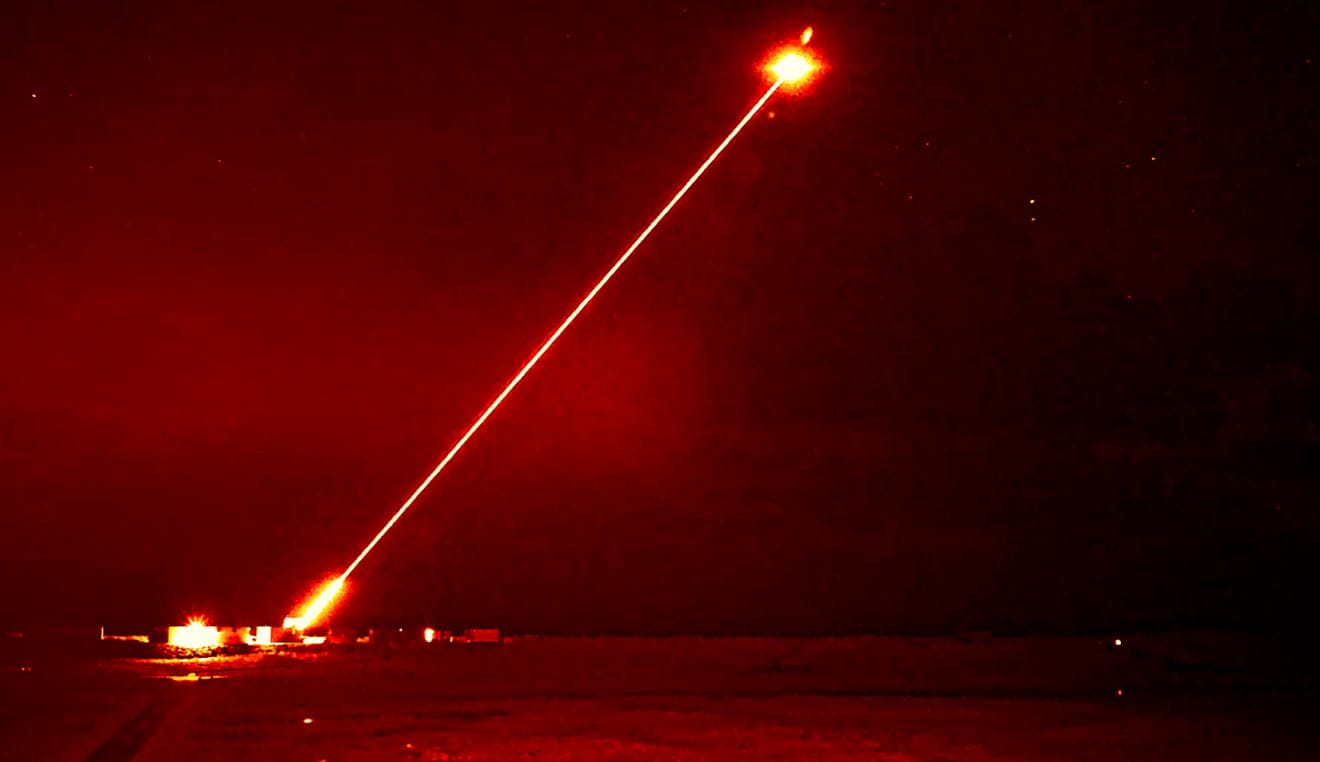
The success of the latest firings has prompted Whitehall to sign a £316m contract with defence firm MBDA UK to continue developing the weapon – and install it on a Type 45 destroyer within two years.
At present the Daring class rely on Sea Viper missiles, cannon and small arms, plus the Phalanx system to deal with aerial threats.
All have proved successful in action: Sea Vipers and HMS Diamond’s 30mm gun were all used to obliterate drones launched by Houthi rebels in the Yemen against Red Sea shipping.
DragonFire offers a cheaper (£10 per shot compared with, for example, over £1m for a Sea Viper missile), highly-accurate (it can hit a £1 coin at a range of one kilometre) alternative, with no danger of expending ammunition.,
In its most recent trials DragonFire detected, tracked, engaged and finally destroyed above-the-horizon drones flying at high speeds – a UK first.
Working with science/tech firm/defence firms QinetiQ and Leonardo, MBDA will hone the design and functioning of the system before installing the high-power device on one of the Portsmouth-based destroyers five years ahead of original plans.
Chris Allam, MBDA UK’s Managing Director said the UK was at forefront of laser weaponry and DragonFire would be a “truly game-changing weapon system” for the Royal Navy.
Luke Pollard, Minister for Defence Readiness and Industry, said DragonFire would place the Royal Navy “at the leading edge of innovation in NATO, delivering a cutting-edge capability to help defend the UK and our allies in this new era of threat”.
It will be the first high-power laser weapon in service with any European nation and the programme will create or sustain nearly 600 jobs across the UK.
Direct from the front-line, the official newspaper of the Royal Navy, Navy News, brings you the latest news, features and award winning photos every month.