Navy News
Direct from the front-line, the official newspaper of the Royal Navy, Navy News, brings you the latest news, features and award winning photos every month.
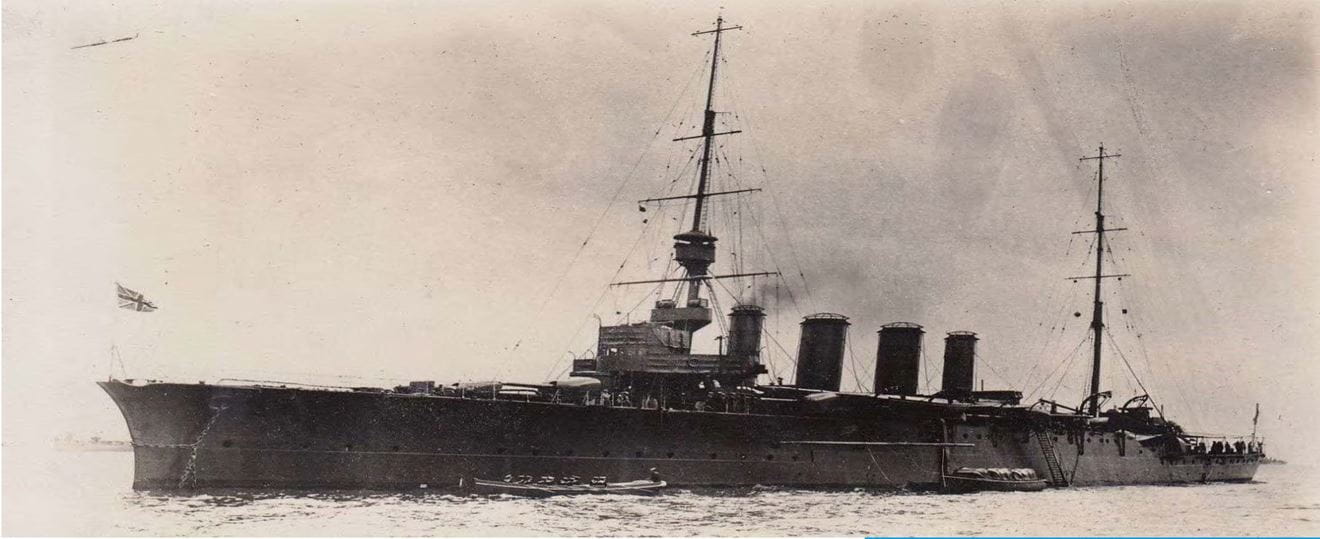
Dubbed ‘the last scout’ because she was looking for German warships so the guns of the Royal Navy’s Grand Fleet could engage them, instead Nottingham ran into an ambush and was torpedoed by a German submarine.
No human eye had seen the Town-class ship since the morning of August 19 1916.
Although many WW1 North Sea wrecks, especially those from Jutland, have been found and dived/surveyed, even salvaged, Nottingham remained undiscovered until now.
But extensive research by a community of divers who collectively call themselves ProjectXplore, dedicated to locating, identifying and documenting historically-significant uncharted shipwrecks around the UK, led to Nottingham’s discovery about 70 miles off the Northumberland coast.
The ship came through the three major surface actions of the Great War in the North Sea: Heligoland Bight in August 1914, Dogger Bank the following January and finally the clash of dreadnoughts at Jutland in May 1916.
Just ten weeks later the German Fleet planned another sortie, a bombardment of Sunderland which was meant to draw the Royal Navy into a trap of waiting U-boats.
As with Jutland, naval intelligence got wind of the attack and the Grand Fleet sortied to intercept.
In the haze of first light on August 19, a sail was sighted and Nottingham closed in to investigate. The ‘sail’ turned out to be the submarine U-52, which slammed three torpedoes into the unfortunate cruiser.
Nottingham sank in an hour taking 38 men down with her – though more than 375 sailors were saved. As for the resulting clash of Fleets the ‘action of August 19’ proved to be indecisive yet again – but nowhere nearly as bloody. Just one more Briton was killed in clash.
The ProjectXplore team exploited information in British and German actions to help narrow down the prospective search area for the wreck
Their eight months of research paid off. The team and their research/dive vessel MV Jacob George located the wreck on the first day of the search in April.
They returned to the site this month for a six-day dive to conduct a detailed survey – with permission from the Royal Navy as Nottingham is an official war grave with protected status – filming and photographing the wreck extensively.
The divers found the cruiser lying at a 45-degree angle in around 82 metres (270ft) of water
Despite nearly 110 years on the seabed and some growth of marine life, the name ‘Nottingham’ is clearly legible.
Indeed, apart from the bow section – the torpedoes struck the cruiser roughly in line with her bridge – Nottingham is in remarkably good condition according to ProjectXplore: the wooden decking on the stern and midships remains in place, as are the four funnels, and all nine of her main 6in guns.
Direct from the front-line, the official newspaper of the Royal Navy, Navy News, brings you the latest news, features and award winning photos every month.