Navy News
Direct from the front-line, the official newspaper of the Royal Navy, Navy News, brings you the latest news, features and award winning photos every month.
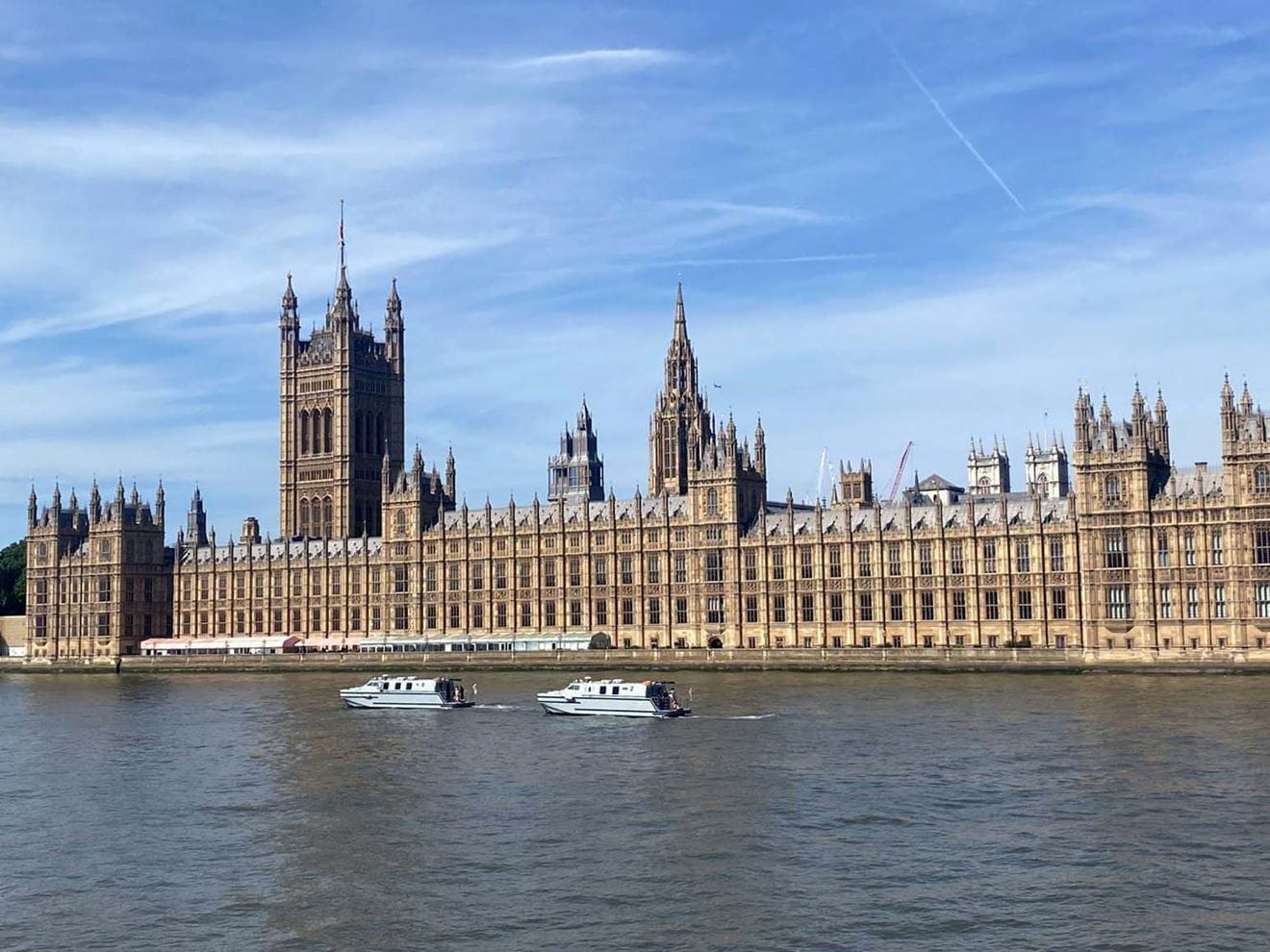
The ‘mother of parliaments’ was the high-water mark of a near 700-mile round trip for two Royal Navy officer training boats, crewed by the leaders of tomorrow, from Britannia Royal Naval College in Devon.
Typically the size – and above all the height – of Royal Navy vessels means no craft venture beyond the Pool of London.
But the sleek, futuristic Vahana boats – 15 metres long and capable of speeds of up to 40 knots – can pass under the Thames crossings and thus reach Parliament.
Crewing the craft Tern and Guillemot, under the instruction of tutors from the college, were junior warfare officers whose many duties includes navigating.
Much of the training is done either in the classroom or on the state-of-the-art bridge simulators which were installed at Dartmouth a couple of years ago.
The immersive 180-degree computer trainers recreate the typical bridge of a major modern warship, with the display screen able to recreate all manner of weather/sea conditions and the entrances to major harbours regularly used by the Navy such as Portsmouth and Plymouth.
It is so realistic that students find themselves adjusting their bodies to the ‘sea conditions’ – even though the simulator is fixed firmly to the ground.
Superb though the synthetic training is, students still need two weeks of practical instruction at sea before entering the simulator for their final assessments.
Sub Lieutenant Jacob Hubbard was among those honing his navigational and bridge skills aboard the Tern.
The Vahana officer training boats enable us to go further and faster using the same navigation systems and techniques that our students will be using on warships in the future.
“It’s been better than I thought,” he said. “We spend a lot of time in the classroom learning so getting to put it into practice has been a great opportunity and we’ve really enjoyed it.
“The way these boats ride through the water, there’s a lot of movement which means it’s very hard to take a visual fix using the pelorus [navigational compass] – rather than being stood in a simulator where everything lines up perfectly. Here, you’ve got real movement from the water so it’s been good.
“The Thames is the perfect location because of the sheer amount of shipping. We got to experience lots of different ships in lots of different situations and we also have to report to the harbour authorities as we’re coming down the Thames which is a great opportunity to actually get to do that in real life.”
Lieutenant George Willmott, manager of the Initial Warfare Officer course at BRNC said the venture up the Thames had been well worthwhile.
He added: “This has been an extremely productive week where our students have planned and executed coastal navigation passages from our home in Dartmouth to central London.
“The Vahana officer training boats enable us to go further and faster using the same navigation systems and techniques that our students will be using on warships in the future.”
The boats made their way to the capital via Portsmouth, Eastbourne and Ramsgate. Each one is a ‘floating classroom’, capable of training more than a dozen students at a time, with basic accommodation (bunks, microwave, toilet) and a hi-tech bridge with electronic charts as you’d find on a modern warship, and the ability to control/steer/drive the boat using a mouse.
Direct from the front-line, the official newspaper of the Royal Navy, Navy News, brings you the latest news, features and award winning photos every month.