Navy News
Direct from the front-line, the official newspaper of the Royal Navy, Navy News, brings you the latest news, features and award winning photos every month.
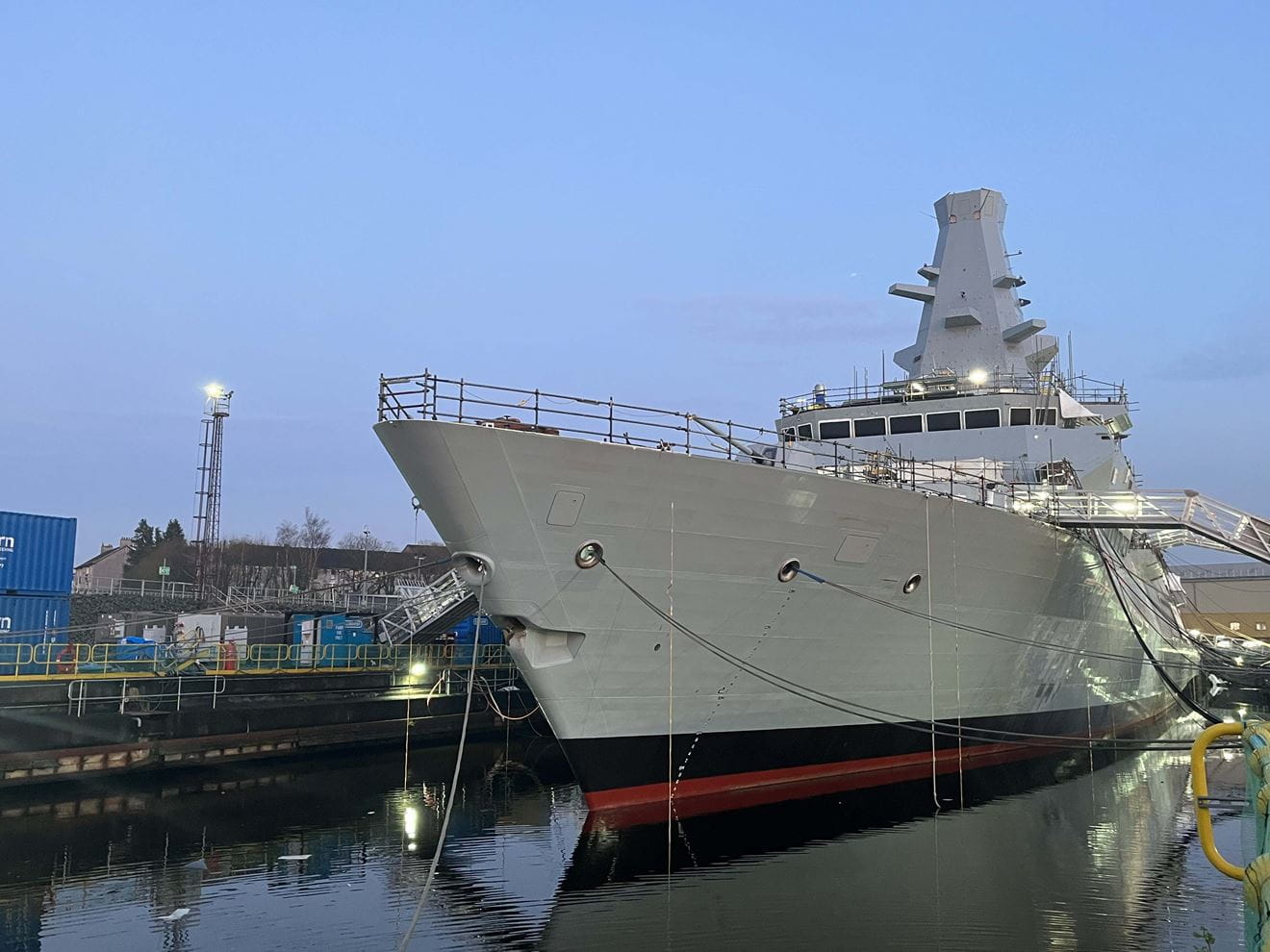
Engineers flashed up the first of four engines which will power HMS Glasgow on operations into the second half of the 21st Century.
Day-in, day-out, four mighty MTU diesel generators will provide the bulk of the power for the Type 26 frigate which is being built by BAE Systems in the ship’s namesake city.
The first of the quartet was switched on by engineers at the firm’s Scotstoun yard on the north bank of the Clyde, observed by members of the ship’s company
Built by MTU, each diesel generator can produce up to 3 MegaWatts of power. Together, the four engines should drive the 8,000-tonne warship through the water at regular cruising speeds in excess of 14/15 knots (and for full speed, there is a Rolls-Royce MT30 gas turbine which generates a whopping 36MW).
As well as providing power to the frigate’s propulsion system, the diesel generators also give life to all Glasgow’s systems: lighting, electricity, computing, air conditioning, fuel pumps, high-pressure air and amenities for around 200 crew such as the galley down to humble 240-volt plugs and USB sockets in mess decks.
“These diesel generators will be the beating heart of the world’s most advanced anti-submarine warfare frigates for the next 30 years,” said Warrant Officer 2 Alan Causer, HMS Glasgow’s propulsion manager.
“The MTU class are often referred to as ‘Ironmen’ engines, renowned for their durability and long service life.”
For the engineering buffs among you… the diesel generators use a common-rail fuel injection system, allowing precise control over the timing, volume, and pressure of the fuel, which results in better fuel economy and reduced emissions.
These diesel generators will be the beating heart of the world’s most advanced anti-submarine warfare frigates for the next 30 years.
They are built with robust components designed for maximum uptime in demanding marine and industrial applications – some 58,000 have been sold since they were introduced in 1996 and collectively they clocked up more than 345 million operating hours… which is nearly 40,000 years.
A single MTU generator could meet the power needs of around 1,500 average homes, or 140 electric vehicles travelling at 70mph on the motorway… while all four running concurrently could serve a town the size of Fareham, Aldershot or Newbury.
The switch-on is symbolic as it marks the beginning of the transition to the testing and commissioning phase of the ship’s life as she edges towards the end of construction.
When in service, Glasgow and her seven sisters – plus up to six being built for the Royal Norwegian Navy – will perform a core role in NATO’s defence of the Atlantic against activity by hostile submarines.
In the case of the Royal Navy Type 26s, they will be based in Devonport, replacing the submarine-hunting variant of the Type 23 frigates.
Direct from the front-line, the official newspaper of the Royal Navy, Navy News, brings you the latest news, features and award winning photos every month.