Navy News
Direct from the front-line, the official newspaper of the Royal Navy, Navy News, brings you the latest news, features and award winning photos every month.
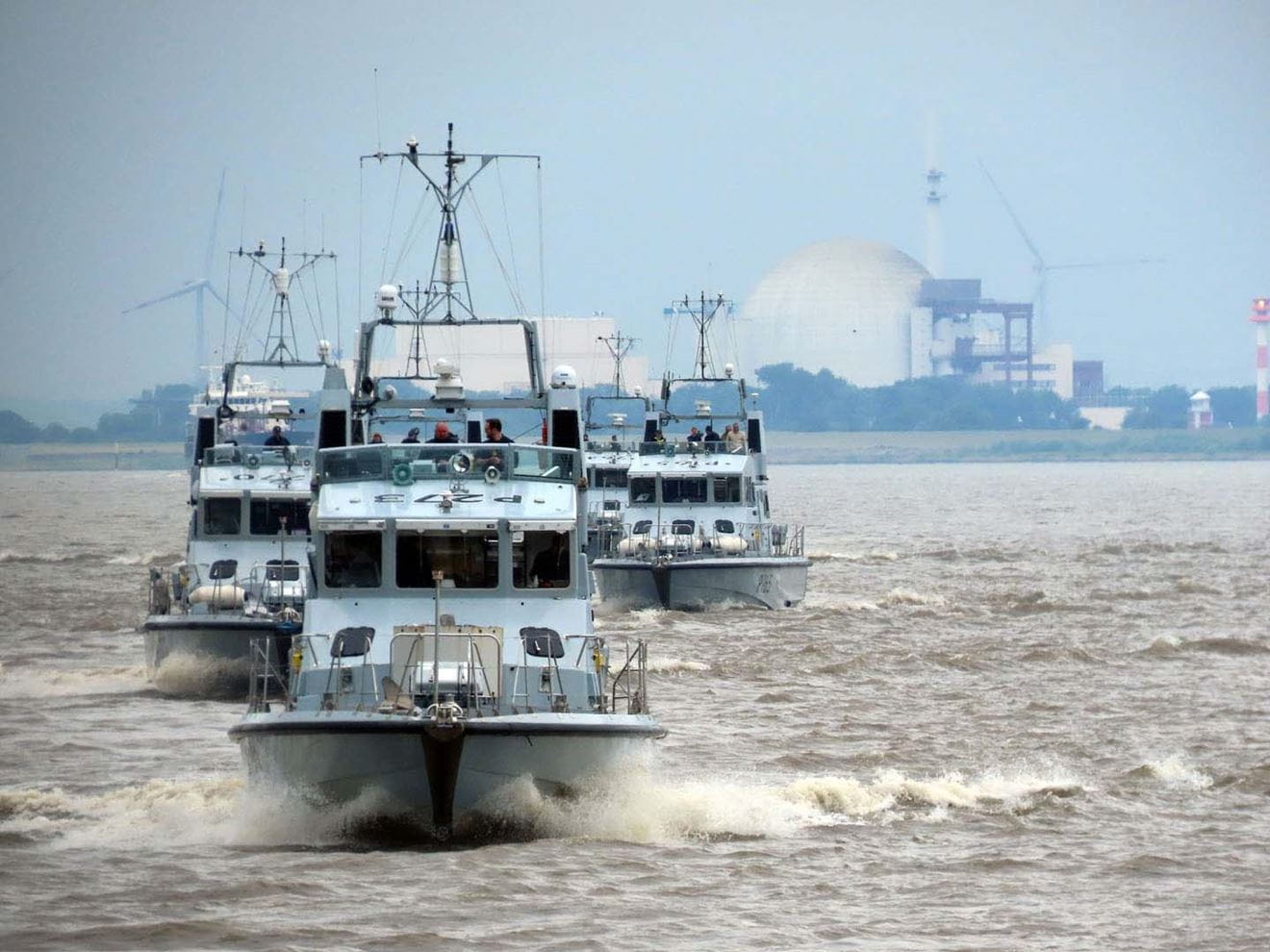
HMS Dasher, Express, Puncher and Pursuer will spend the next ten weeks away from home – eight of them on a string of exercises, as they focus their efforts between the Kattegat and Gulf of Finland.
The fast patrol craft will practise a range of missions including harbour defence, escort duties, acting as launchpads for minehunting drones, and as enemy forces trying to intercept shipping.
First, they’ll join 13 other NATO nations off Germany’s Baltic shore for Exercise Northern Coasts, a test of land, sea and air forces involving more than 2,700 personnel and 40 warships.
The ships will host experts from the Royal Navy’s Mine Threat Exploitation Group, who have been working with them to launch autonomous minehunting kit.
Then the action shifts further east, with the ships taking part in exercises with Finnish, Swedish and Latvian counterparts.
These exercises are under the banner of the Joint Expeditionary Force, the coalition of northern European nations committed to regional defence and security.
Dasher and Pursuer have only just returned from the Baltic having taken part in NATO’s spring exercise in the region, while earlier this year Puncher and Express deployed to the Arctic to support winter war games, then joined the ‘little ships’ for a high-profile re-enactment of the Dunkirk evacuation for the 85th anniversary.
“We’re very excited to be deploying back into the Baltic Sea after a well-earned summer leave period having returned only five weeks ago,” said Lieutenant Jack Mason, Commanding Officer of HMS Dasher.
We are looking forward to working with both NATO and Joint Expeditionary Force partners as we continue to strengthen our relationships with these nations
“The Baltic Sea is becoming a bit of a home away from home for the Coastal Forces Squadron as we deploy into the region for the second time this year, this time with some very different strategic objectives.
“We are looking forward to working with both NATO and Joint Expeditionary Force partners as we continue to strengthen our relationships with these nations.”
The class of P2000 craft have served the Royal Navy since the late 80s, mostly as navigation training platforms and giving university undergraduates a taste of Service life.
But in the past decade their mission has evolved to focus more on front-line operations.
Their size and speed (20.8m long, over 20kts) and manoeuvrability make them ideally suited to operations close to shore, or tasks against small craft.
Each P2000 has a crew of just five, but the numbers will be bolstered with additional officers and sailors undergoing training.
Leading Engineering Technician Thomas Hargreaves, who keeps HMS Dasher running, thoroughly enjoyed his first visit to Baltic and hopes his return will be just as fruitful personally and professionally.
“Once again the Coastal Forces Squadron can prove to both NATO and the Joint Expeditionary Force that P2000s may be small but pack a mighty punch,” he said.
“Having the opportunity to travel to different countries in the Eastern Baltic with my shipmates is an opportunity like no other and I can’t wait continue building those memories.”
Direct from the front-line, the official newspaper of the Royal Navy, Navy News, brings you the latest news, features and award winning photos every month.