Navy News
Direct from the front-line, the official newspaper of the Royal Navy, Navy News, brings you the latest news, features and award winning photos every month.
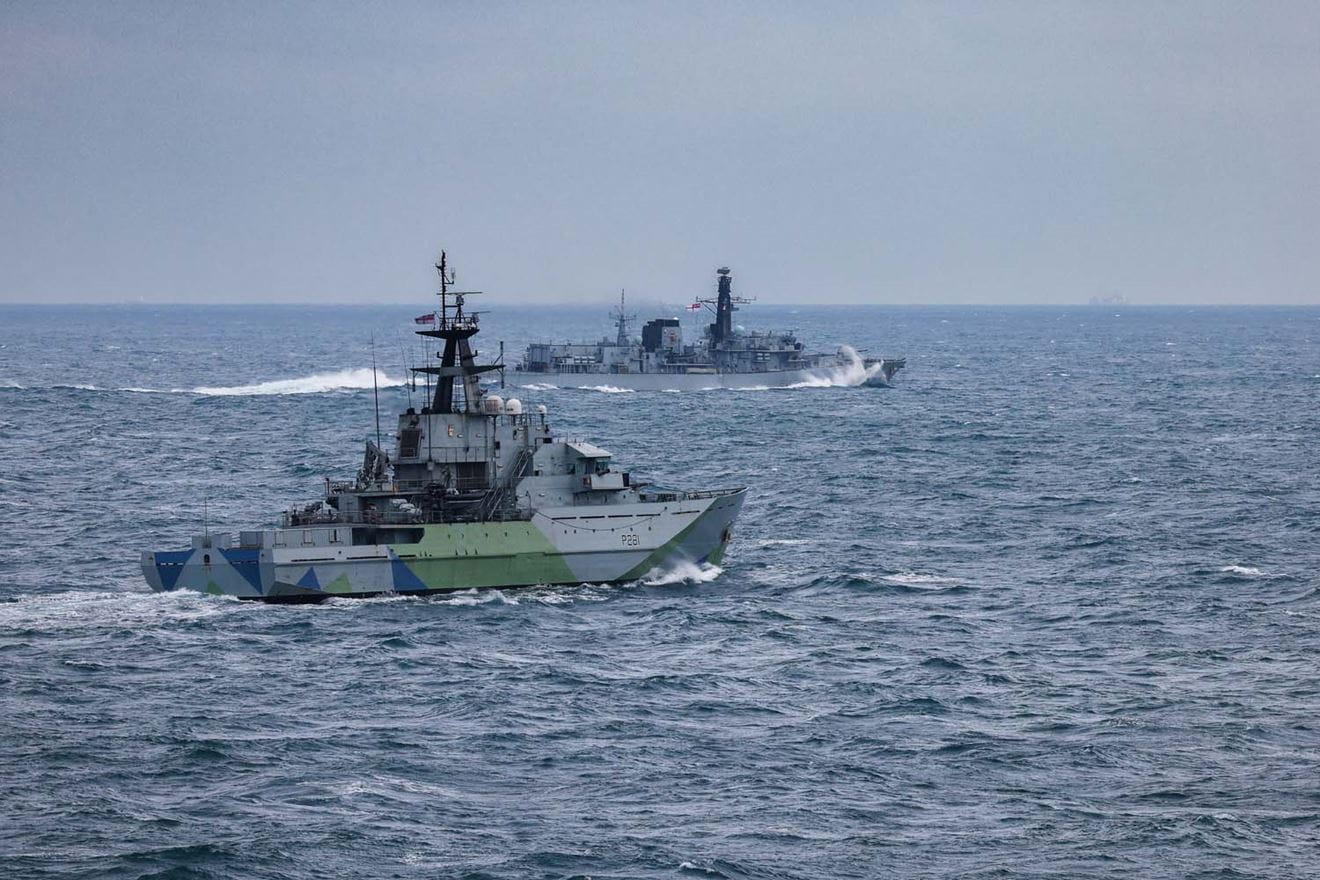
Seven and a half months into the year and the Portsmouth-based warship has already clocked up more than 32,000 nautical miles – one and a half times around the globe – despite rarely leaving home waters.
Tyne is taking a short breather at HMNB Clyde in Faslane from acting – alongside her first-generation River-class sisters ships Severn and Mersey – as the Royal Navy’s almost constant eyes and ears around the UK.
She’s spent more than 3,500 hours (over 145 whole days/nearly 21 weeks) at sea so far this year, activated numerous times to monitor ships and submarines passing through the Channel/the UK’s area of responsibility and, less publicised, played a key role in surveying the UK’s critical maritime infrastructure.
Teams from the Mine and Diving Threat Exploitation Groups have used Tyne to launch cutting-edge underwater autonomous vehicles to conduct detailed underwater surveys while drone experts have used the ship as the launchpad for Puma small aircraft to enhance the ship’s ability to conduct surveillance and reconnaissance.
“River-class ships deliver week-in, week-out, across an array of tasking: homeland defence, supporting mine warfare and diving teams in underwater exploitation, to delivering future sailors and officers to the fleet through a multitude of training. These small ships certainly generate a big impact,” said Lieutenant Bailey Denyer, Tyne’s operations officer.
The evidence is in the data as to how much the first-generation River class continue to deliver for the Royal Navy and the nation
When not acting as guardians on home waters, Tyne and her sisters serve as vital training vessels – everything from teaching would-be and junior officers the fundamentals of seafaring and life at sea, through to helping future navigators of Queen Elizabeth-class carriers and naval task groups earn their spurs by sailing at speed through challenging waters such as the Channel Islands or Western Isles of Scotland.
“The ship exposes you to many different types of operations and training, and the navigation courses have given me a clear insight of what to expect as a future student! I’ve learnt an immense amount from the variety I’ve witnessed onboard and will always be grateful to have done my Officer of the Watch training on board a ship that’s this busy” said Sub Lieutenant Paul Clark, who is undergoing his specialist officer training on board.
In addition to operational and training activities, the ship’s supported high-profile events in the Isle of Wight, visited Northern Ireland and helped the Shetland Islands and Royal Norwegian Navy mark the 80th anniversary of Victory in Europe.
“Although this story is through the lens of HMS Tyne, our sister ships are equally as busy on continuous patrol, always innovating and ready for the next challenge. I feel very privileged to lead such a driven and talented team of women and men.”
Direct from the front-line, the official newspaper of the Royal Navy, Navy News, brings you the latest news, features and award winning photos every month.