Navy News
Direct from the front-line, the official newspaper of the Royal Navy, Navy News, brings you the latest news, features and award winning photos every month.
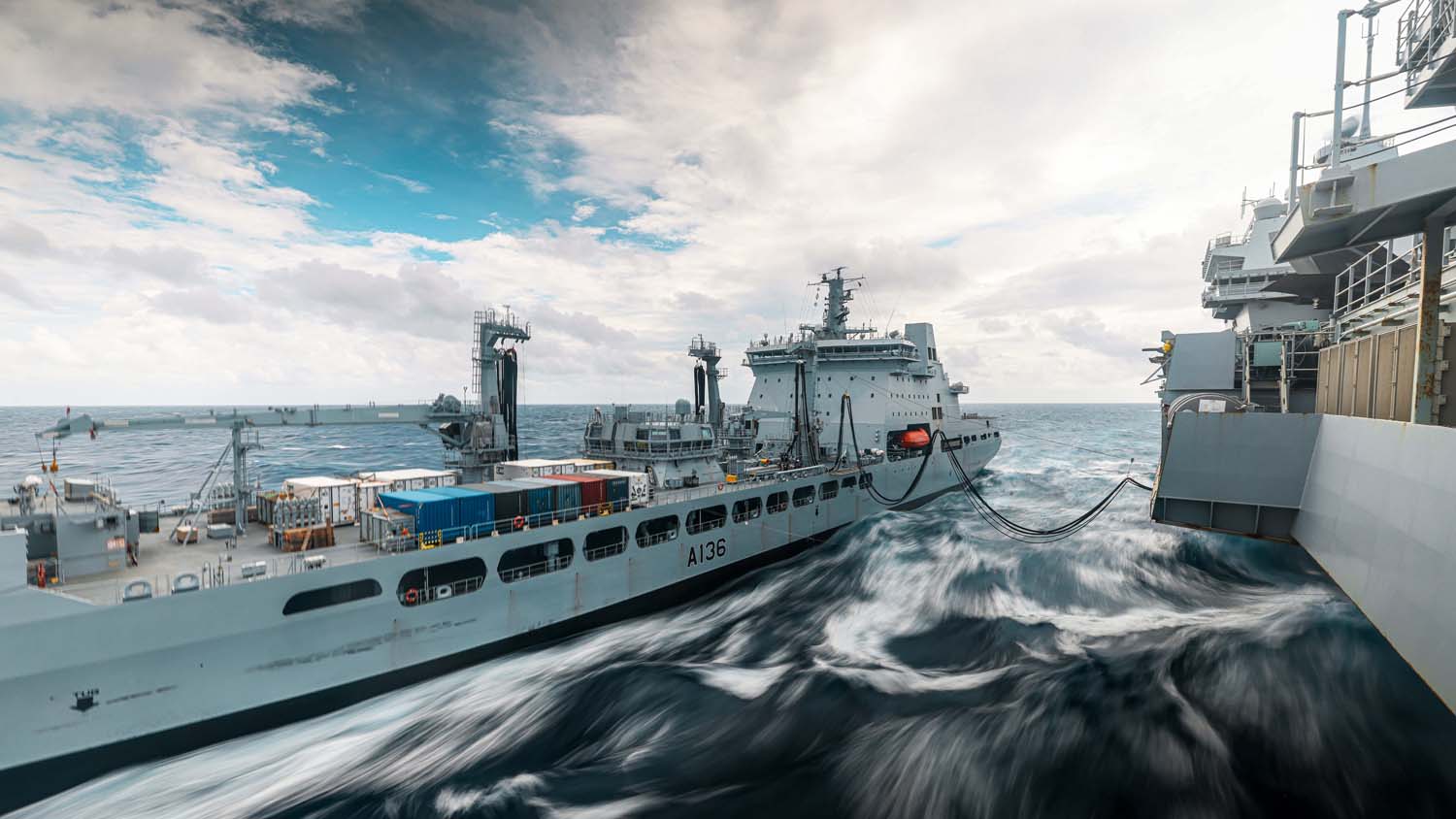
The Royal Fleet Auxiliary celebrates its 120th anniversary, its sailors as in demand now to sustain the Royal Navy’s front-line mission as they were in August 1905.
The head of the Service, Commodore Sam Shattock said: "As we mark 120 years of proud and loyal service, the Royal Fleet Auxiliary remains a testament to the quiet strength and enduring professionalism of RFA personnel.
“From conflict to humanitarian operations, our people have served with distinction, dedication, and humility. This anniversary is not only a celebration of our history, but a reaffirmation of the Royal Fleet Auxiliary's commitment to supporting the Royal Navy and wider Defence on operations at home and overseas for the UK."
Today, tanker RFA Tidespring is supporting the multi-national UK Carrier Strike Group, led by UK flagship HMS Prince of Wales, which is making for Asia as it nears the half-way point of is 2025 deployment.
Given the Service’s largely supporting role, the RFA does not perhaps enjoy the high profile of the Royal Navy, but it is fundamental to sustaining ships at sea for weeks on end if need be – sparing them the need to return to port to stock up on fuel, food, ammunition, fresh water or replacement parts.
In addition, the Service’s vessels serve as mother ships for minehunters, support Royal Marines amphibious operations, host the only large-scale hospital facility of its type in the UK’s armed forces, and conduct crucial training at sea for naval aviators.
In addition, RFA vessels frequently serve as the springboard for counter-narcotic operations and humanitarian relief missions (especially in the Caribbean) and working with NATO in support of anti-submarine patrols of the North Atlantic.
It was established in 1905 – the same year as the Tsar brutally put down a revolution in Russia, ground-breaking HMS Dreadnought was laid down in Portsmouth Naval Base, Norway became an independent country, and Hollywood legends Henry Fonda and Greta Garbo and aviation pioneer/movie mogul Howard Hughes were born.
Created to provide direct support to the Royal Navy, the first Royal Fleet Auxiliary Service ships were RFA Maine, Aquarius, Industry, Kharki, Mercedes and Petroleum.
Fundamental to its success in sustaining ships, techniques of replenishment at sea – refuelling/resupplying on the go - were developed by the RFA and the Royal Navy.
The RFA truly came into its own in the final year of WW2 at the heart of the ‘fleet train’, a massive fleet of support ships able to attend to almost all the needs of the British Pacific Fleet, conducting operations in the final defeat of Japan. The RFA provided tankers, salvage ships and even a floating distillery.
Post-war, the RFA became the Royal Navy's main source of support in the many conflicts that the United Kingdom was involved in.
It again performed important service to the Fleet deployed in the Far East off Korea from 1950 until 1953, when sustained carrier operations were again mounted in Pacific waters.
As the network of British bases overseas shrank during the end of the Empire, the Royal Navy increasingly relied on the RFA to supply its ships during routine deployments, or operate independently.
In supporting the Royal Navy it has frequently been in the line of fire, its vessels earning battle honours in locations as varied and distant as the Gulf, Dardanelles, Korea, North Africa and the Falklands – and it has suffered losses accordingly from the height of the Great War in 1915 through to the most recent casualties, RFA Sir Galahad and Sir Tristram in the South Atlantic in 1982.
Direct from the front-line, the official newspaper of the Royal Navy, Navy News, brings you the latest news, features and award winning photos every month.