As a Weapon Engineer Officer, you’ll be the person a team of skilled engineers look to for advice, guidance and support. As a systems engineer your work will be key to ensuring your ship can do its job; detecting threats with the ability to respond with force when necessary. That means managing a range of projects simultaneously, all with the aim of guaranteeing the potency of your vessel. If you can embrace this responsibility, you’ll be given the world-class training you need to succeed, a clear pipeline for progression and a £27,000 bonus just for joining and completing your training.
Weapon Engineer Officer
You’ll lead a team of skilled engineers to ensure your ship’s efficiency as a state-of-the-art fighting machine.
Start your application
This role is classed as a RBP Engineering Officer. As part of your application process, we’ll help you find the most suitable role based on your skills and experience.
Register interest- £34,500 - £122,800
- Undergraduate Degree
- Surface Fleet
- Engineering
- Officer level
Role details
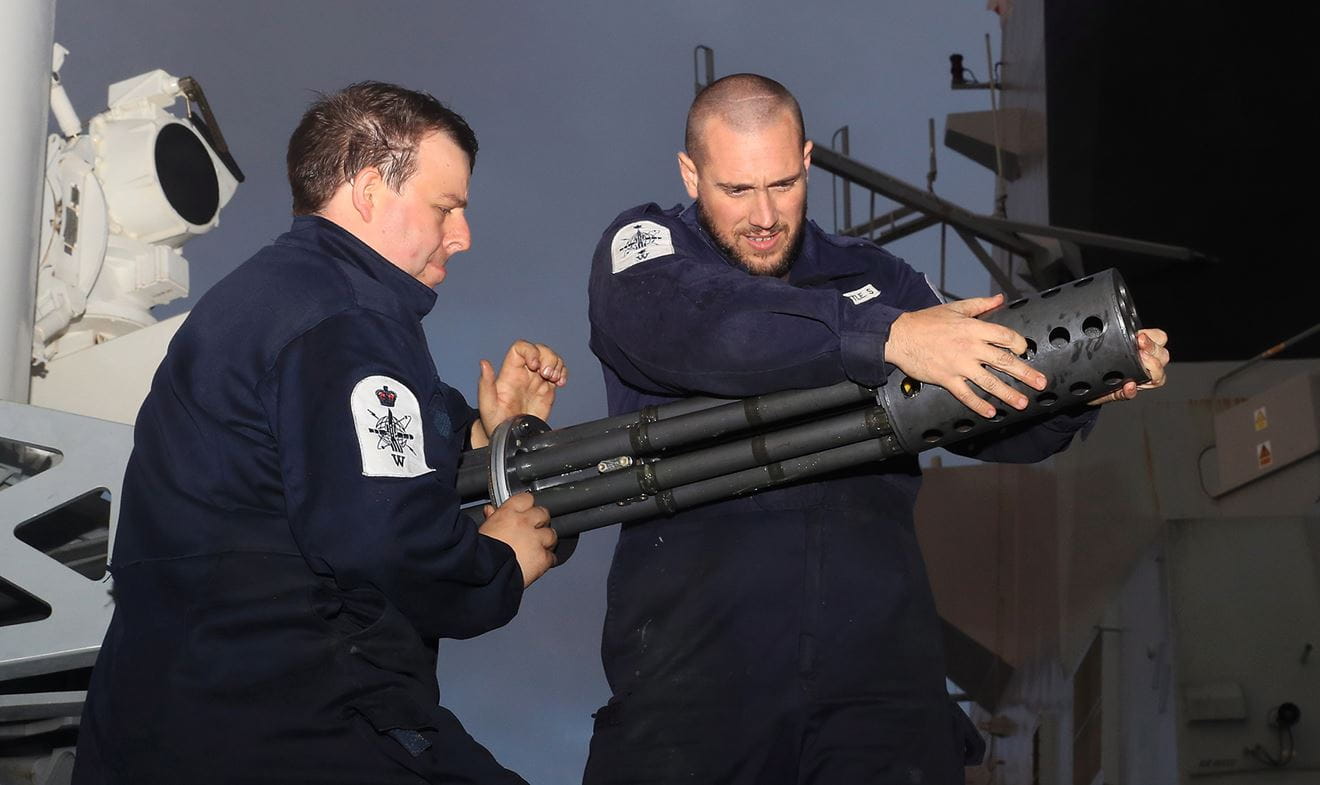
- Lead and manage a team of up to 60 technicians, from specialists in communications and IT, to those with a unique knowledge of explosives and electronic sensor systems.
- You’re the person who ensures the ship’s efficiency as a state-of-the-art fighting machine, guaranteeing the performance of our weapon, and sensor systems, so that we’re always able to fire quickly and with accuracy.
- Take responsibility for some of the world’s most advanced defence systems by using, developing and adapting your engineering knowledge in highly-challenging environments that are unique to Royal Navy life.
- Take advantage of wide-ranging career development opportunities, from promotion to becoming a Chartered Engineer and working alongside industry partners on new equipment development projects.
- A starting salary of at least £34,500, rising to around £42,800 just two years
- A £27,000 joining bonus
- Additional pay for each day spent at sea
- An excellent non-contributory pension scheme – we pay into it for you, so you don’t have to sacrifice any salary
- Six weeks of paid holiday every year
- Extra financial bonuses if you’re on a longer operation
- Amazing opportunities, including world travel and adventurous training for two weeks every year
- Free gym and sports, from football to kayaking to kite-surfing
- Forces Help to Buy scheme – a 0% loan to get you on, or further up, the housing ladder
Qualifications you'll gain
- Become an internationally recognised Chartered Engineer – we’ll support your registration.
Opportunities open to you
- There are many opportunities for post graduate study if you’re academically minded, including an MSc in Guided Weapon systems, Cyber Defence Information and Assurance, Explosive Ordnance Engineering, and Programme and Project Management.
Skills you'll develop
- Learn to work efficiently in a highly pressurised environment – no two days are ever the same.
- Mentor junior personnel and oversee complex projects.
- Gain an in-depth knowledge of complex weapon, sensors, communications and information systems.
- Become expert in how these systems are configured to operate as a state-of-the-art network.
- You’ll need to be aged 18 to 39 (You can start your application from 15 years and 9 months old however you must be at least 18 years old on day of entry to basic training)
- All Science, Technology, Engineering and Mathematics (STEM) degrees will be considered
- You’ll need a minimum of 96 UCAS points. You will also need 5 GCSEs at grade 4-9 (or Scottish equivalent), including Maths and English Language
- You'll need at least 5 GCSEs at grades A*-C (9-4) (or Scottish equivalent) which must include English Language and Mathematics
- A British or Irish National, or a Dual National. Dual nationality restrictions apply
- A Body Mass Index (BMI) between 18 and 28 (between 17 and 27 if under 18)
- An ability to thrive on responsibility and lead from the front
- Confidence making key decisions in high-pressure situations
- A passion for cutting-edge engineering and electronic equipment
- An aptitude for solving problems
I get to work with a team of talented technicians, overseeing the work that keeps our ships fully operational and ready for action. It’s a lot of responsibility, but I wouldn’t have it any other way.

Career progression
From responsibilities to pay, find out where this role can take you.
Day One
Complete your militarisation and marinisation training within 10 weeks at HMS Raliegh. This initial stage of development for young officers, designed to build the leadership, discipline, and core military skills required for naval service, before then moving onto Britannia Royal Naval College (BRNC) in Dartmouth for another 30 weeks to further develop these skills.
Professional Training
Develop your chosen profession skills at your respective training establishment dependant on your profession.
First Year
Learn management theory, develop your own style of leadership and experience your first time at sea practicing your role.
First Promotion
Become a Sub – Lieutenant, advance you skills with further training, have an increased responsibility.
Second Promotion
Become a Lieutenant, lead a department and report directly into command.
Joining process
From picking your role to the first day of training; everything you need to know as an officer
- Register your interest
- Complete your application
- Defence Aptitude Assessment (DAA)
- Interview
- Medical and fitness assessments
- Admiralty Interview Board (AIB)
- Start training
Start your application
Find your place in the Royal Navy. Make friends for life, learn new skills and experience the world.
Got a question?
Our virtual recruiter is available to answer your questions 24 hours a day