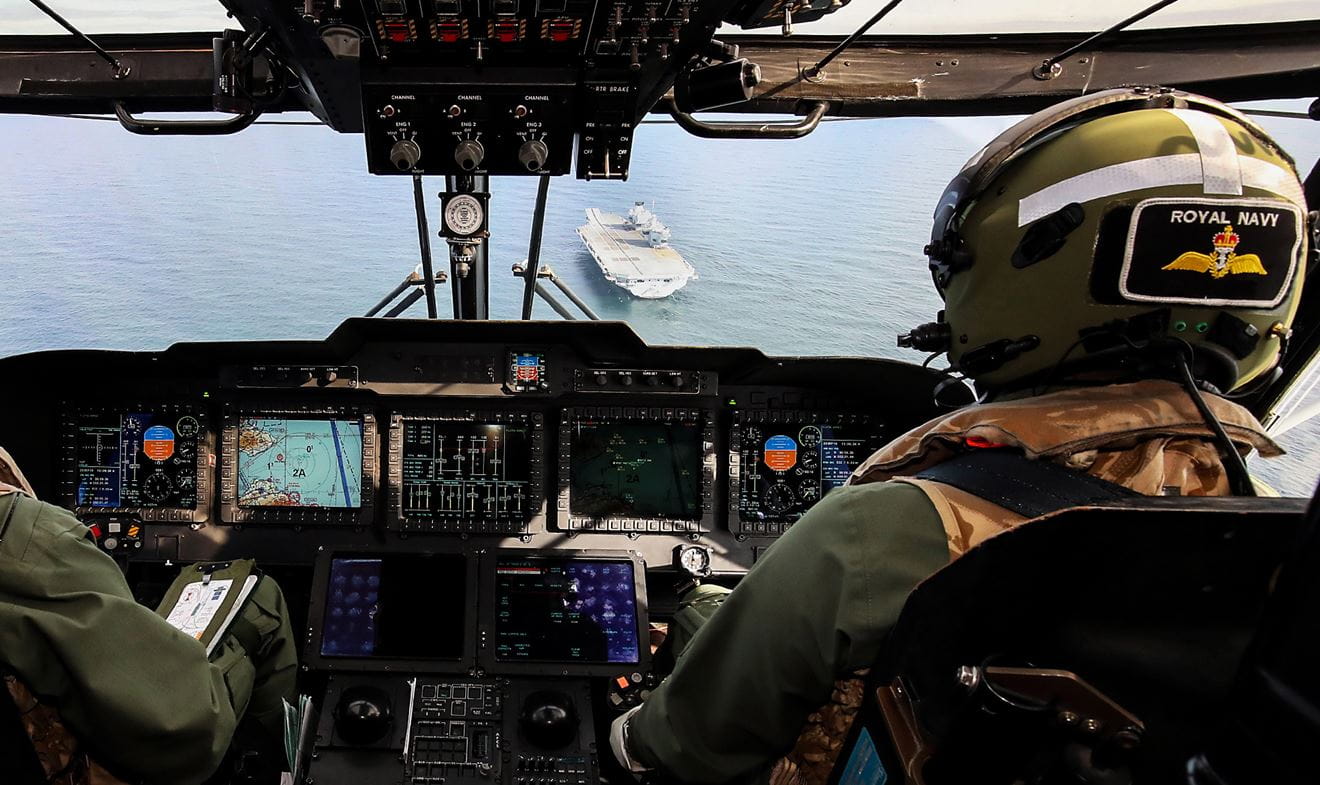
Flying at and, from the sea is different; you’ll need aptitude, mental resilience and a good ‘pair of hands’ to be a Pilot in the Royal Navy. You will exhibit skills which are different in the maritime environment, wherever you are in the world and in all meteorological environments. Whether you’re flying a cutting-edge F-35 Lightning on Strike, a Wildcat over the sea engaging enemy ships, hunting submarines or transporting Royal Marines in a Merlin, you’ll become an expert in mission-focused flying. It takes a special kind of person to do it; have you got what it takes?
Aircrew Officer Pilot
Carve out an aviation career like no other, pushing our cutting-edge aircraft – and yourself – to the limit, all over the world.
Start your application
This role is classed as a RBP Warfare Aviation Officer. As part of your application process, we’ll help you find the most suitable role based on your skills and experience.
Register interest- £33,676 - £117,500
- A-Levels / college qualifications
- Fleet Air Arm
- Aviation
- Officer level
Role details
- Extend our reach globally, pushing cutting-edge aircraft to the limit from the flight-decks of our warships and aircraft carriers
- After basic flying training, you will specialise in either fixed wing or helicopter flying, having support and flight time to become a world-class pilot
- At ‘Wings’, you will become a key part of a Frontline Naval Air Squadron, piloting and operating aircraft on essential missions; ranging from delivering Royal Marines behind enemy lines, providing lifesaving humanitarian aid, hunting enemy ships/subs to flying ‘strike’
- You are the eyes ‘in the front’ and the ‘hands’ to land back on the ship safely
- A starting salary of £34,676 initial pay, paid from a bespoke Aviation Pay
- Potential to earn up to £94,013 before transferring to regular pay with potential to earn in excess of £117,500
- Earn additional pay after Flying Training
- Accelerated training and responsibility from day one
- Six weeks of paid holiday every year
- Free medical and dental care
- Subsidised travel and accommodation
- Adventurous training
- Excellent pension scheme
Qualifications you'll gain
- Gain an Aviation Systems Management Foundation Degree at end of flying training
- Top-up’ to a BSc(Hons) in Aviation Systems Management on the Front Line
- Study for other qualifications (including others degrees) with funding from us
Skills you'll develop
- How to fly state-of-the-art aviation machines on global missions
- The ability to use your quick reaction times and work under pressure
- You must be aged 18 to 26 (You can start your application from 15 years and 9 months old however you must be at least 18 years old on day of entry to basic training)
- You’ll need a minimum of 72 UCAS points. These can be accrued from either GCE A/AS levels (or equivalent) or National Diplomas (e.g., BTEC)
- You’ll need at least 5 GCSEs at grades A*-C (9-4) (or Scottish equivalent), which must include English and Mathematics
- You must be a United Kingdom citizen or British Dual National. Dual Nationality restrictions do apply
- Applicants who have resided outside the UK over the previous 5 years may require a residency waiver
- A minimum height of 151.5cm
- A Body Mass Index (BMI) between 18 and 28 (between 17 and 27 if under 18)
- Must pass CBAT. Specialist Aviation Medical at OASC, RAF Cranwell post AIB.
- Able to thrive on responsibility
- Calm under pressure
- A love of aviation and flying
- Able to learn new skills quickly
Getting my ‘Wings’ was a massive deal. When I applied, all I had was good hand-to-eye coordination. Now I’m in charge of an aircraft worth millions of pounds.

Career Progression
From responsibilities to pay, find out where this role can take you.
Day One
Complete your militarisation and marinisation training within 10 weeks at HMS Raliegh. This initial stage of development for young officers, designed to build the leadership, discipline, and core military skills required for naval service, before then moving onto Britannia Royal Naval College (BRNC) in Dartmouth for another 30 weeks to further develop these skills.
Professional Training
Develop your chosen profession skills at your respective training establishment dependant on your profession.
First Year
Learn management theory, develop your own style of leadership and experience your first time at sea practicing your role.
First Promotion
Become a Sub – Lieutenant, advance you skills with further training, have an increased responsibility.
Second Promotion
Become a Lieutenant, lead a department and report directly into command.
Joining Process
From picking your role to the first day of training; everything you need to know as an officer
- Register your interest
- Complete your application
- Defence Aptitude Assessment (DAA)
- Interview
- Computer Based Aptitude Test (CBAT)
- Medical and fitness assessments
- Admiralty Interview Board (AIB)
- Start training
Start your application
Find your place in the Royal Navy. Make friends for life, learn new skills and experience the world.
Got a question?
Our virtual recruiter is available to answer your questions 24 hours a day